Which Self-Heating Lithium Battery Is Worth It This Black Friday?
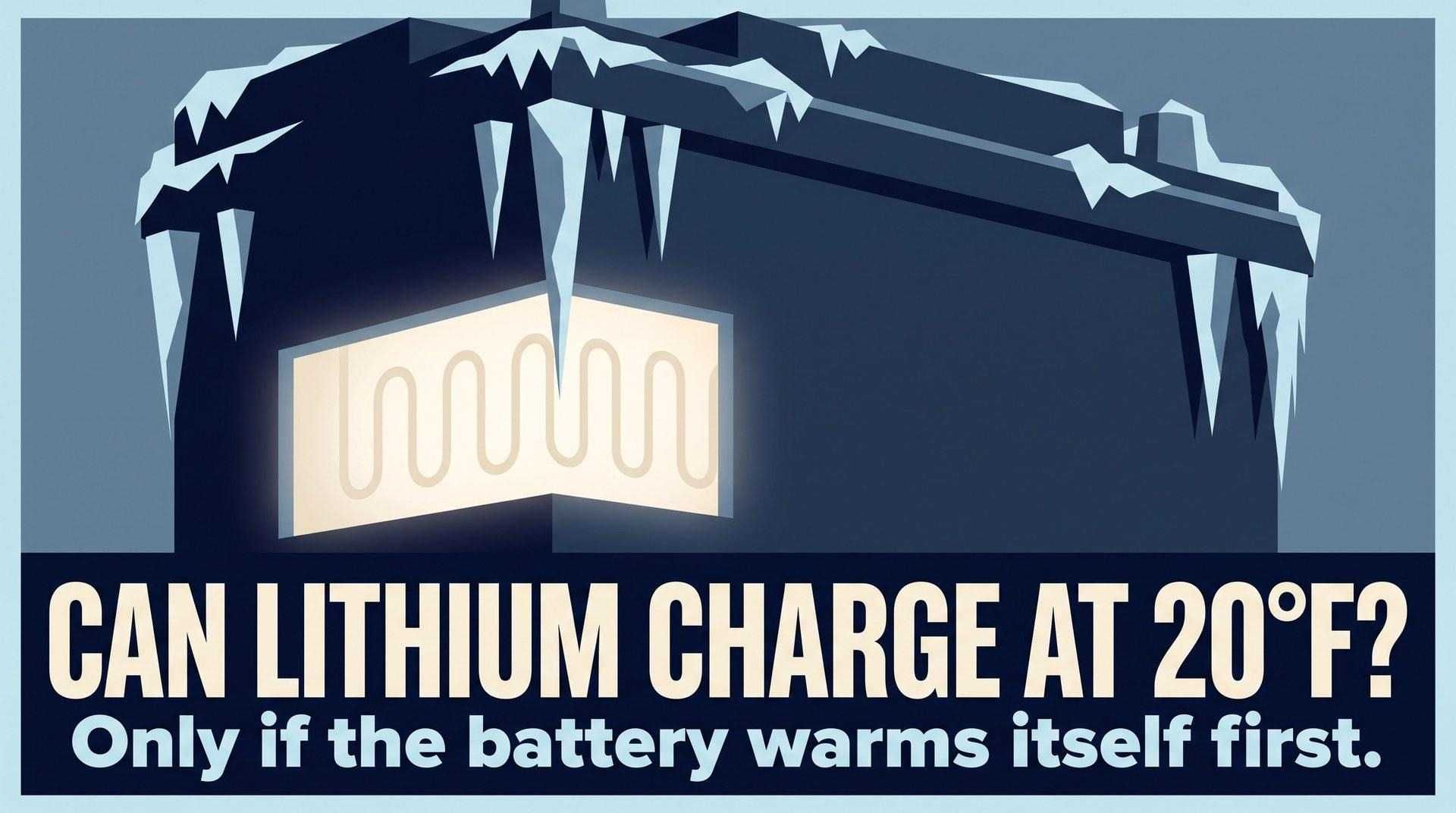
For most people who camp, fish or boondock in cold weather, a self-heating lithium battery is worth the extra money. A standard lithium battery will run your lights and fridge in the cold, but it shuts off charging once its cells drop below freezing. That means your solar panels and generator stop helping right when you need them most. A self-heating model fixes that by warming its cells to a safe temperature before it accepts a charge.
So the harder call is size. Buy too small, and you run flat on day two. Buy too big, and you've paid for capacity that sits there all winter.

Key Takeaways
Short version: you're paying extra for the heater. Getting the size right determines whether it was worth it. |
What these batteries cost during the Black Friday sale

Here is how the five LiTime self-heating models stood on November 9, during the early sale. Each one carries a 5-year warranty.
Battery | Best for | Energy | Flash price | Regular price |
|---|---|---|---|---|
12V 100Ah Group 24 Self-Heating | Small trailers, kayaks, 30 to 70 lb trolling motors | 1,280Wh | $313.65 | $479.99 |
16V 100Ah Smart Self-Heating | Fish finders and forward-facing sonar | 1,600Wh | $359.99 | $439.99 |
12V 165Ah Group 31 Self-Heating | Larger RVs, vans, off-grid | 2,112Wh | $408.00 | $699.99 |
12V 165Ah Dual Purpose Self-Heating | Boats that need one battery to start and run | 2,112Wh | $451.35 | $699.99 |
12V 320Ah Mini Self-Heating | Winter boondocking, cabins | 4,096Wh | $773.99 | $1,099.99 |
You can see the current numbers on the LiTime black friday deals page, which runs early sale prices from November 5 to November 18. Flash prices change between rounds, so treat the column above as a snapshot, not a promise.
Two extras matter if you buy more than one. Spending $599 knocks off another 5%, $799 gets you 6%, and $1,599 gets you 8%. Shipping is free with no minimum, but only within the continental US.
Is the heater worth paying for, though? That depends on one number: 32°F.
Why a lithium battery stops charging below 32°F
Charging lithium cells below freezing damages them, so good batteries simply refuse. When it's that cold, lithium can build up as metal inside the cell instead of storing properly. Battery University explains that this plating permanently cuts performance and safety, and the battery can look like it's charging normally while it happens.
So the battery management system, the small computer inside the case, cuts charging off below 32°F. It only lets charging resume once the cells are back above 41°F.

Below 32°F, the battery stops charging. The heater runs between -4°F and 41°F and warms the cells to 50°F before charging starts.
Picture it. You wake up at a frosty campsite, the sun hits your panels, and the app shows zero amps going in. Nothing is broken. The battery is protecting itself.
A self-heating lithium battery has built-in heating pads. When the cells sit between -4°F and 41°F and power is available, it warms them to 50°F and then lets the charge flow. LiTime also notes that warming the case from outside is a bad idea, because it heats the plastic long before it heats the cells.
Which self-heating lithium battery fits your setup

12V 100Ah Group 24 Self-Heating: the small, light one
This is the one to look at if you have a pop-up, a small trailer or a kayak with a trolling motor. It weighs about 22.7 pounds and fits a standard Group 24 tray.
It has two heating modes you switch in the app. Regular mode uses your charger's power, as long as the charger puts out at least 10 amps. Energy-efficient mode uses the battery's own charge if it's above 20%. From 14°F, expect 70 to 90 minutes before charging starts.
12V 165Ah Group 31 Self-Heating: more power in the same box
Same idea, about 65% more energy. It fits a Group 31 tray, which many larger RVs and vans already use, so you get a lot more runtime without cutting a new battery box.
At 33.5 pounds, it's still easy to lift. Bluetooth is password-protected, so the camper next door can't pair with your battery. One thing to know: it's a house battery, not a starter battery.
12V 165Ah Dual Purpose Self-Heating: one battery for the boat
This is the odd one out, because it can start an outboard. It's rated at 1,200 cold cranking amps at 14°F, then runs your electronics once the engine is going.
The clever bit is a reserve mode that holds back the last 15% of charge so you can always restart and get home. It's rated IP67, which means it handles splashes and salt spray. Check your motor first, though. LiTime lists some brands, including Yamaha and Mercury, as not suitable, so read the compatibility note before you buy.
12V 320Ah Mini Self-Heating: for long cold weekends
If you camp without hookups in winter, this is the one. It holds 4,096Wh, about three times the smaller model, in a case LiTime says is 35% smaller than a typical 12V 300Ah battery.
It weighs 57.3 pounds, so plan where it sits. A handy trick: you can start the heater from the app while you drive, so it's warm and ready to charge when you park.
RV couple Gab and Bren swapped a 100Ah battery for this one in nearly the same footprint and filmed the upgrade:
16V 100Ah Smart Self-Heating: built for fish finders
Serious anglers run sonar off a separate battery so the trolling motor doesn't drag down the voltage. This 16V model is made for that job, and LiTime says it can run up to five fish finders for about 10 to 16 hours.
It has the same two heating modes, which matters on an early ice-out morning. You will need a dedicated 16V charger, since 12V chargers won't work.
Before you check out
Most cold-morning disappointments come down to something boring, like the wrong charger.
- Check your charger's amps. The heater only runs off a charger putting out at least 10 amps (15 amps for both 165Ah models). A weak trickle charger won't wake it up.
- Match the tray size. Group 24 and Group 31 are not the same footprint. Measure before you order.
- Don't use a house battery as a starter. Only the Dual Purpose model is built to crank an engine.
- If you're close to $599 or $799, a charger or cable can push you into the next discount tier.
- Keep the receipt. LiTime offers a 30-day price match on its own site, so if the price drops again, you can claim the difference.
If you're also weighing a plug-and-go option for the house or the truck bed, our roundup of Black Friday portable power station deals is a useful comparison.
The bottom line
Honestly, if you only camp in summer, skip the heater and keep the money. A self-heating lithium battery earns its price on the days you'd otherwise lose to frost. If your trips run into frost, the heater keeps your solar panels doing their job, and Black Friday is the cheapest time this year to get one.
