What does dark web monitoring do? An OmniWatch explainer for consumers
Dark web monitoring is a security service that scans hidden marketplaces and breach databases for a person's personal details, then sends an instant alert. It handles two jobs and skips a third that many people assume it covers. It detects exposed data, and it tells the owner what to do about it. It does not scrub that data from the dark web, and it cannot stop the breaches that put the information there in the first place.
What monitoring really delivers is time. Most fraud starts quietly, and victims often notice nothing until a strange charge lands or a loan application is refused. A guide from OmniWatch on what dark web monitoring does frames the payoff as “the difference between a quick password change and months of fraud recovery.” The sections below unpack how the technology works, what it watches for, and where its limits lie.
What the service is actually scanning
The dark web is a small, encrypted slice of the internet, roughly 5% of the whole, that ordinary browsers cannot open and search engines never index. Despite its size, it operates as a primary clearinghouse for stolen personal data. When a company is breached, the pilfered database is sorted, packaged, and posted for sale on private forums within hours.
A monitoring tool takes secured data and runs it against databases of leaked records that are constantly being updated and checks the identifiers a user has asked it to track, such as an email address or Social Security number, against each fresh batch of surfaced data. A match triggers an alert. That constant cross-reference turns a silent exposure into a signal the owner can act on.
From leaked records to alerts, step by step
Broken into stages, the process is straightforward. First, the service matches an email address and other identifiers against a catalog of known breaches, leak sites, and marketplace listings. Second, when it finds a hit, it shows the breach name, the date, and the exact type of data exposed, rather than a vague warning. Third, it hands the user a set of concrete moves that shrink the damage.
That final stage carries the most weight. An alert that a Social Security number appeared on a forum helps only someone who already knows the next move, which is why the stronger services attach specific guidance to every notification instead of leaving people to guess. Instructions turn a warning into a fix.
The identifiers that matter most
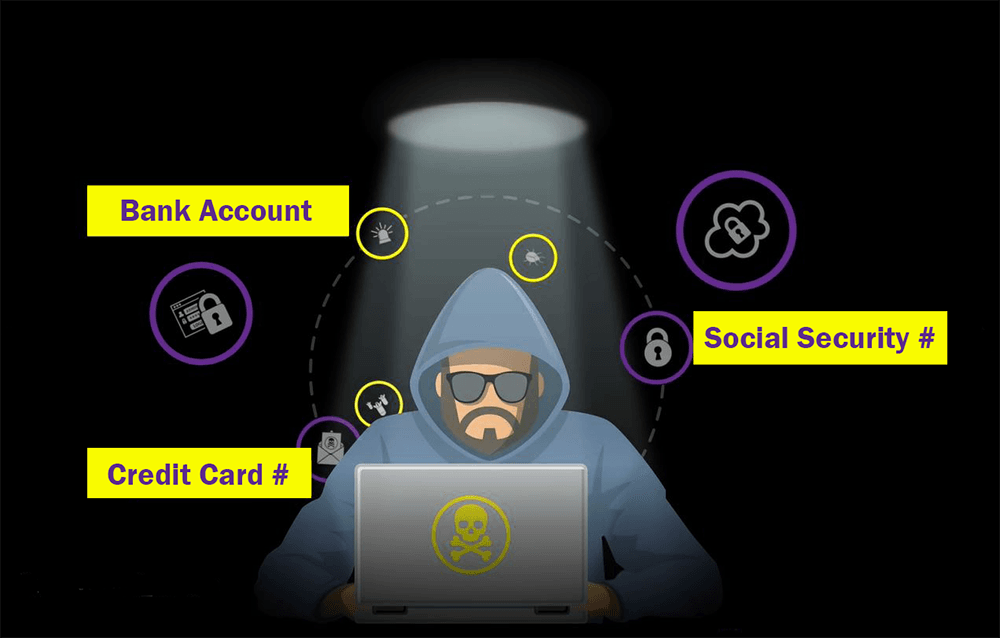
Email and password are only the opening. Modern fraud is assembled from scattered fragments: a Social Security number from one leak, a bank account number from another, a driver's license from a third. OmniWatch tracks more than 130 categories of personal data, spanning government identifiers, financial account numbers, login credentials, phone numbers, passport and license numbers, and medical or insurance records.
Pricing on these markets reveals what criminals value. A single Social Security number can change hands for as little as $1 to $10, while a bundled identity profile, known in the trade as a “fullz,” can command a few hundred dollars depending on the victim's finances. Buyers assemble what they need, then use it to open accounts, file bogus tax claims, or seize existing logins.
How the data gets there in the first place

Personal records rarely reach the dark web by chance. The most common route is a corporate breach, which means careful personal habits offer no immunity when a company holding the data is compromised. The scale reached a record last year. The Identity Theft Resource Center counted 3,322 data compromises in 2025, its highest annual tally ever and a 79% jump across five years.
The same report showed criminals chasing durable identifiers. Compromises involving Social Security numbers nearly doubled over the period to 2,236, and breaches exposing bank account details climbed to 1,099. Beyond breaches, data also flows in through phishing messages, malware planted on a device, and brokers who bundle and resell personal information at volume.
The honest limits of the technology
Monitoring does one job extremely well and leaves others untouched, so understanding the boundary matters. On the useful side, it spots exposed data quickly, pinpoints which breach produced it, and prompts timely defensive steps. Catching an exposure early lets a person retire a reused password before it unlocks other accounts, or freeze credit before a new line opens.
On the other side, monitoring cannot pull information back from the dark web. Once leaked, records are copied endlessly across servers that no one governs, so deletion is off the table. The practical aim is to render the stolen data useless through new passwords, frozen accounts, and added verification. Hunting through the dark web personally is no substitute either, since it can invite malware, and most records trade on closed forums that ordinary users cannot enter.
Turning an alert into action
An alert is a cue to move, not a reason to panic, and a short routine covers most situations. Change the password on the flagged account and anywhere it was reused. Switch on two-factor authentication for email and financial logins. If a Social Security or financial identifier appears, freeze credit at Experian, Equifax, and TransUnion, a free step that blocks new accounts. Then watch statements and reports for unfamiliar activity over the following weeks.
Pairing these alerts with credit monitoring adds a second detection layer. A freeze halts new accounts while monitoring flags changes to an existing file, so the two together cover both the accounts a thief might open and the ones already in a person's name. Neither replaces the other, and the overlap is the point.
One layer inside a larger system

Dark web monitoring handles a single stage of a longer timeline: it catches exposure, but exposure is only where fraud begins, and the stakes have grown. The FBI's Internet Crime Complaint Center logged more than 1 million complaints in 2025, with reported losses above $20.9 billion, a 26% increase over the prior year and an average loss of $20,699 per report. The same data counted AI-enabled fraud as its own category for the first time, with 22,364 complaints and close to $893 million in losses. Those figures explain why detection usually sits alongside other defenses. A full protection plan tends to combine dark web and credit monitoring for early warning, restoration help to undo damage, and insurance to absorb recovery costs. Because more losses now stem from deception rather than stolen credentials alone, scam protection tools that flag phishing cover a channel that breach-based monitoring cannot reach. Reviewers at Cybernews judged one such combined service well worth the cost for most users.
Where OmniWatch fits in
OmniWatch built its service around that early-warning role, running continuous scans across leak sites and marketplaces and pairing every hit with step-by-step guidance rather than a bare warning. An editorial evaluation from AllAboutCookies rated the service 4.5 for its features and support, while user reviews on Trustpilot describe fast setup and responsive restoration help.
The company reinforces detection with recovery. Plans include up to $4 million in identity theft insurance per adult, reimbursement for certain scam and ransomware losses, and a Make-It-Right Pledge that refunds members when a covered case cannot be resolved. That approach, along with an advisory panel of security specialists, earned OmniWatch a Gold Stevie Award for Company of the Year in the 2025 American Business Awards. One write-up from SecureBlitz noted the high insurance ceiling and clear terms, and a published profile from the Stevie Awards credited the company's preventive model and its Scam Protection Center.
Understanding remains the point. Through its blog, glossary, advisory panel, and library of real scam stories, OmniWatch treats dark web exposure as a problem people can meet with informed action, not dread. For anyone asking what monitoring actually accomplishes, the honest answer is narrow but valuable: it will not keep data from leaking, yet it can shorten the distance between a breach and a response from months to minutes.
