
AI Avatars Explained: How Brands Create Spokespeople Without Cameras
AI avatars are digital humans generated by machine learning models that can deliver any script on camera without a camera ever being involved. A brand types or uploads text, picks a face and a voice, and the software produces a video of a realistic presenter speaking those words with synced lip movement, natural gestures, and appropriate facial expressions. The entire process replaces a studio shoot, a hired actor, and an editing session with a few minutes of software time.
What makes this more than a novelty is consistency and control. A human spokesperson ages, changes agencies, raises rates, or gets caught in a scandal. An avatar delivers the same face and tone across a thousand videos in forty languages, and it is available at 2 a.m. when a product page changes and the explainer video needs an update by morning.
How AI Avatar Technology Actually Works

Two generations of the technology exist side by side, and it helps to know which one you are looking at. The first generation works from recorded footage. An actor is filmed for a few minutes in a studio, and a model learns their face, mouth movements, and mannerisms well enough to re-animate that footage with new speech. This is why avatar libraries in most platforms feature "stock" presenters, since each one traces back to a real, paid, consenting actor whose likeness was licensed for the purpose.
The second generation is fully synthetic. Diffusion and transformer models generate faces that belong to no living person, along with movement and expression driven entirely by the audio. These avatars sidestep likeness licensing but have historically lagged slightly in realism, though the gap has narrowed to the point where casual viewers rarely distinguish them in short-form content.
Voice runs on a parallel track. Text-to-speech models now handle intonation, pauses, and emphasis well enough that industry testing suggests most listenerscannot reliably identify synthetic voices in clips under thirty seconds. Pair that with lip-sync models that map phonemes to mouth shapes frame by frame, and the output holds up even on close inspection. Custom avatars add one more layer, where a brand films its own founder or team member for five to fifteen minutes of training footage and gets a digital twin that can then present in languages the real person does not speak.
What It Costs Compared to Filming a Real Spokesperson
A traditional spokesperson video carries stacked costs. Talent fees for a mid-tier presenter typically run 500 to 2,000 dollars per day, studio rental and crew add 1,000 to 5,000 dollars, and editing brings the total for a single polished video to somewhere between 3,000 and 10,000 dollars. Usage rights complicate it further, since many talent contracts limit where and how long the footage can run, and renewals cost money every year.
Avatar platforms compress all of that into subscription pricing. Entry plans generally sit between 20 and 100 dollars per month with a monthly minute allowance, while business tiers with custom avatars and API access run a few hundred to a few thousand per year. The per-video marginal cost lands near zero, and there are no usage renewals, no reshoot fees when the script changes, and no scheduling. A pricing update that would have triggered a 4,000-dollar reshoot becomes a two-minute script edit.
The timeline difference is just as stark. Studio production runs two to six weeks from brief to delivery. Avatar production runs minutes to hours, which changes what video gets used for. Content that was never worth filming, like a 40-second answer to one support question or a personalized outreach clip for one prospect, suddenly clears the cost bar.
Where Brands Are Using AI Avatars Right Now

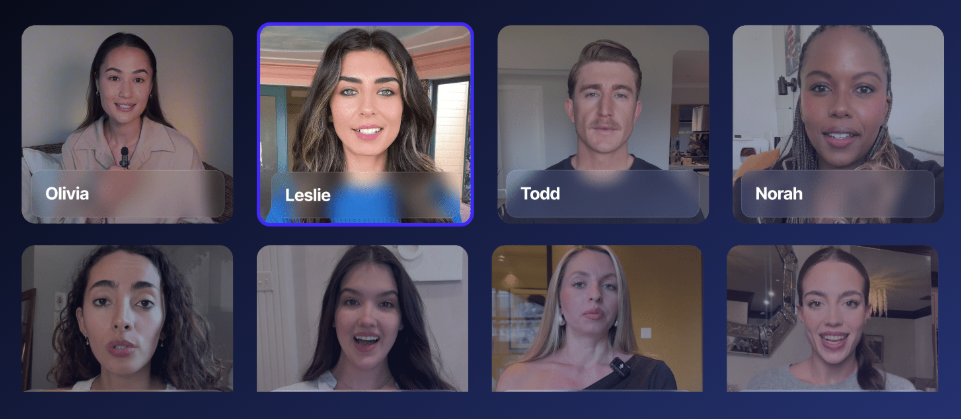
Performance advertising is the biggest driver by volume. Short-form ads on TikTok and Meta lean heavily on talking-head formats because a face explaining a product outperforms plain product footage for holding attention, and avatars let advertisers test dozens of presenter and script combinations without booking anyone. E-commerce teams push this further by automating the whole chain, using platforms thatturn product links into video ads with an avatar presenting details pulled straight from the listing, which makes per-SKU video viable across catalogs of hundreds of products.
Corporate training and internal comms form the second major cluster. Compliance modules, onboarding videos, and policy updates are exactly the kind of content that goes stale fast, and an avatar lets an HR team refresh a module without rebooking a presenter. Localization multiplies the value here, since one avatar can deliver the same training in dozens of languages with matched lip-sync, something research has linked to better comprehension than subtitled foreign-language video.
Beyond those, SaaS companies use avatars for product walkthroughs and changelog videos, real estate agents narrate listing tours, educators front online courses, and sales teams generate personalized video messages at a scale no human could film. The segments differ in what they optimize for. Advertisers want variety and testing volume, trainers want consistency and easy updates, and sales teams want personalization, but all three are buying the same underlying thing: video presence without production friction.
The Realism Question and the Rules Around Disclosure
The honest answer on realism is that it depends on format and length. In a 15 to 30 second vertical ad viewed on a phone, current avatars pass unnoticed for most viewers. In a five-minute widescreen video watched on a laptop, small tells accumulate, such as slightly repetitive gestures, overly even pacing, or hands that avoid complex movement. Brands that understand this match the tool to the format instead of forcing avatars into long-form content where a human still reads as warmer.
Viewer attitude matters as much as detection. Consumer research suggests audiences are broadly accepting of synthetic presenters in functional content like ads, tutorials, and announcements, but trust drops when avatars deliver emotionally weighted messages or when people feel deceived after the fact. That is one reason disclosure is becoming standard practice rather than a legal afterthought. Several ad platforms already require synthetic media labels for realistic human likenesses, the EU's AI transparency rules push in the same direction, and undisclosed use of a real person's likeness without consent is legally dangerous territory in most jurisdictions. The practical rule is simple. Use licensed or fully synthetic avatars, label where the platform requires it, and never clone a real person without written consent.
The decision worth thinking through is not whether avatars look real enough, since for short-form marketing content they already do. It is which parts of your brand's voice you are comfortable systematizing. A spokesperson, even a synthetic one, accumulates familiarity with your audience over time, so choosing an avatar is closer to a casting decision than a software setting. Pick one face and voice for your core channels, and treat swapping them as carefully as you would treat replacing a long-running human presenter.
