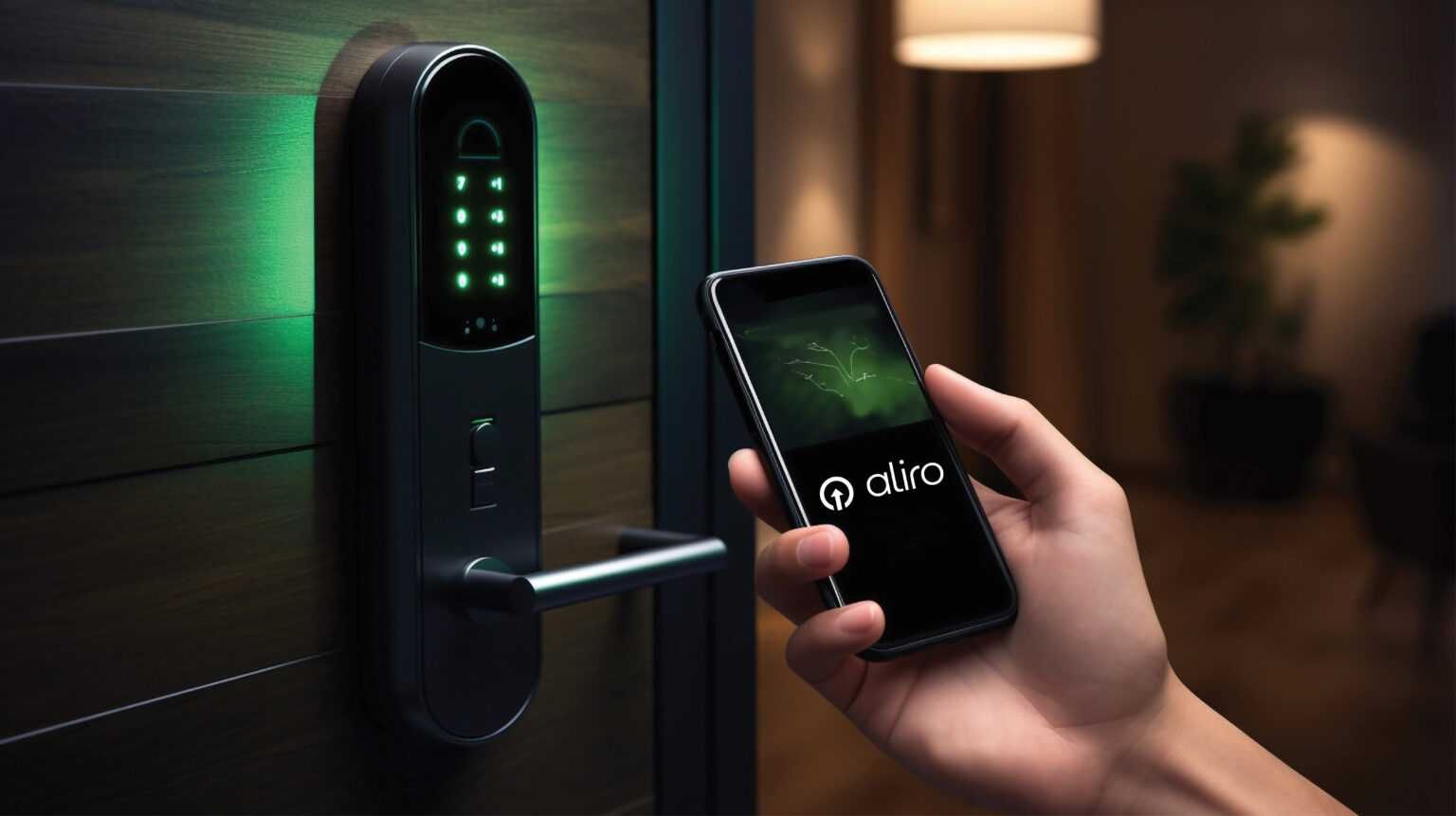
Aliro 1.0 Launches: The Open Digital Key Standard Set to Transform Access Control
Connectivity Standards Alliance has officially released Aliro 1.0, a new communication protocol and credential standard designed to transform how smartphones and wearables function as secure digital keys across homes, offices, campuses, hotels, and commercial buildings.
Built as an open, interoperable framework for digital credentials, Aliro aims to eliminate fragmentation in access control systems and create a unified layer that works across manufacturers, mobile wallets, and ecosystems.
Here’s everything you need to know about the Aliro 1.0 specification — how it works, why it matters, and what it means for the future of secure mobile access.
What Is Aliro 1.0?

Aliro 1.0 is described as:
“A new communication protocol and credential standard designed to revolutionize how users interact with access points in every aspect of their lives.”
While many consumers associate digital keys with smart locks, Aliro was designed for far broader impact. It supports use cases including:
- Corporate offices
- Universities
- Hospitality properties
- Single-family homes
- Multi-dwelling units (MDUs)
- Underground parking garages
- Elevators and network-limited environments
Rather than relying on proprietary systems or isolated mobile key apps, Aliro creates a standardized, wallet-native digital credential that can function seamlessly across multiple hardware vendors and properties.
Why the Access Control Industry Needed Aliro

For decades, physical access control has relied on proprietary cards, symmetric cryptography, and closed ecosystems. That fragmentation slowed innovation and forced system owners into vendor lock-in.
Tobin Richardson, President and CEO of the Connectivity Standards Alliance, explains:
“Aliro is solving the fragmentation that has held back digital key adoption, replacing it with a single interoperability standard built through Alliance Member collaboration. By connecting the access control industry directly to leading mobile wallet ecosystems, it delivers a secure, frictionless experience that goes well beyond the front door. Lower integration complexity means faster innovation and shorter time to market. This is how the future of access control gets built.”
In other words, Aliro is not just about replacing plastic cards — it is about creating a unified trust framework that enables mobile-first access across industries.
How Aliro 1.0 Works: Technical Overview
Aliro 1.0 establishes a secure communication framework built on asymmetric cryptography, ensuring trusted interactions between:
- Smartphones and wearables
- Access readers
- Credential management systems
The specification supports multiple communication transports to accommodate different environments and user experiences:
NFC (Near Field Communication)
Tap-to-access functionality for secure entry.
Bluetooth Low Energy (Bluetooth LE)
User-initiated, longer-range authentication.
Bluetooth LE + Ultra-Wideband (UWB)
Hands-free, proximity-based secure access.
Importantly, Aliro is designed to function even in environments without network connectivity — such as underground garages and elevators — ensuring reliability across commercial deployments.
Backed by Major Mobile Wallet Ecosystems

A key differentiator for Aliro is its confirmed alignment with leading wallet platforms, including:
- Apple
- Google LLC
- Samsung Electronics
By integrating with native mobile wallets, Aliro allows users to store secure credentials directly in the operating system environment they already use daily.
This reduces friction for consumers and enterprises alike and accelerates large-scale adoption.
Silicon and Security: The Foundation Beneath Aliro
Aliro is supported by major semiconductor companies that provide the secure hardware layer required for encrypted digital credentials.
Charles Dachs, Executive Vice President and General Manager, Secure Connected Edge at NXP Semiconductors, explains:
“NXP is at the forefront of enabling secure, hands free access to our homes and buildings, driven by our leadership in NFC, UWB, Bluetooth LE, and advanced security technologies. As a long-standing board member of the Connectivity Standards Alliance, our contributions to the Aliro standard are helping bring forward an interoperable foundation that delivers a more autonomous, hands-free access experience for consumers.”
By leveraging NFC, Bluetooth LE, and UWB — alongside modern cryptographic protections — Aliro ensures credentials are validated securely while enabling a seamless user experience.
A Major Shift for Commercial Real Estate

Aliro’s impact may be especially significant in commercial real estate and multi-tenant environments, where multiple credentials and legacy systems create security gaps.
Haniel Lynn, CEO of Kastle, notes:
“Commercial real estate has long faced fragmented access systems, multiple credentials, and too often, reliance on outdated proximity cards that create real security gaps. Aliro establishes a secure, interoperable standard that unifies base building and tenant access… This is a defining step toward a seamless, secure mobile experience across commercial real estate.”
By enabling vendor-independent interoperability, Aliro allows property owners to mix and match hardware and software without sacrificing compatibility.
Consumer Benefits: Interoperability and Future-Proof Access

For homeowners and renters, Aliro promises:
- One digital credential across properties
- Native wallet integration
- Stronger encryption than legacy cards
- Seamless interoperability across ecosystems
- Reduced dependence on proprietary apps
Jürgen Pansy, Co-Founder and Chief Innovation Officer at Nuki Home Solutions, highlights the importance of open standards:
“Users deserve seamless interoperability and future-proof technology, regardless of the ecosystem they choose. We are convinced that Aliro 1.0 will unlock the next era of secure, connected access.”
This interoperability aligns closely with broader smart home movements toward open standards and platform neutrality.
Certification and Ecosystem Scale

Aliro 1.0 includes a comprehensive certification program with authorized test labs and standardized test suites to ensure global interoperability. More than 220 Alliance Member companies contributed to the specification’s development, including lock manufacturers, silicon vendors, mobile platform leaders, and integrators.
This scale of collaboration significantly increases the likelihood of rapid ecosystem growth.
A Defining Industry Moment
Lee Odess, CEO of The Access Control Collective, captures the long-term significance:
“Aliro is not just a standard. It’s a forcing function. For four decades, our industry built proprietary access-control systems that served a fragmented market but ultimately left end users carrying the cost… This is the kind of industry moment that doesn’t announce itself loudly. It arrives quietly, becomes the assumption everyone works from, and ten years from now will feel inevitable.”
Aliro represents one of the most substantial architectural shifts in access control in decades — moving from proprietary symmetric credentials toward open, public-key cryptography and wallet-native digital credentials.
The Path Forward
The Connectivity Standards Alliance describes Aliro 1.0 as the foundation of a living standard, not a one-time effort. Future updates are expected to expand use cases, support secure key sharing enhancements, and maintain backward compatibility as the ecosystem evolves.
As Aliro-certified products begin reaching the market, consumers and enterprises alike will need to understand:
- Whether their devices support Aliro
- Whether firmware updates are available
- How Aliro integrates with existing smart home ecosystems
- What transport modes (NFC, BLE, UWB) their hardware supports
Final Thoughts
Aliro 1.0 marks a pivotal shift in how digital credentials are created, stored, validated, and deployed. Backed by major mobile wallet ecosystems, supported by leading silicon vendors, and embraced by commercial security leaders, Aliro is positioned to become the interoperable trust layer for universal digital access.
If the past decade unified smart home connectivity, the next decade may unify secure mobile credentials — and Aliro 1.0 is now at the center of that transformation.
Explore The GearBrain, our manual compatibility product find engine, to discover smart devices that work with your smartphone, Google Assistant, and Amazon Alexa-enabled devices. It’s a preview of what’s coming in GearBrain Assistant — our upcoming AI-powered tool that will make finding compatible smart devices even easier.
