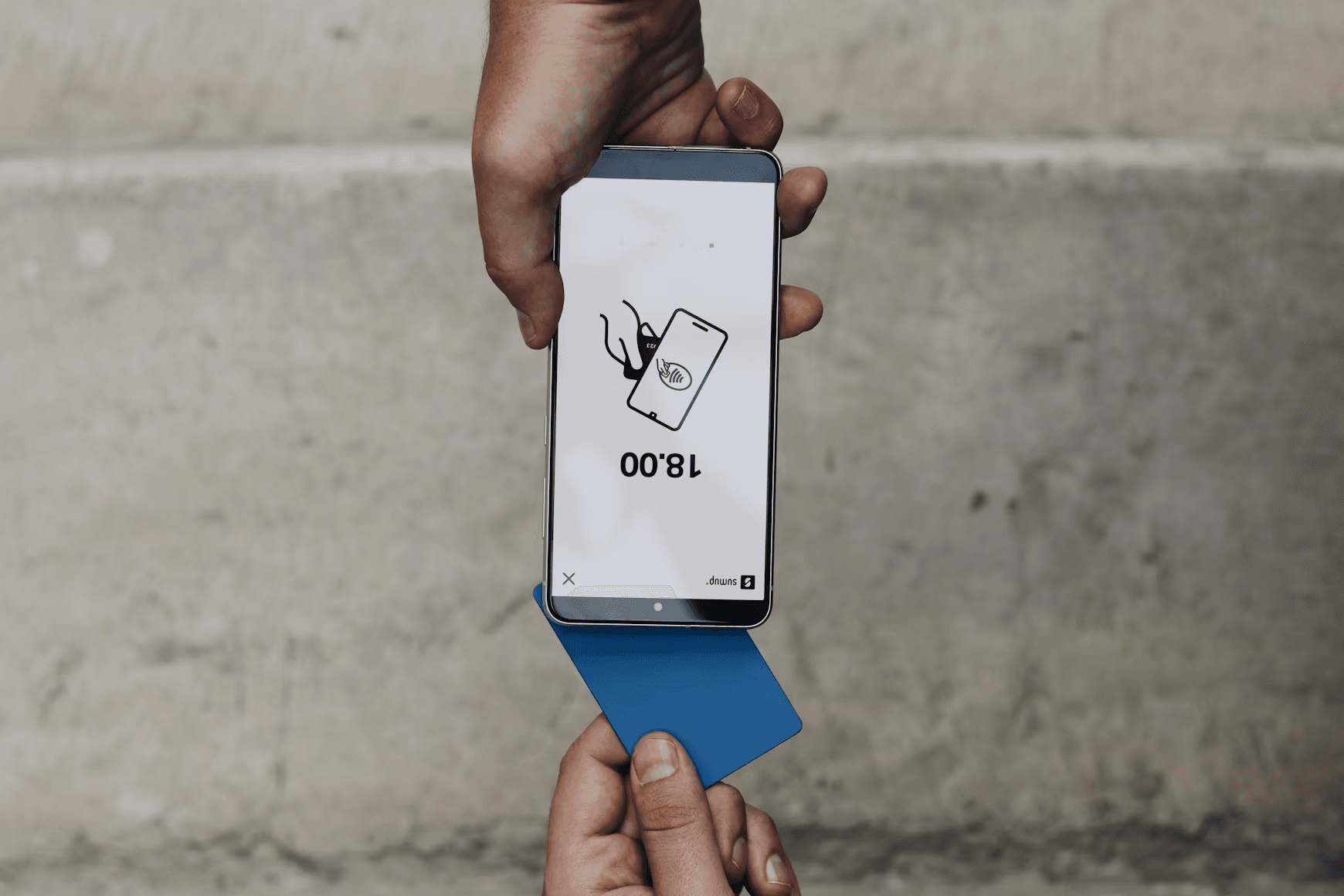
Cash Is Out, Contactless Is In: What the Shift Means for Your Security
The past decade's worth of payment statistics from the Federal Reserve reveal an understated yet steady trend. Credit cards made up 34 percent of consumer payments in the United States in 2025, up from 18 percent ten years earlier, while cash usage fell from 33 percent to 14 percent, according to the Pew Research Center's analysis of Federal Reserve data. Swiping your phone or card at the checkout counter is now second nature, and the wallet in your pocket is essentially just your smartphone.
However, this storyline can be easily misinterpreted. Cash doesn't disappear, and contactless payment isn't inherently less secure, but the nature of the risks is different.
Where the risk actually moved
Cash is associated with obvious risks. When a cash note is lost or stolen, you can't recover it through a bank or a third party like a credit card company or a mobile wallet provider. The danger associated with contactless payments is a bit different. The risk is that an intruder can access an account, and your task is to block access quickly enough.
The technology makes contactless payments more secure than one may expect. Each time a card is added to the phone wallet, the terminal never sees the actual card number. A device-specific token and a security code are generated for each transaction, so any information obtained during the transaction would be useless on other devices. The same goes for physical contactless cards, which contain a chip that generates a new cryptogram each time a payment is made. Near-field communication used for both methods works only within a few centimeters.
The Federal Reserve’s own research adds perspective. Its2026 Diary of Consumer Payment Choice findings show that payment behavior changes slowly. A consumer made an average of six cash payments a month in 2025, down from 14 in 2016. Cash is shrinking as a default, but it is still part of how people pay.
What goes wrong in a contactless routine

Weaknesses lie around the payment, not in the tap itself. The problem of a lost or stolen phone is the most obvious one, so a robust passcode, biometric lock, and the ability to remotely lock it, such as with Apple's Find My or Google's Find My Device, become crucial here, regardless of the payment settings. How to secure a smartphone article has covered all these settings before. The harder it is to unlock your wallet, the harder it is to use it for any malicious purposes.
The second weakness is the message that arrives before the payment. IC3, the FBI unit responsible for combating internet crime, has warned people about texts claiming an unpaid road toll to persuade them to use a payment site and reveal their credit card numbers. Any number entered on this website bypasses the tokenization mentioned above, since the thief isn't intercepting your tap; they simply ask for the number.
This brings us to timing. Funds are deducted from a debit account instantly, and the speed of your report affects how much you are protected. Under Regulation E, which governs debit cards and electronic funds, you are liable for up to $50 for any unauthorized transaction, as long as you report it within two business days of becoming aware of it. Liability increases to $500 if you report it more than two days after the statement date but within 60 days of the statement date. On the other hand, credit cards are covered under the Fair Credit Billing Act, which normally limits the liability to $50 and provides a formal procedure for disputes. Wallet payments rely on the underlying card, so they inherit its liability protections.
Habits that match how people pay now
Speed is the main advantage of a tap, so the best defenses are the fastest ones. Many online banking services now let customers receive instant transaction alerts, freeze a card from within the app, and set spending limits for certain payment types, although the exact controls vary by institution. Checking which of these your own bank offers, and switching on the ones that fit how you spend, turns a monthly statement review into a near real-time one.
A couple more habits account for the rest:
- Watch for new and small charges on statements, since test transactions usually start small.
- Don't click links in texts or emails; go directly to the merchant's app or enter their web address.
- Review the list of cards in each wallet app and delete any cards you no longer need.
- Use the Consumer Financial Protection Bureau's complaint mechanism if a dispute with your bank doesn't resolve the issue.
It also makes sense to keep a cash cushion. According to a Federal Reserve study, 45% of consumers kept money outside banks for savings or emergencies, with average store-of-value amounts of $364 in 2025. This is a pragmatic view for most families: electronic payments are convenient, and it doesn't cost much to keep some physical cash.
A cashless society is a reality, but it alters the risk more than it increases it. Tokenization protects the payment itself, and what remains is a matter of your mobile device's security, your awareness of scams, and how quickly you spot them.
For readers who want to go further than payment settings, the devices around the wallet deserve the same attention. Phones, smartwatches, and connected accessories now hold payment credentials alongside everything else people carry, and each one has its own lock, update, and recovery options. A practical guide on how toprotect your privacy and data in an Internet of Things world is a useful next step for tightening that wider setup, so that a tap at the register is backed by devices that are just as well secured.
