LambdaTest's Transition to TestMu AI: A 5-Minute Recap
If you have been hearing about LambdaTest transitioning to TestMu AI and want the short version before reading any of the longer explainers, this is it. The piece is structured to be read in roughly five minutes and to leave you with a complete picture of what happened, why it happened, and what it means for you.
On January 12, 2026, LambdaTest officially announced its transition to TestMu AI. The new name reflects the company's evolution from a cloud-based testing platform into what it now calls the world's first full-stack Agentic AI Quality Engineering platform. The headquarters, the team, the legal entity, and the underlying product are all the same. The identity, positioning, and the roadmap's next chapter are new.
The Short Version
LambdaTest, founded in 2018, became one of the most widely used automation clouds in the world over its first seven years, running cross-browser tests for more than 2.8 million users in over 90 countries.
Starting in 2022, the company began rearchitecting its platform around AI and what is now called agentic AI - software systems where AI agents autonomously plan, execute, and adapt their behavior to accomplish goals.
By 2026, the platform had become primarily about autonomous agents rather than browser grids, so the company transitioned. TestMu AI is the new name. The old LambdaTest brand is being retired, but everything underneath it continues to operate normally.
If you are an existing customer, partner, or community member, the transition is designed to be seamless. You do not need to migrate, change credentials, or update integrations. You do need to whitelist the testmuai.com domain so future emails reach your inbox.

What Changed
- The name: LambdaTest is now TestMu AI. References to the old name will be phased out over the coming months, but contracts, invoices, and legal documents will continue to reference LambdaTest Inc., which remains the legal entity.
- The website: The new home is testmuai.com. The old lambdatest.com domain will continue to work during the transition. Both will point to the same product.
- The visual identity: There is a new logo and a refreshed visual system designed to reflect an AI-native future. The internal product UI is being updated incrementally rather than all at once.
- The positioning: The company now positions itself primarily as an agentic quality engineering platform rather than an automation testing platform. The cloud is still there - it is the substrate on which the agents run - but the message has shifted.
- The product narrative: Concepts such as vibe testing, autonomous AI agents for testing, and an agentic AI test cloud are now central to how the platform is described. These were available before the transition but were not framed as the main story.
What Did Not Change
- The legal entity: The company is still LambdaTest Inc. All contracts, MSAs, NDAs, billing agreements, and SLAs continue without modification.
- Your account. Logins, passwords, account names, API keys, and webhooks continue to work. Nothing on your side needs to be updated for authentication.
- Your integrations: CI/CD pipelines, Slack notifications, Jira sync, GitHub Actions, and any other integrations you have configured remain functional. Whitelisted IP addresses and product domains are unchanged.
- Your team: The people you interact with - account managers, support engineers, customer success contacts - remain the same. Their email signatures and reply-to addresses are migrating to TestMu AI, but the humans are unchanged.
- Your test suites: Tests written for the LambdaTest platform continue to run on TestMu AI. There is no migration project required.
- Pricing: Existing pricing tiers and commercial terms continue as agreed in your contract. New pricing for agentic capabilities, where applicable, will be communicated through normal account channels.
Why did the transition happen
The simplest explanation is that the platform outgrew its name. LambdaTest was a name born of the cloud testing era, when the defining capability was running tests across many browsers in parallel. That capability is now table stakes. The new differentiator is autonomous agents that plan, author, execute, and analyze tests with minimal human intervention.
The company started building that agentic capability in 2022 - earlier than most of the testing industry - and by 2026, it had become the primary value proposition. A name change was needed to signal the shift to the market and to give the new positioning room to breathe.
Why TestMu
The name TestMu comes from the TestMu Conference, which the company has hosted annually since 2022. The conference grew into one of the industry's primary forums for discussions about AI and quality engineering. Attendees and speakers had already associated the name with the future of testing well before the transition was announced.
There is also a small piece of alphabet symbolism. Mu is the Greek letter that follows Lambda in both the Greek and English alphabet sequences. Framing the transition as Lambda to Mu makes the transition feel like a natural next step rather than a wholesale pivot.
What TestMu AI Actually Does Now

TestMu AI organizes its product around two main pillars.
The first is Autonomous AI Agents for Testing. These agents can plan, author, and evolve end-to-end tests using context from your codebase and natural-language prompts. They cover database, API, UI, and performance layers. The promise is that you describe the behavior you want verified, and the agents do the rest.
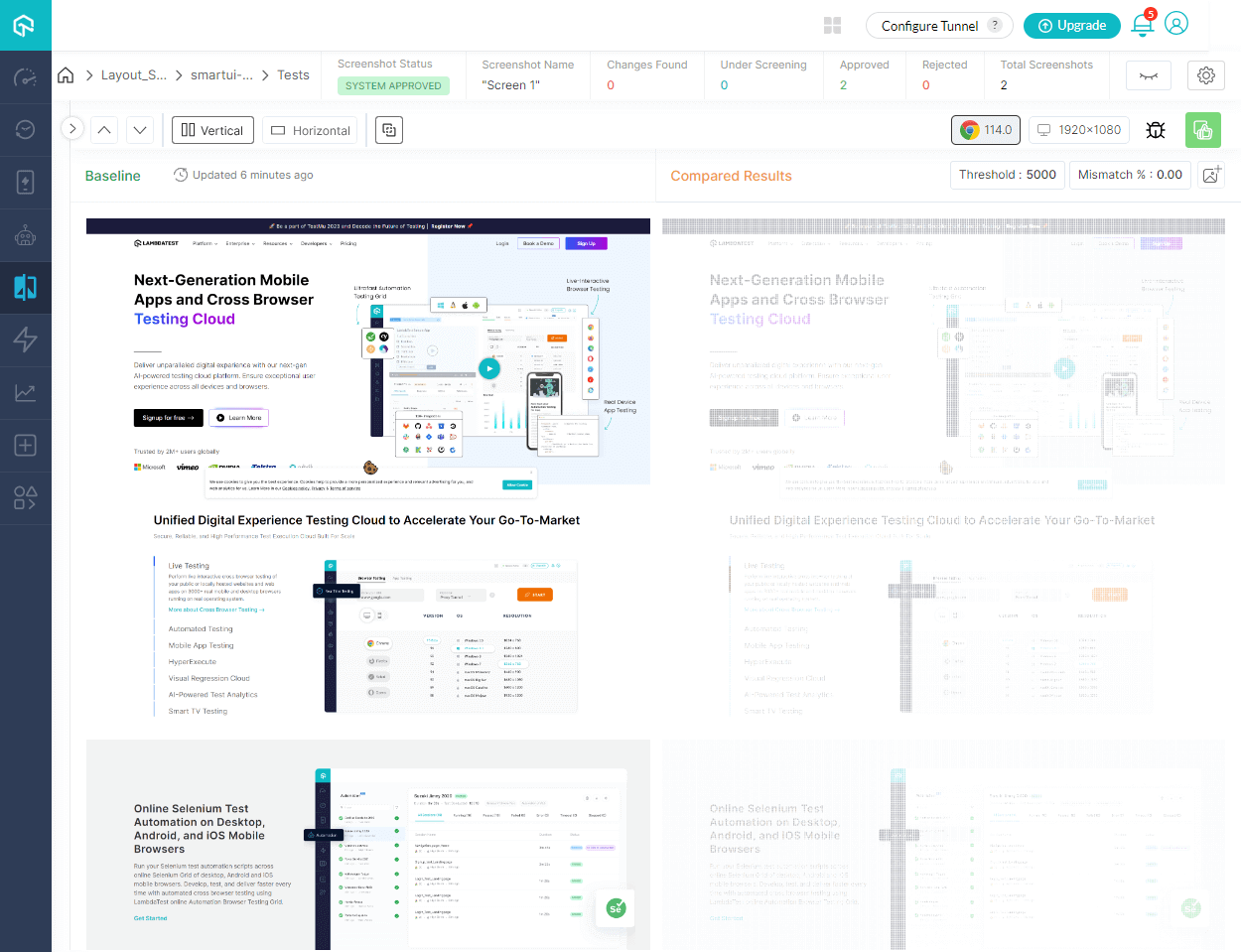
The second is the Agentic AI Test Cloud. This is the unified execution platform that actually runs the tests. It handles visual regression, accessibility, API, performance, web, mobile, and custom enterprise environments at scale, across real devices and real browsers.
Together, these pillars are designed to keep up with what TestMu AI calls infinite code - the rapidly increasing volume of code being generated by AI assistants, which would overwhelm traditional QA capacity if not matched by equally scalable testing automation.
The Numbers Worth Knowing
Over 2.8 million users worldwide. More than 18,000 enterprise customers, including Microsoft, OpenAI, NVIDIA, Vimeo, and Dunlem. Over 1.5 billion tests are executed annually. Operations in more than 90 countries. Average year-on-year growth has been around 110 percent for the past two years. Inclusion in the 2025 Gartner Magic Quadrant for AI-Augmented Software Testing Tools and The Forrester Wave: Autonomous Testing Platforms 2025 report.
These figures are the backdrop against which the transition should be understood. TestMu AI is not a startup making a play for the agentic testing category. It is the established leader of the previous category, making the case that the category itself has evolved.
A Timeline at a Glance
Two thousand eighteen marked the founding of LambdaTest with a focus on cloud-based cross-browser and cross-device testing. Adoption grew rapidly across CI-using engineering teams.
Between 2019 and 2021, the platform expanded beyond browser testing to cover visual regression, accessibility, API, and performance testing, evolving into a full quality lifecycle platform.
Two thousand twenty-two marked the inflection point. The team began the architectural transformation toward agentic AI and launched the first TestMu Conference, which would grow into a major industry forum.
Between 2023 and 2025, the platform added AI-assisted test generation, self-healing locators, intelligent failure analysis, visual AI, and the early forms of autonomous agent capabilities. Customer count and test execution volume scaled accordingly.
January 2026 marked the transition to TestMu AI, officially aligning the company name with the agentic-era platform built under the LambdaTest brand.
What You Should Do
If you are a customer, whitelist the testmuai.com domain in your email system to continue receiving product updates and important notices. Update internal documentation that references LambdaTest at your convenience - there is no deadline. Familiarize yourself with the agentic capabilities; if you have not explored them yet, this is a good moment.
If you are a partner, the partnership terms continue unchanged. Updated co-marketing assets are being shared through your partner contact. Your existing integration certifications, joint marketing agreements, and reseller arrangements remain unchanged.
If you are a community member, all programs, initiatives, and collaborations continue uninterrupted. The team you have been working with is the same. If you would like to help spread the word, the company is sharing social assets and sample copy through community channels.
If you are simply curious, visit testmuai.com for the full announcement, watch the video from CEO Asad Khan explaining the vision, and read the blog post detailing the technical evolution.
The Bottom Line
LambdaTest did not disappear, get acquired, or pivot to a different business. It transitioned to reflect a four-year-long evolution that turned a cloud testing platform into an agentic quality engineering platform. TestMu AI is the new name, but everything that made LambdaTest valuable - the scale, the reliability, the team, the community - is intact.
For most users, the transition will be a footnote in their experience of the product. The login screen will look slightly different, the URLs will gradually update, and the marketing will tell a new story. But the tests will keep running, the integrations will keep working, and the platform will continue doing what it has always done - just with a name that now matches what it has become.
