The Tech Behind Cinematic Event Experiences: Lighting, Effects, and Automation
Ever walked into an event and felt like the room changed its personality the moment the lights dropped? Not gradually. Instantly.
One second, it’s just a hall with people shifting around, talking over each other.
The next, haze rolls in, light beams cut through the air like they have weight, and everything feels staged in a way your brain can’t ignore.
According to Freeman's research, 91% of attendees say live experiences create a stronger emotional connection than digital ones. That number makes sense when you’ve stood inside a perfectly timed drop, where sound, light, and movement hit at once.
And that’s what we’re getting into here — how lighting, effects, and automation quietly build those cinematic moments from the inside out.
Lighting Isn’t Just Illumination Anymore
A decade ago, event lighting was mostly used to ensure people could see the stage clearly.
Now it shapes emotion.
The global stage lighting market exceeded $3 billion recently, according to Grand View Research, and you can understand why the second you step into a modern concert venue or high-end wedding reception.
Lighting designers don’t just “light” rooms anymore. They sculpt tension, movement, even intimacy. You’ve noticed it too, probably.
Cool blue lighting creates distance and tension, while warm amber tones soften the atmosphere almost immediately. Then there are those sudden white flashes, perfectly synced with the music. Sharp. Aggressive. Impossible to ignore.
And haze matters more than most people realize.
Without atmospheric haze floating through the room, those dramatic light beams disappear entirely. The particles in the air catch and reflect the light toward the audience, creating those visible shafts stretching over crowds. Tiny detail. Massive difference.
The Psychology Hidden Inside Color and Motion

Research shows that red tones can increase alertness and emotional intensity. Event designers lean into that instinctively, especially during high-energy moments.
Movement affects us just as much.
Fast-moving lights create excitement partly because the brain reacts instinctively to motion. Slow sweeps feel emotional and cinematic. Rapid flashes build adrenaline. It’s similar to film editing in a weird way — pacing changes how your body responds before your mind catches up.
Still, balance matters.
Too much movement becomes exhausting fast. Some productions overdo it, throwing lights everywhere until the whole room feels like visual static.
You leave with a headache instead of a memory.
The Tech Behind Cinematic Event Experiences
Live productions feel effortless when they’re done right. That illusion takes a ridiculous amount of technology working quietly in the background.
Event controllers create cinematic experiences using:
1. Lighting Systems That Behave Like Performers
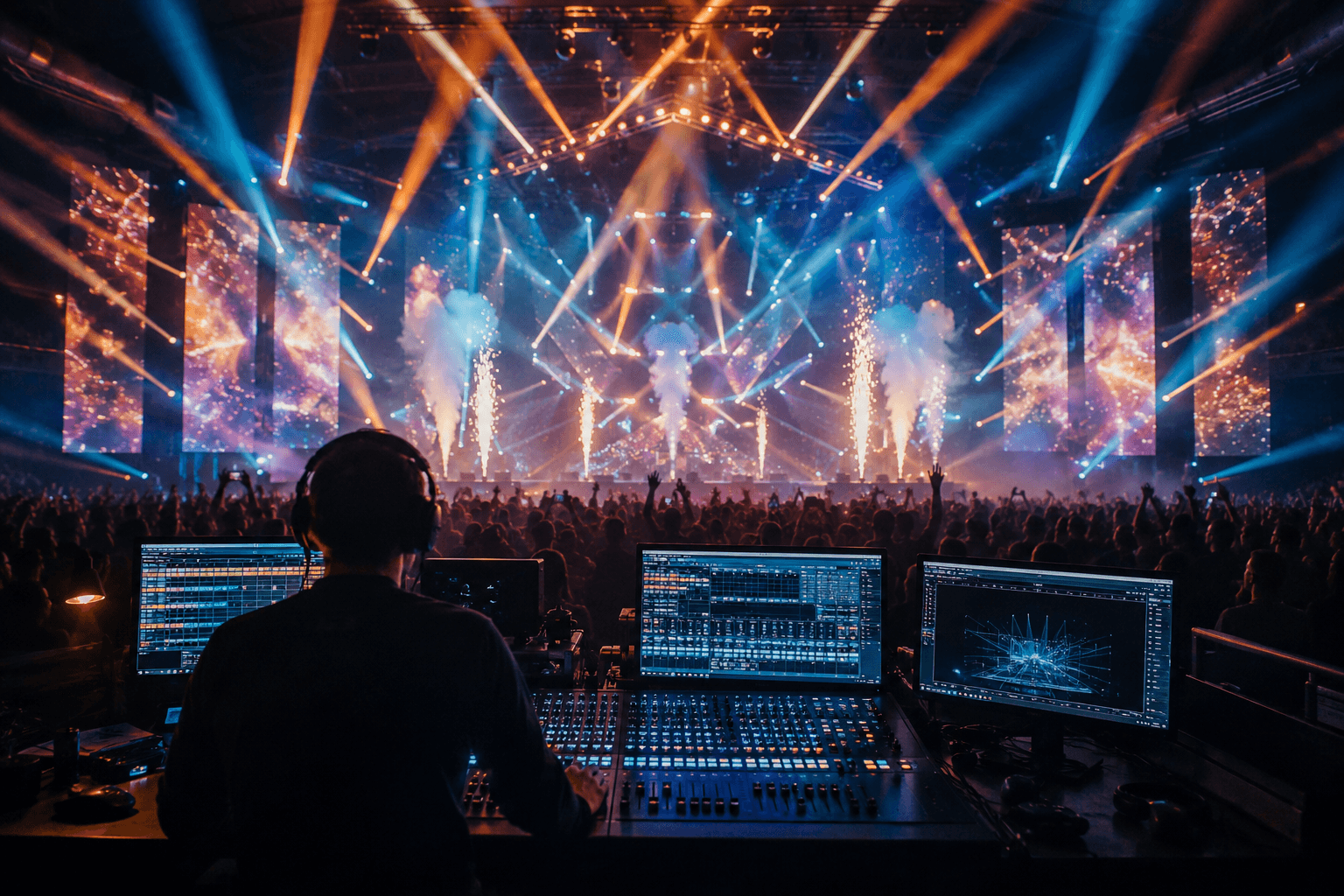
Modern intelligent fixtures can pan, tilt, zoom, and change color in milliseconds using DMX-controlled systems linked to centralized software. Lighting operators now essentially choreograph entire environments rather than simply “lighting a stage.”
That precision matters more than people realize.
One cue delayed by half a second can weaken the emotional timing of a concert drop or stage reveal. Tiny mistake. Huge difference.
2. Effects That Hit Crowds Emotionally
A crowd reacts differently to practical effects than digital screens. You can test it yourself.
LED walls look impressive, sure. But confetti cannons or cold spark fountains hit people in the gut. There’s movement, sound, and texture. The air changes.
Companies like Surge FX Special Effects & Lighting build entire event environments around that idea, combining cold sparks, dancing-on-cloud effects, intelligent lighting, low-lying fog, and synchronized visual moments for weddings, concerts, and corporate productions.
What stands out is how tightly these effects are timed with sound and lighting — not as add-ons, but as part of the same emotional script.
You feel it before you think about it.
3. Software That Quietly Controls Everything
This part rarely gets attention, yet it holds entire productions together.
Automation software now synchronizes lighting, sound, lasers, video walls, and effects through centralized show-control systems.
According to Allied Market Research, the global live events industry could surpass $1 trillion within the next decade, driven heavily by advances in production technology and event automation. One cue can trigger dozens of actions simultaneously.
Lights cut black. Sparks erupt. Music drops. Fog rolls across the stage at the exact right second. Audiences experience it emotionally, almost instinctively, while technicians backstage track timing to the millisecond. That precision creates immersion that people remember for years.
What Audiences Feel — Even If They Don’t Realize It


Most people leave events talking about moments, not machinery.
They remember the silence before the reveal. The warmth of the lights during the first dance. The strange electricity in a crowd right before a concert opener appears onstage.
Human memory clings to atmosphere more than technical details. Maybe that’s why live experiences still matter so much in a world buried in screens.
Where the Magic Actually Lives
The funny thing about cinematic event technology is that the best productions make the technology disappear completely.
Nobody applauds perfectly synchronized automation software or lighting protocols. They react to feeling. Awe. Tension. Relief. Excitement.
And somewhere behind the curtains, surrounded by cables, glowing monitors, and half-drunk coffee gone cold hours ago, a crew of exhausted technicians quietly builds those emotional moments piece by piece — hoping nobody notices the machinery at all.
