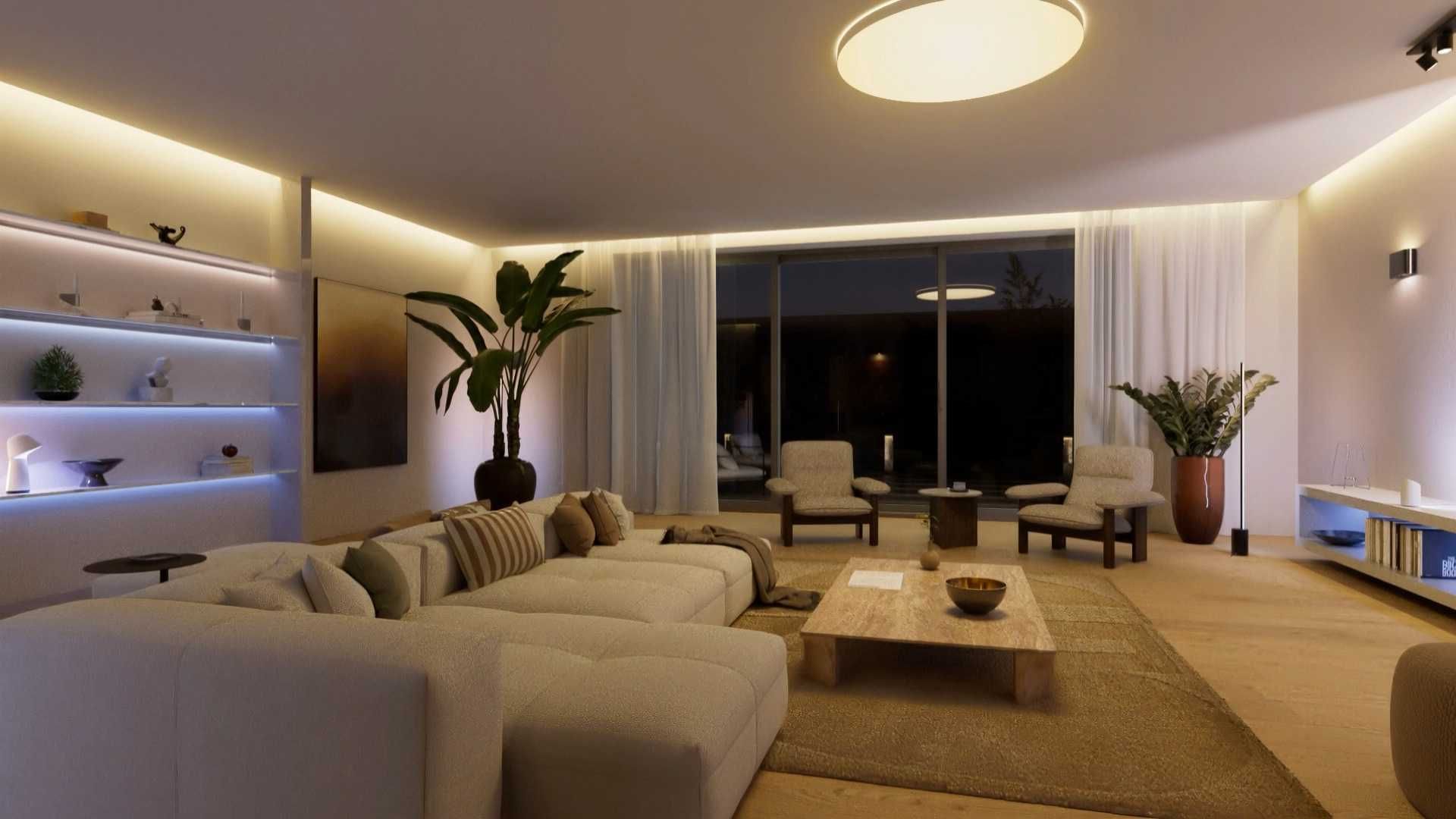
Philips Hue SpatialAware: How Smart Lighting Finally Understands Your Space
At CES 2026, Philips Hue didn’t just show off new lights — it showed us a new way lighting can understand space. The company unveiled Hue SpatialAware, a major leap forward in intelligent lighting that transforms how scenes are created, experienced, and personalized inside real homes.
Rather than applying effects to individual bulbs, Hue SpatialAware analyzes your room layout and the physical placement of each Philips Hue light, then intelligently distributes light scenes so they feel natural, immersive, and intentionally designed — as if a professional lighting designer mapped your home.
For anyone who has ever felt that smart lighting scenes looked “cool” but not quite realistic, this update changes everything.
What Is Philips Hue SpatialAware?

Hue SpatialAware is a new Philips Hue feature that understands your space. It uses a spatial algorithm to distribute light scenes across all the Philips Hue lights in a room so they work together in harmony.
“This feature analyzes the layout of your room and the placement of your Philips Hue lights to create the optimal lighting experience tailored to your unique environment. It’s like having a lighting designer in your pocket, allowing you to experience light scenes like never before.”
Until now, smart lighting scenes were largely position-agnostic. A sunset scene might look beautiful on one lamp but feel random when applied across an entire room. Hue SpatialAware changes that by making light spatially aware.
How Hue SpatialAware Works
Step 1: Scan Your Room Using AR
The setup process is designed to be simple and guided entirely through the Philips Hue app.
Using Augmented Reality (AR), the camera on your smartphone or tablet scans your room and detects the position of each Hue light. This creates a spatial model of the room, including the distance, orientation, and relative placement of fixtures.
“Simply scan your room, and voila!”
Step 2: Intelligent Scene Distribution
Once the room is scanned, Hue SpatialAware uses an algorithm to distribute light scenes intentionally across the room. Instead of assigning random colors to lights, the system understands:
- Which lights are near windows
- Which are overhead vs. accent lights
- Which are positioned on opposite sides of the room
This allows scenes to feel directional, layered, and realistic.
Step 3: Dynamic Updates as Your Space Changes
Add new lights later? No problem.
After setup, you can rescan your room at any time. The spatial model updates automatically and incorporates new lights based on their positions, without requiring a rebuild of scenes from scratch.
Why Hue SpatialAware Is a Big Deal
Currently, when using preset scenes from the Scene Gallery, colors are assigned without regard to their relative positions. That’s fine for basic effects, but it limits realism.
“With Hue SpatialAware scenes, colors are distributed intentionally across all the lights in the room to create the most natural representation.”
This shift moves Philips Hue from smart lighting effects to spatial lighting intelligence — a foundational change.
As John Smith, Business Leader for Philips Hue at Signify, explains:
“This feature is a leap forward in intelligent home lighting design, moving beyond effects applied to individual products to lighting that adapts to your personal space. All Philips Hue light scenes are designed for spaces where people live, and this new feature offers an even more cohesive experience, transforming the smart home into a truly intelligent home.”
Experiencing Nature-Inspired Light Scenes Like Never Before
Hue SpatialAware truly shines with nature-inspired scenes, which are designed to mimic how light behaves in the real world.
Compatible scenes include:
- Lake mist
- Mountain breeze
- Savanna sunset
- Lake placid
For example, in a sunset scene:
- Lamps on one side of the room emit warm yellow tones to mimic the setting sun
- Ceiling lights on the opposite side shift into darker, cooler shades
The result is lighting that feels immersive, dynamic, and emotionally accurate, rather than decorative.
“Hue SpatialAware scenes enable you to bring nature into your home, recreating natural light settings with remarkable realism by understanding the position of each light.”
Compatibility and Requirements
- Available to Bridge Pro users
- Works with approximately half of the remastered scenes in the Scene Gallery at launch
- Designed primarily for multi-light rooms where spatial awareness delivers the biggest impact
Once released, users can choose between:
- Applying an optimized SpatialAware scene
- Reverting to the current (non-spatial) scene mode
This flexibility ensures backward compatibility while unlocking a more advanced experience.
A Smarter Hue Ecosystem: Additional CES 2026 Announcements
Hue SpatialAware was the headline feature, but Philips Hue also announced several ecosystem upgrades that further strengthen its smart home platform.
Apple Home Support for Hue Secure
Coming in Q1 2026, Philips Hue Secure devices will work seamlessly with Apple Home, including:
- Wired Hue Secure cameras
- Hue Secure video doorbell
- Hue contact sensors
Users will be able to:
- Stream live video in Picture-in-Picture (PiP) on Apple TV
- Receive real-time alerts via the Apple Home app
Multi-Bridge Migration to Bridge Pro
Users installing a Bridge Pro can now migrate multiple Bridges, either all at once or over time. The only limit is the capacity of the Bridge Pro itself — a major win for larger homes and power users.
AI Assistant Gets Smarter
Philips Hue’s AI assistant can now:
- Create automations from natural language requests
- Example: “Wake me up at 6:45 am every day except Wednesdays.”
- Support more languages, including Dutch, German, and Spanish
- Provide troubleshooting assistance when needed
Improved Rooms and Zones Visualization
Automations and accessories are now shown directly within the Rooms and Zones they control, making it easier to:
- Adjust bedroom wake-up routines
- Set kitchen light timers
- Personalize layouts by rearranging content visually
Availability Timeline
- Hue SpatialAware – Available Spring 2026
- Expanded Apple HomeKit support – Q1 2026
- Multi-Bridge migration support – Available now
- AI assistant automations – Available now
- New AI assistant languages & troubleshooting – Q1 2026
- Improved Hue app visualization – Q1 2026
Why Hue SpatialAware Matters for the Smart Home
Philips Hue SpatialAware represents a broader shift happening across the smart home: context-aware intelligence.
Instead of asking users to adapt to technology, the technology adapts to how people actually live — how rooms are shaped, how light moves, and how ambiance is experienced.
For smart home platforms like GearBrain Assistant, this kind of spatial intelligence is exactly what enables better recommendations, compatibility insights, and more human-centric automation.
Hue SpatialAware doesn’t just make lighting smarter — it makes it feel right.
And after seeing it firsthand at CES 2026, it’s clear this is one of the most meaningful lighting innovations Philips Hue has introduced in years.
