Ring Drone Cam Buying Guide: Should Your Next Indoor Camera Fly?
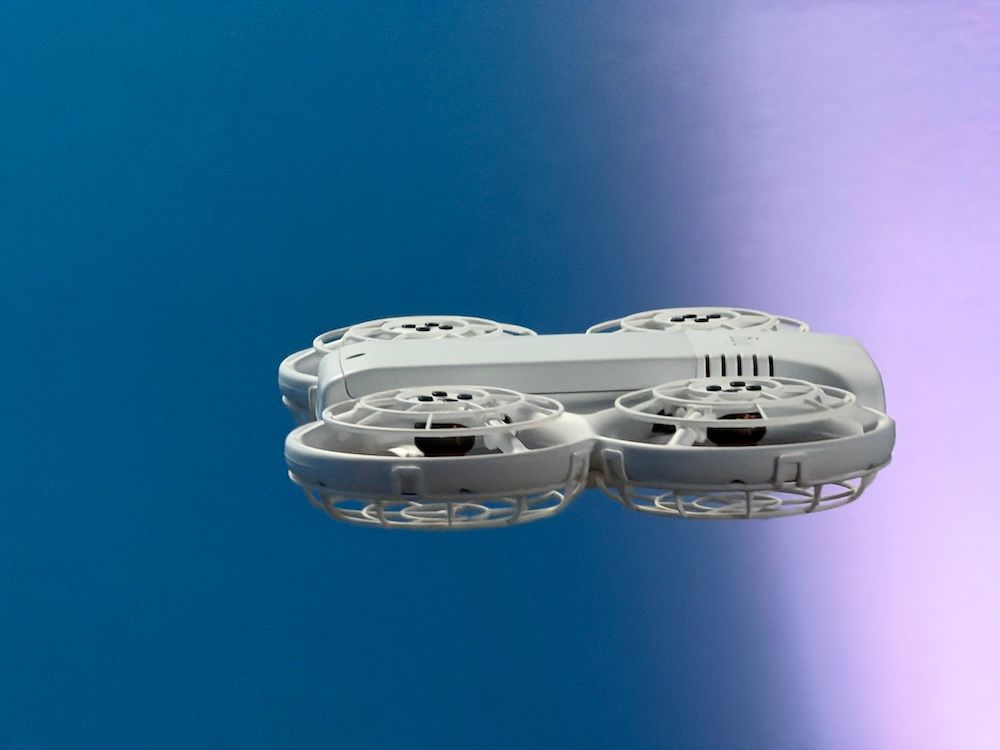
You receive a door sensor alert while away from home, but your nearest camera cannot show what happened. Installing another camera is one option. Ring’s new approach is to send a camera to the location. At a November 9 first-look event in New York City, GearBrain heard Ring founder and Chief Inventor Jamie Siminoff explain how the new Ring Drone Cam is designed to bring a live view to places a fixed camera cannot see.
The flying indoor camera is one of the first two products under Ring Robotics, alongside the business-focused Ring Rover Cam. Drone Cam’s proposition is especially interesting for households that want occasional visibility in several rooms without permanently mounting a camera in each one.
GearBrain Quick Take: Who should consider Ring Drone Cam?

Ring Drone Cam is worth watching if you already use Ring and want on-demand views or automated inspections of accessible indoor areas. Its announced $249.99 price makes the concept approachable, but buyers should first confirm safe routes, reliable connectivity, subscription requirements, and comfort with a visibly and audibly active camera.
Ring Drone Cam is priced at $249.99, with U.S. shipping scheduled to begin January 27, 2027. Customers can now preorder through Amazon or sign up for email updates from Ring's site. Ring’s original announcement noted that required FCC authorization was still pending; check the product listing for current availability, regulatory disclosures, and estimated delivery dates before ordering.
Ring plans U.S. shipping for January 27, 2027. However, the announcement states that Drone Cam has not yet received required FCC authorization and cannot be offered for sale or lease until that authorization is obtained. The current call to action is an email-update signup, rather than a purchase recommendation.
This guide is based on Ring’s announcement and GearBrain’s attendance at its NYC briefing. We have not independently tested flight safety, navigation, video quality, or response reliability in a home.
Key takeaways
- Drone Cam captures 2K video with a 148-degree field of view and can rotate 360 degrees for a room view.
- Custom routes support on-demand flights, scheduled patrols, and investigations following connected Ring alerts.
- AI Pilot combines vision, sensors, and cloud processing to map and navigate the home.
- Two LED lights support video in low light; the camera is off while the drone is docked.
- Scheduled flights require a compatible Ring Protect plan. Qualifying plan details and prices were not provided in the supplied materials.
What is Ring Robotics?
Ring Robotics is Ring’s new category of autonomous mobile security. Its devices are designed to patrol, investigate disturbances, and respond to connected security equipment rather than staying in one mounted position.
The first two products divide that mission by environment. Ring Drone Cam flies indoors to check areas of a home. Ring Rover Cam travels on wheels and is designed for businesses, with up to 4K video, an adjustable periscope camera, two-way audio, a light tower, and a siren. Rover’s announced price is $999.99, with U.S. shipping scheduled for December 16, 2026.
Both use AI Pilot, a custom system built from cameras, specialized vision models, sensors, and cloud processing. Ring says it creates a floor plan, identifies rooms, suggests patrol points, and navigates around obstacles. Owners can customize those points for the areas that matter most.
The underlying idea is useful: an alert could prompt a closer look, even when the nearest fixed camera has the wrong viewing angle.
Ring Drone Cam specifications at a glance
| Feature | Announced detail |
|---|---|
| U.S. price | $249.99 |
| Planned shipping | January 27, 2027, subject to required authorization |
| Intended environment | Indoors |
| Video | 2K |
| Field of view | 148 degrees |
| Rotation | 360 degrees |
| Low-light lighting | Two built-in LED lights |
| Navigation | AI Pilot; mapped space and preset patrol points |
| Flight controls | Custom routes, on-demand deployment, scheduled flights |
| Automatic response | Investigates triggers from connected Ring cameras, sensors, or alarms |
| Weight | 165 grams, according to Siminoff’s presentation |
| Charging | Approximately eight minutes of charging per minute of flight, according to the presentation |
| Multiple floors | Upstairs flight described at the briefing; home-specific suitability needs confirmation |
| Connectivity loss | Stops and lands, according to Siminoff |
| Dock privacy | Powers down with camera off |
| Video protection | Throw Away the Key Encryption, or TAKE |
| Map integration | New Alexa Home Map control |
| Subscription | Compatible Ring Protect plan required for scheduled flights |
The supplied materials did not specify maximum flight duration per charge, supported Wi-Fi bands, minimum route clearances, or detailed third-party compatibility. Charging estimates do not establish total flight endurance.
Why did Ring’s flying camera take so long?
At the briefing, Siminoff said work began on the home-drone concept in 2016, before Amazon acquired Ring. Earlier versions approached release but did not meet the company’s consumer-reliability goals, including another near-launch effort in 2025.
He described a difficult engineering cycle. More sensors and computing power helped address unusual situations, but they also needed more energy. Larger batteries added weight, while protective motor shrouds reduced airflow. Solving one problem made reliable flight harder elsewhere.
The breakthrough, according to Siminoff, was moving most of the intelligence into the cloud. That reduced the onboard computing burden and helped bring the drone’s weight down to 165 grams. He described onboard functions as handling the camera stream and safe landing, with cloud processing providing navigation intelligence.
That history explains the product’s design, but it also identifies a buying consideration: dependable connectivity is central to the experience. A lightweight drone does not eliminate the need to assess the network along every intended route.
How do mapping, routes, and automatic response work?
Ring says setup begins by carrying Drone Cam through the space. AI Pilot turns what the camera sees into a floor plan and suggests patrol points. You can customize those points, define routes, and send the drone out on demand.
When a flight begins, AI Pilot plans a route to a preset point and navigates around obstacles. Automatic incident response can dispatch the drone to previously configured points when a connected Ring camera, sensor, or alarm triggers.
For example, a door contact alert could prompt an indoor view of the entry area, helping you assess whether someone entered. A scheduled flight could provide a routine check while you are away. These are announced workflows; GearBrain has not yet measured dispatch speed, obstacle handling, or how consistently the drone reaches its destination.
Siminoff also described upstairs flight. That could help in a multi-level home, but it shouldn't be read as a guarantee that every staircase or floor plan is supported. Closed doors still restrict access to rooms, and a moving camera only shows the area it is viewing at that time.
GearBrain buying advice: Choose the locations you need to inspect before choosing the robot. A route is valuable only if it reaches a viewpoint that answers your question.
What happens if connectivity fails?
According to Siminoff, Drone Cam stops and lands if connectivity is lost. He also said customers must ensure the drone can land anywhere along its routes.
That makes route planning more than drawing a path between rooms. Assess the surfaces beneath the flight path, keep the route suitable for landing, and confirm Ring’s final guidance for pets, children, furniture, and other household conditions. Safe landing is a fallback, not a promise that a patrol continues without internet access.
The charging ratio also matters. At roughly eight minutes of charging per minute of flight, the product is best understood as a camera for targeted checks rather than a continuously airborne patrol. Total flight time per full charge was not stated in the supplied notes.
How does Alexa Home Map fit in?

At the presentation, Siminoff described an updated, more photorealistic Alexa Home Map scheduled for December 16, 2026. The map provides a visual representation of the home, with the drone’s position and path shown alongside the live camera view.
His example involved selecting an area associated with a sensor alert and sending the drone to investigate. A room-based map could make that process easier than searching a long list of device names.
The announcement confirms control from the new Alexa Home Map, but the supplied materials do not establish all supported screens, phone requirements, or additional service costs for this specific integration. Do not assume an Echo Show purchase is mandatory, or that every third-party sensor shown in Alexa can trigger a Drone Cam flight.
Will Drone Cam work with your existing smart home?
| Existing equipment or expectations | What buyers should check |
|---|---|
| Ring cameras, doorbells, sensors, and alarms | Exact supported models, trigger types, and setup requirements |
| Alexa Home Map | Availability, supported control devices, and any subscription requirements |
| Third-party leak, heat, or contact sensors | Whether the specific device supports the desired Ring response |
| Apple Home, Google Home, or SmartThings | Support is not established in the supplied announcement |
| Matter or Thread devices | No Matter or Thread support for Drone Cam is established here |
| Existing home Wi-Fi | Reliable connectivity throughout mapped flight routes |
A Ring integration is more specific than a general smart-home connection. Check the complete sequence: which device raises the alert, which service receives it, and whether Drone Cam can respond to it. GearBrain’s compatibility platform can help you research your existing equipment, with exact Robotics support confirmed through Ring.
Privacy, lighting, and noise: What should homeowners expect?
Ring says Drone Cam powers down in its dock with its camera off and starts recording when a flight is triggered. LED indicators show when it is recording. Its videos use TAKE, or Throw Away the Key Encryption, which Ring describes as its strongest default encryption yet.
Those measures answer some practical questions about visibility and docked behavior, but they do not explain every aspect of cloud processing, access, retention, or account sharing. Review those details before routing flights through private rooms.
The drone is intentionally noticeable. Siminoff described audible propellers and visible lighting as potential deterrents. Two LEDs also illuminate low-light scenes for the camera. That may help during a security check, but it also creates household noise and light that buyers should consider.
Although it can respond to an outdoor doorbell alert, Drone Cam is an indoor product. An exterior alert could prompt an interior investigation; it does not establish outdoor flight capability.
Price, subscriptions, and availability
Ring announced a $249.99 price and planned U.S. shipping starting January 27, 2027. Use Ring’s supplied Amazon email-update signup link to follow availability.
Scheduled flights require a compatible Ring Protect plan. The supplied materials do not identify the qualifying tier or price, so the hardware cost alone does not establish the ongoing cost of automated patrols. Confirm recording access and other service entitlements as well.
FCC notice supplied by Ring: Ring Drone Cam has not been authorized as required by the rules of the Federal Communications Commission. This device is not, and may not be, offered for sale or lease, or sold or leased, until authorization is obtained.
Questions buyers ask
Does Drone Cam record while docked?
Ring says it powers down with its camera off in the dock and waits for a flight to be triggered before recording.
Can it fly upstairs?
Siminoff described multi-floor operation at the briefing. Confirm the final route, staircase, clearance, and safety requirements for your home before relying on that feature.
Does it replace every indoor camera?
It can provide different viewing angles across accessible areas, but it cannot watch every room simultaneously. Fixed cameras remain useful where a continuous view is important.
Is it silent?
No. Ring describes audible propellers as part of its visible and audible presence. GearBrain has not measured its sound level.
Can it check an alert automatically?
Ring says alerts from connected Ring cameras, sensors, and alarms can send it to preset patrol points. Confirm support for the exact device and trigger you intend to use.
Final buying checklist
- Identify the rooms and viewpoints where mobile checks would help.
- Confirm safe routes and landing conditions using Ring’s final instructions.
- Check reliable connectivity along those routes.
- Verify exact sensor, camera, and Home Map compatibility.
- Include the required Ring Protect plan in your budget.
- Review privacy settings and household comfort with noise and flight.
- Check FCC authorization and availability before buying.
GearBrain’s Take
Drone Cam addresses a familiar smart-home problem: an alert tells you something happened, but your existing camera cannot show the relevant location. A camera that travels to a saved point could help close that gap without putting a fixed camera in every room.
The promise now depends on execution. We want to test mapping, real-world obstacle avoidance, connectivity-loss behavior, low-light video, and sensor-triggered flights before recommending it broadly. For current Ring households with a clear need for occasional indoor checks, Drone Cam is a product to follow as authorization and shipping approach.
Editor’s note: Based on Ring’s November 10 announcement and GearBrain’s November 9 NYC briefing with Jamie Siminoff. Manufacturer claims and presentation estimates have not been independently validated through extended home testing. Prices, availability, and services may change.
