Robotics and Edge Computing: The Backbone of Autonomous Smart Farming Ecosystems
The rapid evolution of agricultural technology is redefining how we produce food, shifting from traditional manual methods to highly automated, data-driven systems. Companies dedicated to Indeema are at the forefront of this shift, integrating advanced software to bridge the gap between sophisticated hardware and day-to-day operational efficiency.
As global populations continue to rise and severe climate pressures mount, the necessity for autonomous smart farming has never been more critical. Traditional agriculture has historically been labor-intensive and unpredictable, but modern robotics and edge computing allow farms to operate with unprecedented precision.
By leveraging these technologies, farmers ensure that vital resources—such as water, chemical fertilizers, and crop protection agents—are optimized for maximum yield and environmental sustainability. This transformation goes far beyond simple automation; it builds a responsive ecosystem that perceives its environment and makes informed decisions in real-time to future-proof our global food supply chain.
The Synergy Between Robotics and Edge Computing

At the heart of the autonomous farm lies the powerful relationship between advanced mobile robotics and cutting-edge edge computing architectures. Unlike traditional industrial systems that rely entirely on constant cloud connectivity, edge computing processes data locally right at the site of operation.
Localized Decision-Making in Rural Fields
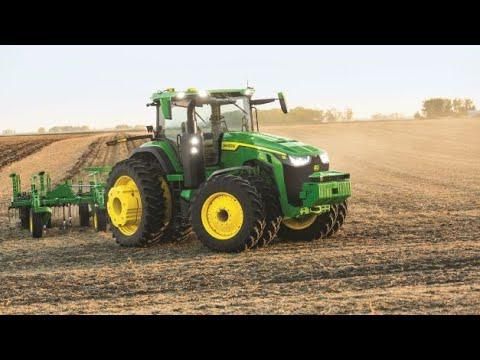
This shift is vital for robotic harvesters, autonomous tractors, and intelligent planting drones that must navigate complex rural environments without network latency risks. By keeping critical decision-making processes "at the edge," these machines avoid physical obstacles, identify specific plant diseases via multispectral imaging, and adjust operational parameters instantly.
This decentralized approach drastically reduces reliance on consistent internet coverage in rural areas, turning standard farm equipment into self-aware, intelligent agents capable of complex navigation and precise task execution under highly variable field conditions.
Core Benefits of Edge Integration
- Reduced Latency: Instantaneous processing of sensor data enables immediate mechanical reactions, preventing potential equipment damage or crop loss during high-speed operations.
- Bandwidth Efficiency: By analyzing data locally, robots only transmit essential insights to the central dashboard, significantly reducing network congestion.
- Reliability: Autonomous operations continue seamlessly even during periods of network instability, cellular dead zones, or total off-grid scenarios.
- Enhanced Security: Localized processing reduces the amount of raw, sensitive farm data transmitted over public networks, minimizing cyber exposure.
- Cost Optimization: Reducing cloud data transmission lowers expenses, especially when utilizing expensive satellite or cellular plans in remote locations.
Navigating the Technical Landscape

Implementing such data-intensive ecosystems requires a sophisticated, multi-layered tech stack that manages diverse inputs from a wide array of peripherals. Modern agricultural robots are sophisticated information hubs equipped with high-resolution LiDAR, thermal multispectral cameras, chemical concentration sensors, and real-time weather stations.
Edge gateways serve as the primary brain of these machines, aggregating data to run real-time machine learning inference models. This ensures that a robotic sprayer can distinguish between a valuable crop and a competitive weed in milliseconds, applying chemicals only where strictly necessary.
Feature | Traditional Machinery | Edge-Enabled Autonomous Systems |
Connectivity | Manual or basic telemetry only | High-speed, local edge-to-edge processing |
Decision Making | Human-led / reactive | Real-time AI-based autonomous logic |
Environmental Awareness | Static / Limited vision | Dynamic (LiDAR, Computer Vision, GPS) |
Maintenance | Reactive (fix when broken) | Predictive (sensor-driven, preventive) |
Input Analysis | Negligible / Manual | Massive real-time sensor fusion |
Furthermore, system integration involves complex software orchestration across various platforms. It is not enough for a robot to simply see the field; it must understand the agronomical context of what it observes. This requires robust API development and firmware that handles rigorous agricultural demands. Deploying containerized software to edge devices allows for the remote updating of AI models to reflect changing crop conditions, seasonal shifts, or new regulatory requirements.
Scalability and the Challenges of Field Deployment

While the potential of these technologies is immense, transitioning to fully autonomous ecosystems presents significant engineering and logistical challenges. Deploying edge computing hardware into the field requires ruggedized enclosures capable of withstanding extreme temperatures, heavy rain, dust, high humidity, and high-intensity mechanical vibrations.
Unified Fleet Management
The failure of a single sensor or processing module can halt a million-dollar harvest operation. Furthermore, the software development lifecycle must prioritize extreme interoperability, ensuring that robots from diverse manufacturers, custom sensor arrays, and various cloud platforms communicate effectively.
Managing these disparate hardware components through a unified, scalable software layer is crucial. Developers must create modular architectures that allow seamless software updates to be pushed to edge devices remotely, keeping fleets synchronized without requiring manual field intervention.
Preparing for a High-Efficiency Future
Looking toward the horizon of 2030, the integration of edge computing into agricultural robotics will transition from an experimental luxury to an industry-standard necessity. The ability to execute deep learning models on low-power processors will enable smaller, more agile robots capable of delicate, site-specific tasks like precision pruning, individual fruit selection, or single-plant fertilization.
This trend empowers farm operators to manage fields with the granular detail previously reserved for high-end manufacturing floors. As these robotic systems become more modular and affordable, the technological barrier to entry decreases, allowing smaller operations to improve efficiency and combat ongoing labor shortages.
This evolution signals the dawn of an era where every square meter of farmland is managed by intelligent, autonomous agents, fundamentally changing our interaction with the land and ensuring a sustainable, resilient, and productive future for global agriculture.
Conclusion: The Future of Farming
The convergence of advanced robotics and localized data processing is a fundamental structural redesign of how agricultural production occurs at scale. By empowering machines to make context-aware decisions locally, farmers achieve new levels of precision, reliability, and security unattainable under traditional models.
As industry leaders push the boundaries of what is possible, seamlessly integrating these technologies into a robust ecosystem remains the primary goal for the next decade. Ultimately, the successful farm of tomorrow combines ai and iot to create a truly autonomous, sustainable, and highly productive environment, setting a new benchmark for global food security, environmental stewardship, and technological innovation.
