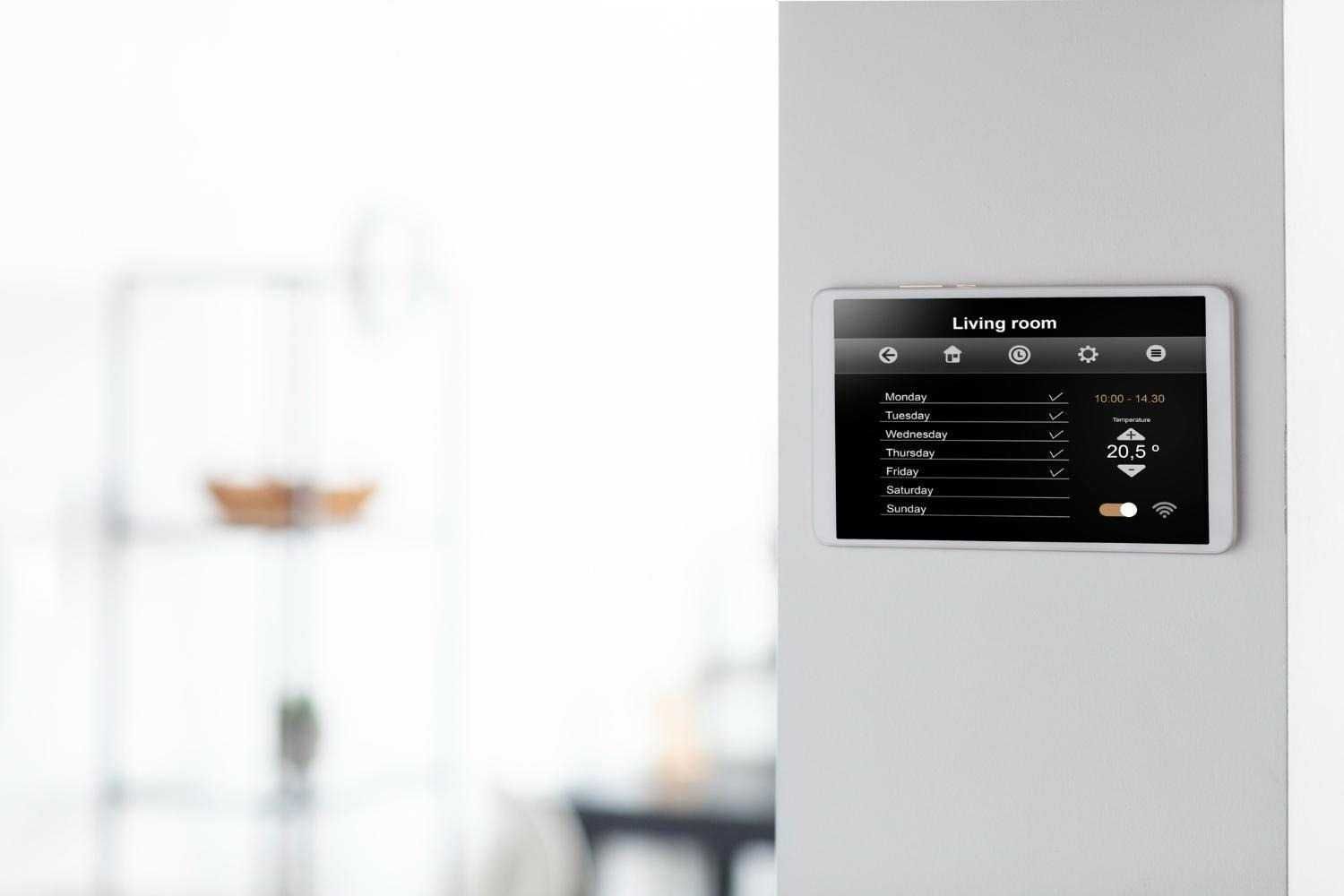
6 Best Smart Thermostats For Homes Without a C-Wire: A Side-by-Side Comparison of Top Brands
Older homes — anything built before the mid-2000s — usually didn’t come prewired with a C-wire. That gap can really limit how you manage your home’s heating and cooling unless you hunt for the best smart thermostat without a C-wire. Plenty of options exist now, and this guide compares them.
The best smart thermostat within your budget that makes everyday control simple and starts saving you money on your energy bill without forcing you to give up comfort. A few brands ship a workaround right in the box (or sell one as an add-on). Others duck the issue with battery power. The takeaway: you’ve got real choices.
Major names like Ecobee, Google Nest, Honeywell Home, Sensi, and Amazon all have something engineered to handle a missing C-wire. The breakdowns below put six top picks side by side — covering total installed cost, what each thermostat delivers for the money, and which one stands out to the typical buyer.
What is a C-Wire and Why Do Most Thermostats Require One?
The C in C-wire is short for “common.” It closes the 24-volt circuit linking your thermostat to your HVAC equipment. Mechanical thermostats from decades back pulled almost nothing in the way of electricity — a basic signal flipped heat or cool on and off, and that was the whole job.
Today’s smart thermostats are entirely different beasts. They simultaneously run WiFi radios, backlit displays, temperature and humidity sensors, and processors. None of that runs on the heat-and-cool signal wires alone. The C-wire supplies the constant 24V needed to keep everything powered.
It’s typically the blue wire inside your thermostat bundle, but not always. The fastest way to check: pull the thermostat face off the wall and inspect the C terminal on the base plate. A wire seated there means you have one. No wire? You’re exactly where you should be — looking for the best smart thermostat without a C-wire.
How Homes Without a C-Wire Get Around the Issue
Here’s the good news: the search for the best smart thermostat without a C-wire used to be painful and isn’t anymore. Plenty of viable options exist, and nearly every thermostat below leans on one of three workarounds.
C-wire adapters install at the furnace or air handler and convert one of the existing wires in your thermostat bundle to carry the 24V feed. No fishing fresh cable through the walls — you’re just changing what role each conductor plays at both ends. The Mysa C-Wire Power Adapter is one example. Honeywell Home and Ecobee each take their own approach to the same idea.
Battery operation is the simplest dodge of the C-wire problem altogether. The Sensi Lite operates on a pair of AAs, so the adapter and the furnace trip both disappear. The catch is battery drain — WiFi pulls a lot of power from batteries to keep up with.
The “power stealing” approach takes another angle. The Google Nest Learning Thermostat, for example, draws power from the heat and cool signal wires while the HVAC system is running, then stores it in an internal rechargeable battery for use between cycles. Google’s own data says fewer than 1% of homes need anything more than this.
Whichever path makes sense for your situation, we’ve laid out all the options below.
Best Smart Thermostat For Homes Without a C-Wire
The six top picks below are the ones worth a closer look if you want to upgrade your home’s climate control without a C-wire on hand. We ranked them based on how well each solves the power issue, what real value you get for the spend after install, and which smart home ecosystems each plays well with.
1. Mysa Smart Thermostat

Price | $159 (+$25 for C-wire adapter) |
C-Wire Solution | Mysa C-Wire Power Adapter, sold separately |
Smart Home | Apple HomeKit, Alexa, Google Home, Matter |
Display | 4.3" x 4.3" LED with touch controls |
ENERGY STAR | Yes |
Subscription | None |
The Mysa Smart Thermostat does technically require a C-wire. We can already hear the reaction: “I came here for the best smart thermostat WITHOUT C-wire, so what’s the deal?”
The answer is a $25 adapter Mysa sells that installs at the furnace and reassigns your existing wiring to deliver constant 24V to the thermostat. No cable fishing through walls anywhere.
It’s a Matter-certified thermostat with native HomeKit, Alexa, and Google Home support — keeping the unit future-proofed for whichever smart home platform you grow into. Add 7-day scheduling, geofencing, and runtime tracking that logs every heating and cooling cycle at 30-minute intervals for the past 2 years. Accuracy holds at ±0.5°F, a humidity sensor comes built in, and the unit is ENERGY STAR certified, so the bill savings show up where they should.
The total with the adapter is $184. Without it (homes that already have a C-wire), it’s $159. Either way, the price still undercuts Ecobee and Nest while adding more features — a combination that earns it the top slot here. No subscription needed, either.
2. Honeywell Home T5 Smart
Price | $99.99 (~$35 for C-wire adapter if needed) |
C-Wire Solution | Honeywell Home C-Wire Power Adapter, sold separately |
Smart Home | Alexa, Apple HomeKit, Google Assistant |
Display | Backlit touchscreen |
ENERGY STAR | Yes |
Subscription | None |
The T5 also requires a C-wire, with Honeywell Home’s adapter adding roughly $35 to the $99.99 base. The older T5+ used to bundle the adapter, but that model is no longer sold. The current T5 ships standalone.
It’s not a flashy unit, but that might be exactly what you want. You get the basics at a budget-friendly price: geofencing, 7-day scheduling with four time periods, and Smart Response — which fires the system up early so the home actually hits your target temperature by the scheduled time.
All controls are routed through the Resideo app. Alexa, HomeKit, and Google work. Matter doesn’t, which is the main caveat to flag. Remote sensors, learning, and dual fuel systems are also off the table.
3. Sensi Lite Smart Thermostat

Price | $89.99 |
C-Wire Solution | Runs on 2x AA batteries (included) |
Smart Home | Alexa, Google Assistant, SmartThings |
Display | 2.25" backlit LCD with touch buttons |
ENERGY STAR | Yes |
Subscription | None |
The Sensi Lite is designed specifically to skip the C-wire on most standard heating and cooling systems. Just drop in two AAs — no furnace trip, no adapter. The exception is heat-only, cool-only, or heat-pump setups, which still require a C-wire.
Scheduling and geofencing all live in the Sensi app. The thermostat itself doesn’t let you change schedules directly — every adjustment means reaching for your phone.
Alexa, Google, and SmartThings all play nicely. HomeKit doesn’t, and Matter isn’t on the spec sheet either. The display is a small backlit LCD with capacitive touch buttons rather than a color touchscreen, and the dated look definitely shows against the rest of this list.
Battery life is the open question. The unit stays connected to WiFi 24/7, which burns through AAs faster than a basic programmable thermostat would. Expect frequent battery swaps. That said, it’s still the easiest install on this list and the strongest no-C-wire pick under $100.
4. ecobee Smart Thermostat Premium

Price | $230–250 |
C-Wire Solution | Power Extender Kit included free |
Smart Home | Alexa (built-in), Siri, Google, HomeKit, Matter |
Display | Color touchscreen |
ENERGY STAR | Yes |
Subscription | None for thermostat (security plans $5–10/mo) |
Ecobee is unique on this list for including the C-wire fix in the box at no extra cost — a Power Extender Kit you install at the furnace.
A lot more comes packed in beyond the wiring solution. Built-in Alexa or Siri voice assistant, air quality monitoring (VOCs and estimated CO2), a SmartSensor for covering a second room, and radar-based occupancy detection. Dual-band WiFi plus Matter certification rounds it out.
You do pay for all of it. At $230–250, this sits as the second-priciest pick. What you’re really paying for is the out-of-the-box simplicity, voice control, and air quality features that nothing else on this list can match.
5. Google Nest Learning Thermostat (4th Gen)

Price | $279.99 |
C-Wire Solution | Power Sharing (no C-wire needed in most homes) |
Smart Home | Google Home, Alexa, HomeKit (via Matter) |
Display | 2.7" LCD under domed glass, 600x600 resolution |
ENERGY STAR | Yes |
Subscription | None |
The newest Nest Learning Thermostat doesn’t need a C-wire at all in most homes. It draws power from the signal wires while the system runs and stores it in an internal rechargeable cell. Google’s published claim is that this works in over 99% of homes. The remaining 1% can grab a $25 Nest Power Connector.
The fourth gen brought Matter onboard, which means HomeKit and Alexa now work alongside Google Home. The display is a 2.7" LCD beneath domed crystal glass with a radar sensor that changes the visible content based on your distance.
True to the name, the thermostat learns your schedule as you use it. One Nest Temperature Sensor ships with the unit, and you can pair up to six total. For households deeply embedded in the Google Home ecosystem, this is the best smart thermostat available without a C-wire or any add-on hardware.
It’s also the most expensive option on this list by a noticeable gap. A bigger concern, though, is the learning algorithm. Plenty of homeowners find it intrusive — the thermostat takes the initiative and adjusts the temperature even when nobody asks it to. Ecosystem lock-in is the other catch: it really belongs to Google Home first, with everything else as secondary support.
6. Amazon Smart Thermostat

Price | $79.99 (C-wire adapter bundle available) |
C-Wire Solution | C-wire adapter included in bundle SKU |
Smart Home | Alexa only |
Display | LCD with touch buttons |
ENERGY STAR | Yes |
Subscription | None |
The Amazon Smart Thermostat closes the list as the budget pick. Base price is $79.99 with a C-wire required — go with the bundle SKU, and you get the adapter included for a couple bucks more.
Alexa is the only supported smart home platform. Google Home, HomeKit, and Matter aren’t. It’s the same kind of platform lock-in we just covered with the Nest, just pointing toward Amazon. If your home is already populated with Echo devices, it’s fine. If not, the limitation kicks in quickly.
The thermostat itself has no mic or speaker, so voice commands only work if there’s an Echo nearby. Alexa Hunches will note your routines and adjust the temperature on its own over time — but everything runs through Amazon’s cloud rather than on the device itself.
It’s cheap and it looks the part. A basic display with a big temperature number, mode indicator, and a couple of touch buttons. No weather, no humidity, no clock. Strictly does what it’s built for, nothing more.
Installing Your New Smart Thermostat (Quick Guide)

You’ve settled on the best smart thermostat for your situation without a C-wire. Mounting it is honestly the simple part.
Don’t have a C-wire? The adapter (or Power Extender Kit, in Ecobee’s case) goes in at the furnace before you start on the thermostat itself. Quick walkthrough:
- Cut the breaker. Non-negotiable step.
- Pull the old thermostat face off and photograph the wiring. Do this before any wires come off the terminals.
- Use the labeling stickers included in the box. Mark every wire so you know where it lands on the new unit.
- Disconnect the wires, remove the old base plate, and screw the new one onto the wall.
- Move to the furnace and install the adapter. Open the access panel, locate the terminal strip, and match the wiring diagram. You’re working with three or four connections.
Then run back upstairs, connect the thermostat wires, click the thermostat onto its base plate, and restore the breaker. Most installs are done in under half an hour.
Don’t want to touch the wiring at all? The smart thermostat installation cost from a professional varies by region. Mysa, for what it’s worth, is straightforward enough that most homeowners can pull it off without calling anyone.
Final Words on the Best Smart Thermostat Without C-Wire
There’s no universal best smart thermostat without a C-wire that fits every household. Budget filters the field. The smart home platform you’ve already invested in narrows it further. After that come the personal priorities — air quality data, schedule reliability, voice control, and so on.
With all that in mind, it’s still genuinely tough to beat Mysa at $184 including the adapter. You’re getting Matter, HomeKit, and full scheduling without a subscription, all for less than Ecobee or Nest.
Want a wider look at smart thermostat pros and cons? The blog has a deeper post on that. And if your interest is rental properties specifically, take a look at our adjacent ranking covering that angle.
Don’t let the missing C-wire derail your upgrade. Every option on this list has a workaround. Once the unit is on the wall, you’ll typically clock the energy savings first.
Frequently Asked Questions
Do all smart thermostats need a C wire?
No. The Sensi Lite skips the C-wire entirely and runs on AA batteries. The Nest Learning Thermostat charges its internal battery directly from the signal wires, so it sidesteps the issue as well. Mysa, Ecobee, Honeywell Home, and Amazon all require a C-wire — but each brand offers an adapter that reuses your existing wiring instead of running a new cable.
Can I install a thermostat without a C wire?
If the model you’re after supports it, then yes. Battery-powered units mount the same way as any thermostat. Adapter-based models tack on one stop at the furnace before the wall work. Most homeowners handle the whole job DIY without calling a tech. Your low-voltage smart thermostat will ship with wiring instructions specific to your HVAC setup.
What smart thermostat can I use without a C wire?
Any of the six on this list. Nest and the Sensi Lite need no extra hardware at all. Mysa, Ecobee, the Honeywell Home T5 and Amazon both use adapters — and Ecobee is the only one that ships its adapter free. For the best balance of price and features, our pick is Mysa.
Do thermostats without a C-wire save you money?
Yes, with the magnitude depending on the model. Mysa owners average about 15% savings on heating and cooling — which is what makes it the best smart thermostat without a C-wire when energy savings carry equal weight to the feature set. Run your own numbers through our smart thermostat savings calculator for a more specific estimate.
How well do these thermostats mesh with an existing smart home?
Depends on what you’ve already got. Mysa, Ecobee, and Nest all support Matter, which means they work across HomeKit, Google Home, and Alexa. Honeywell Home T5 and Sensi Lite handle Alexa and Google but leave out HomeKit and Matter. Amazon’s thermostat is Alexa-only — nothing else.
Will a no C-wire smart thermostat work with my heat-pump or dual-fuel system?
Most do, yes. Mysa handles heat pumps with auxiliary heat. The Nest Learning Thermostat supports up to two heat pump stages plus two stages of auxiliary heat. Ecobee covers most heat pump configurations. The best smart thermostat for a heat pump really depends on your stage count and whether aux heat is involved.
Dual fuel is the harder case. The Amazon and Honeywell Home T5 thermostats don’t support it. Ecobee and Nest do. Mysa supports heat pumps with aux. Run your specific system through each brand’s compatibility checker before placing an order.
