Electric resistance heat draws several times more power per hour than a heat pump compressor running solo. A single bad setting, repeated every night for an entire winter, is enough to wipe out the efficiency gains that justified putting a heat pump in your home in the first place.
That’s the trap baked into most “smart” thermostats currently sold for heat pump installations. The learning logic gets a little too clever, draws conclusions you never asked it to draw, and ends up costing you more month after month. Worse, the same algorithm often falls short on its core responsibility — actually keeping the house comfortable.
Pick the right controller, and that whole problem disappears. This guide walks through the leading options on the market, breaks down the spec sheets, and helps you settle on a smart thermostat for heat pump systems that protects your utility bill and makes daily climate control easier to manage.
Key Takeaways
- Heat pumps need a thermostat that maintains a steady temperature and prevents unnecessary auxiliary heat draw.
- A standard programmable thermostat can quietly raise your monthly energy spending.
- The best smart thermostat for heat pump systems handles multi-stage heating and cooling, monitors humidity, and integrates with smart home platforms.
- Mysa, Nest, Ecobee, Honeywell, and Amazon all make compelling thermostats for heat pump owners.
- The wiring and installation steps matter just as much as any feature listed in the app.
Why You Need the Best Smart Thermostat For Heat Pump
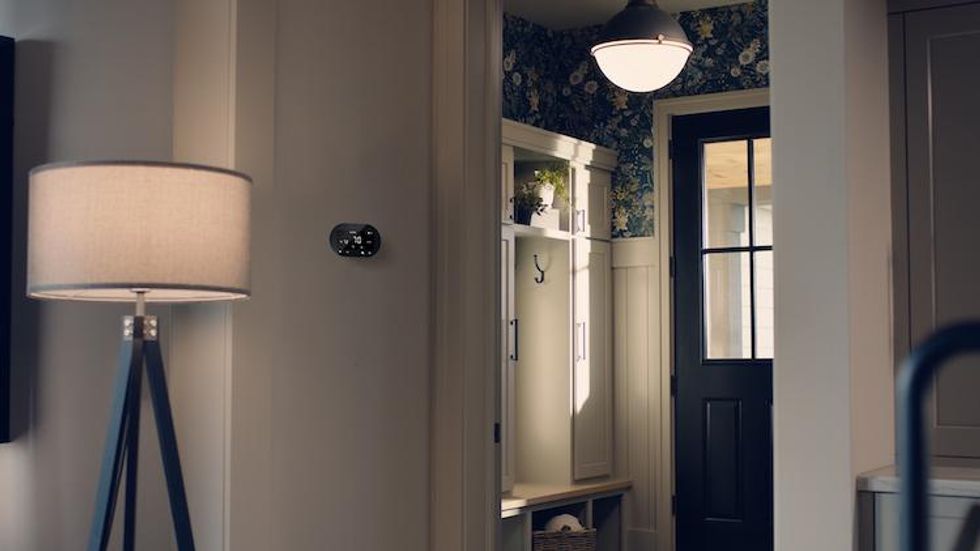
 GE Lighting Cync smart thermostat GE Lighting
A heat pump transfers heat rather than producing it from scratch. That’s what makes it dramatically more efficient than a gas furnace or strip heater — but only when the thermostat in charge of it actually understands the difference.
A mismatched thermostat treats a heat pump like any other heating appliance. Big setbacks. Aggressive recovery cycles. No awareness of staging logic. The best thermostats for heat pumps sidestep all of those problems. Here’s what makes the upgrade worthwhile.
Saving Money on Energy Bills
A properly managed heat pump can shave 30% to 60% off heating expenses compared to electric resistance setups. The catch? Plenty of installed systems lean on the resistance backup far more often than they need to.
A thermostat designed around heat pump behavior eases temperature changes in over time. The compressor handles the lifting, and the resistance coils stay parked. Across an entire heating season, that gap can add up to several hundred dollars. The best thermostats for heat pumps often pay for themselves in a single winter.
Preventing Short Cycling
Short cycling describes the pattern in which a compressor turns on and off in quick bursts. It hammers mechanical parts and pads the electric bill. The cause is usually a thermostat that responds too aggressively to small temperature shifts, calling for heating or cooling in choppy pulses rather than smooth, sustained runs.
A heat pump-compatible smart thermostat uses wider deadbands and more sophisticated staging logic, allowing the compressor to run for extended periods at high efficiency. Equipment lasts longer, and so does your wallet.
Integrating With a Smart Home
If your lights, locks, and speakers already react to a voice command or a tap on a phone screen, the thermostat shouldn’t be the holdout. A solid smart thermostat for heat pump installs hooks into Apple HomeKit, Google Home, and Amazon Alexa.
The bigger development to watch is Matter. The cross-platform standard prevents you from being locked into any single ecosystem. For the best thermostats for heat pumps, smart home compatibility isn’t a bonus feature anymore — it’s the difference between a thermostat that fits your life and one that fights it.
Keeping Your Climate Comfortable Without Waste
Comfort doesn’t have to come at the expense of efficiency once the right hardware is calling the shots. Geofencing, occupancy sensing, and humidity awareness allow the system to respond to what’s actually happening in the house rather than blindly running on a timer.
When the house is empty, the thermostat eases off. When you’re heading back, it warms or cools gradually, so the place feels right by the time you walk in. That kind of intelligence carries extra weight for heat pump owners since maintaining a temperature is always cheaper than recovering from a deep dip.
Different Types of Thermostats That Work With Heat Pumps
 Different Types of Thermostats That Work With Heat PumpsMagnific
Not every thermostat is wired or programmed for heat pump duty. Even within the compatible category, the spread of technology is enormous. Here’s the lay of the land when you’re shopping for the best thermostats for heat pumps.
Smart Thermostats
Smart thermostats connect to your home WiFi, run through a phone app, and integrate with voice assistants and smart home hubs. Remote control, scheduling, runtime data, and geofencing-based adjustments all come standard.
This category is the right answer for heat pumps. These models manage multi-stage equipment, tune auxiliary heat thresholds, and produce usage data that lets you actually optimize efficiency over time.
Programmable Thermostats
Programmable thermostats operate on time-based schedules. You assign target temperatures for waking, leaving, returning, and sleeping. They cost less than smart models and don’t need WiFi. The trade-off is everything you’d expect: no remote access, no occupancy detection, no adaptation to a changing routine.
The deeper issue for heat pump owners is the setback. A programmable thermostat will dutifully drop the temperature 10 degrees at midnight and try to claw it back at 6 AM. That recovery pattern is exactly what calls in the expensive auxiliary heat.
If you’re deciding between a smart and programmable thermostat for a heat pump, the smart one earns back its purchase price faster than it would on nearly any other system.
Zoning Thermostats
Zoning thermostats control multiple temperature zones within a single HVAC system, using motorized dampers in the ductwork. Each zone has its own thermostat, so a bedroom can stay cooler than a living room without conflict.
This approach pairs nicely with heat pumps because each zone presents a smaller, more consistent demand. That’s the exact load profile a compressor handles best. The complexity is the catch — zoning calls for ductwork modifications and professional installation, and not every heat pump system supports it directly.
In commercial facilities with larger HVAC estates, similar zoning, sensor, and equipment data is coordinated through a building management system. Platforms such as Iotellect help operations teams monitor HVAC performance, energy use, alarms, and environmental conditions from a unified interface.
Important Features in a Heat Pump Compatible Thermostat
The best thermostats for heat pumps share certain non-negotiable qualities. Scrutinize these specs when you’re narrowing the field.
Support For Heating AND Cooling
Heat pumps reverse direction using a valve controlled by the O/B wire. The thermostat must accommodate that wire and let you specify whether the valve energizes during heating or cooling — different manufacturers wire it differently.
Multi-stage support matters too. If your heat pump operates in two compressor stages plus an auxiliary backup, the thermostat must control all three independently.
Precision Sensors
A gas furnace can run a degree or two past target with no real penalty. When a heat pump overshoots, the compressor stays on longer than it should, or, worse, the auxiliary heat fires when nothing calls for it.
The best smart thermostat for heat pump systems uses temperature sensors accurate to within ±0.5°F. Humidity sensing matters as well, since moisture levels shape how comfortable a given temperature actually feels.
Smart AND Programmable Capabilities
You set baseline temperatures across the day, and the thermostat overlays geofencing, occupancy, or weather data to fine-tune around the schedule.
A pure learning algorithm — the kind that builds your schedule by watching what you do — can backfire on a heat pump if it introduces setbacks that weren’t part of your plan. That’s the conflict at the heart of the Google Nest thermostat vs learning thermostat conversation.
The best smart thermostat for heat pump efficiency keeps you in charge of the schedule and adds smart layers on top, instead of replacing your input entirely.
Compatible With Your Smart Home
A modern smart thermostat should at a minimum support Google Home, Amazon Alexa, and Apple HomeKit. Matter certification raises the bar further by tying all three ecosystems together and protecting your purchase against future platform shifts.
Remote Control via Wifi
The whole reason for adding WiFi is the ability to nudge the temperature from your phone or peek at system status during a cold snap.
Remote access is especially valuable for vacation properties or short-term rentals where you need freeze protection without burning fuel to heat empty rooms.
Ease of Use
The best smart thermostat for heat pump owners offers a clear app, a readable display, and a setup process that doesn’t require an HVAC tech sitting in your hallway.
What is the Best Thermostat for a Heat Pump?
The five models below cover the leading options for heat pump compatibility heading into 2026. Every one of them gets the basics right:
- Multi-stage support
- WiFi connectivity
- App control
Where they diverge is on price, platform support, and how skillfully they juggle the specific quirks heat pumps demand. These are the best thermostats for heat pumps you can buy right now.
1. Mysa Smart Thermostat
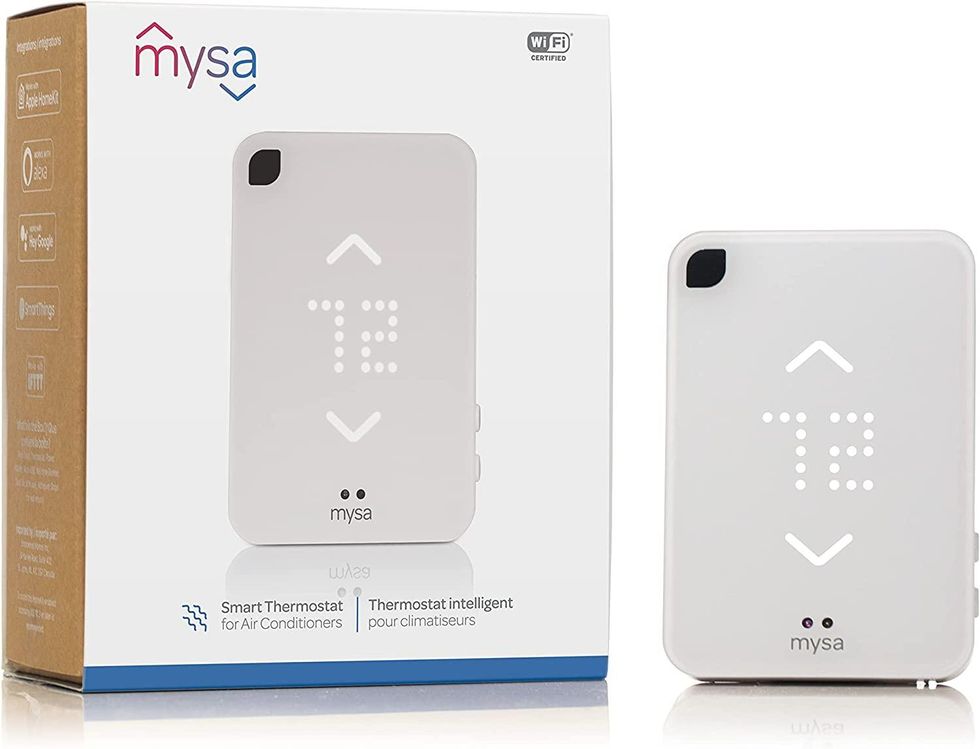
 Mysa Smart Thermostat for Air Conditioners and mini split heaters, ductless heat pumps and portal AC units. Amazon
Price: $159
Heat pump support: Up to 2H/2C with auxiliary heat
Smart home: Apple HomeKit, Google Home, Amazon Alexa, Matter certified
Sensors: Built-in humidity, ±0.5°F temperature accuracy
ENERGY STAR: Yes
C-wire: Required (power adapter available separately)
The Mysa Smart Thermostat lands in a niche no rival on this list occupies: Matter certification, ENERGY STAR rating, full coverage of the three major smart home platforms, and a $159 sticker that comes in at least $70 below every premium competitor.
Mysa’s approach to scheduling is the standout for heat pump owners specifically. There’s no learning algorithm second-guessing what temperature you actually wanted. You set the schedule and the unit follows it. As we mentioned, predictability counts double on a heat pump system, where unexpected setbacks triggered by an overconfident algorithm can trigger auxiliary heat for no good reason and cost real money.
The runtime tracking records system activity every 30 minutes across heating and cooling stages, with 2 years of history to scroll through. That granularity is what catches auxiliary heat engaging more often than expected, or a cooling stage running longer than usual after a service call.
Geofencing adjusts the temperature as you leave and return, which keeps the heat pump from experiencing a sudden recovery spike. Mysa is also the only model on this list shipping with Matter certification, meaning it works across Apple, Google, and Amazon without manufacturer bridges that might lose support down the road.
Pros
- Lowest price among full-featured options ($159)
- Matter-certified and ready for any of the three major smart home assistants
- Schedule-driven control prevents unintended setbacks
- Detailed runtime tracking (30-minute intervals, 2 years of history)
- No subscription required
Cons
- No room sensor included (some competitors bundle one)
- C-wire required (adapter sold separately, not in the box)
- No occupancy detection is built into the thermostat itself
2. Honeywell Home T10+ Pro Smart Thermostat
 Honeywell T10 Pro Smart Thermostat with RedLINK Honeywell T10 Pro Smart Thermostat with RedLINK
Price: $229.99
Heat pump support: Up to 3H/2C heat pump systems
Smart home: Apple HomeKit, Google Home, Amazon Alexa (no Matter)
Sensors: Included RedLINK room sensor (temp, humidity, motion)
ENERGY STAR: Yes
C-wire: Required (adapter available separately)
The T10+ Pro carries the broadest staging capability on this list — three heating stages and two cooling stages — which is a substantial advantage for larger or more complex heat pump systems.
The bundled RedLINK sensor measures temperature, humidity, and motion in another room, and the platform accepts up to 20 sensors total. Honeywell’s Adaptive Intelligent Recovery studies your system over roughly a week, then shifts start times so the home reaches target temperatures right on schedule.
Smart home integration is where the T10+ Pro shows its age. Honeywell’s newer X2S brings Matter to the table, but it’s a separate product. That said, the T10+ Pro is excellent at handling the HVAC side if you need the best smart thermostat for heat pump systems with serious multi-stage hardware.
Pros
- Supports 3H/2C (broadest heat pump staging available)
- Room sensor with motion detection included
- Expandable up to 20 sensors for whole-home monitoring
- 5-year warranty (longest on this list)
Cons
- No Matter support
- C-wire required and no adapter in the box
- Resideo app feels dated next to competitors
- Higher price than Mysa with fewer smart home integrations
3. Google Nest Learning Thermostat
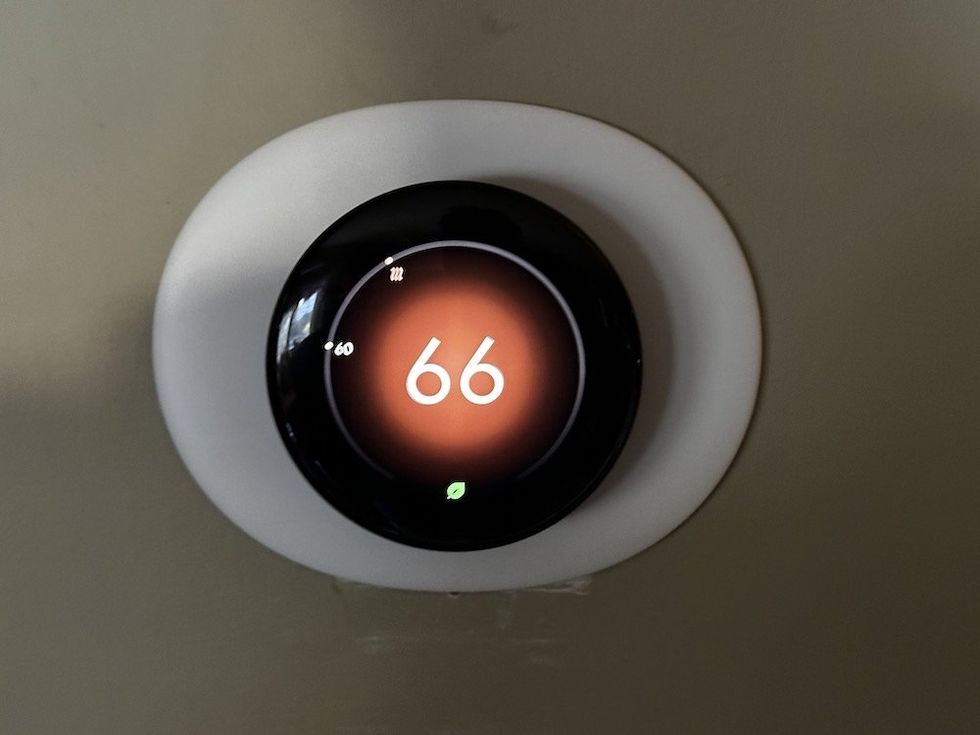
 Google Nest Learning Thermostat Review: AI-Powered Efficiency GearBrain
Price: $279.99
Heat pump support: Multi-stage with auxiliary heat
Smart home: Google Home, Amazon Alexa, Apple HomeKit (via Matter), Matter certified
Sensors: Soli radar presence detection, included temperature sensor
ENERGY STAR: Yes
C-wire: Uses the Nest Power Connector instead (sold separately)
The 4th-generation Nest is Google’s flagship release. It introduces a borderless display, Soli radar to detect presence, and a temperature sensor to extend coverage to a second room.
Matter and Thread support let it operate across all three major platforms, which is a real leap from the 3rd gen — that one only spoke fluently to Google and Alexa.
The catch for heat pump owners is the same one that’s followed Nest for years: the learning algorithm. Nest watches household behavior and builds a schedule from inferences. Sounds appealing on paper. The trouble is that the inferences can produce temperature swings that summon auxiliary heat for no reason at all.
You can override with manual schedules, but the thermostat keeps suggesting changes. If anyone in the house accepts those suggestions without grasping the heat pump implications, you’re back to the same surprise setbacks.
The Nest is also the costliest option on this list at $279.99. Of the best thermostats for heat pumps, this is the one most likely to override your settings on its own. If you want a Nest alternative with direct schedule control, the Mysa is the obvious comparison point.
Pros
- Best-in-class hardware and display
- Matter and Thread support
- Soli radar handles presence detection accurately
- Temperature sensor included
Cons
- Most expensive option at $279.99
- Learning algorithm can introduce unwanted heat pump setbacks
- Full functionality requires a Google account
- Energy tracking is less granular than Mysa or Ecobee
4. Ecobee Smart Thermostat (Premium)
 ecobee Smart Thermostat Premium with Smart Sensor and Air Quality Monitor Amazon
Price: $259.99
Heat pump support: Dual-stage heat pump with 2-stage auxiliary heat
Smart home: Apple HomeKit, Google Home, Amazon Alexa (built-in), no Matter
Sensors: Included SmartSensor, built-in air quality monitor, radar occupancy detection
ENERGY STAR: Yes
C-wire: Not required (Power Extender Kit included)
Ecobee crams more into a single thermostat than any rival on this list: Alexa with onboard speaker and microphone, Siri compatibility, an air quality monitor, radar-based occupancy sensing, and a SmartSensor for a second room.
The 4-inch touchscreen is the largest display in the lineup, and the included Power Extender Kit eliminates the need for a C-wire. Ecobee covers dual-stage compressor heat and dual-stage auxiliary, which is plenty for the majority of residential systems.
The catch is the $259.99 price. That’s $100 more than Mysa, and the truth is you’re paying for features most homeowners never use, like air quality monitoring and the built-in Alexa speaker. You’re also still missing Matter certification.
The honest read is that the best smart thermostat for heat pump owners isn’t necessarily the priciest one on the shelf. It just has to manage the system well, and several less expensive options do so just as effectively. We have full Nest vs Ecobee and Ecobee vs Honeywell breakdowns elsewhere on the blog if you want to see how they line up.
Pros
- Most feature-dense option available
- Built-in Alexa, Siri, and air quality monitoring
- Power Extender Kit removes the C-wire requirement
- Largest display at 4 inches
Cons
- No Matter certification
- $259.99 covers features that many users won’t actually use
- Radar occupancy detection can pick up pets
- Feature density makes the initial setup feel busy
5. Amazon Smart Thermostat
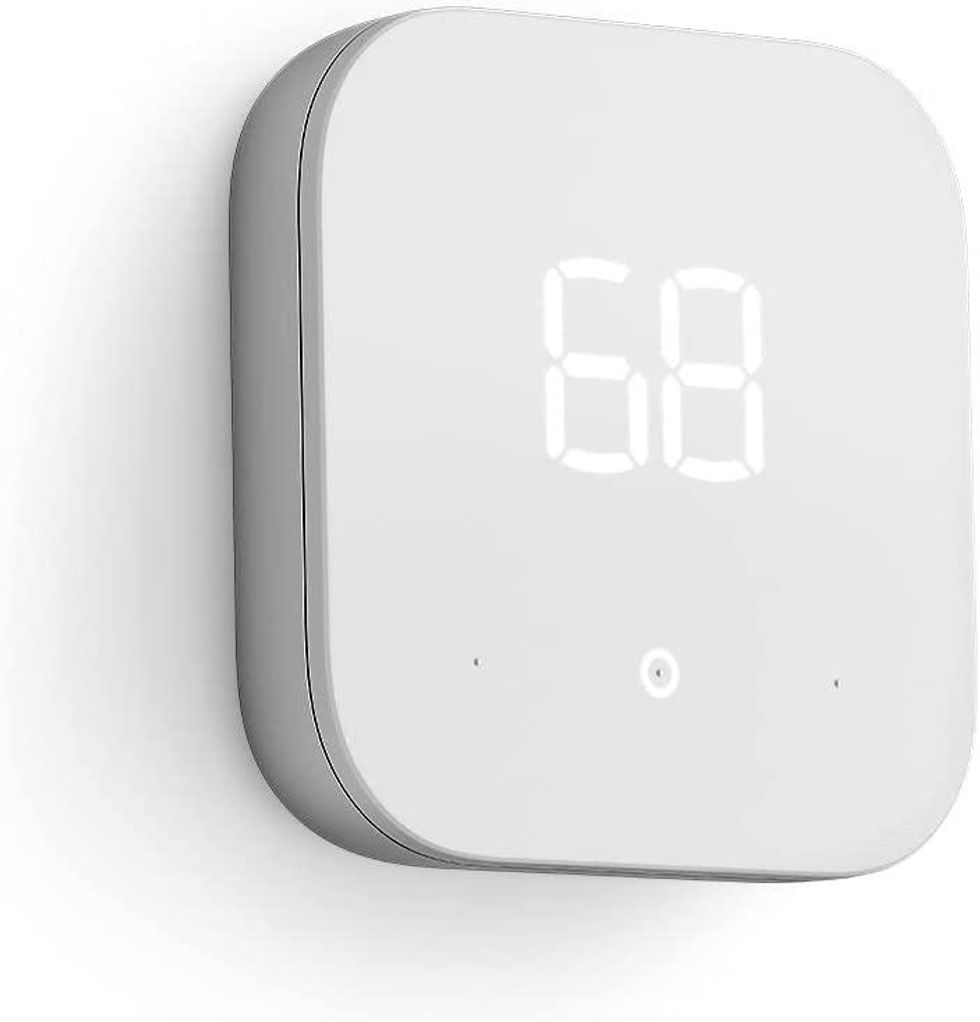
 Amazon Smart Thermostat is Energy Star Certified and works on Wi-Fi connection and works with Alexa. Amazon
Price: $79.99
Heat pump support: Yes — but no support for dual-fuel systems (heat pump + gas backup)
Smart home: Amazon Alexa only (no HomeKit, no Google Home, no Matter)
Sensors: Built-in humidity sensor (reporting only — no humidity control)
ENERGY STAR: Yes
C-wire: Required (adapter sold separately)
The Amazon Smart Thermostat undercuts everything else here at $79.99. It runs on Honeywell Home technology under the hood, so scheduling, basic energy reporting, and Alexa voice control all behave reliably without any kind of complexity.
Alexa Hunches stands in for true geofencing by reading phone location data, dialing the temperature back when it senses the house is empty. Whether that lands as a useful feature or a frustrating one is a matter of personal preference, as with the Nest Learning thermostat.
What’s harder to argue with is the stack of limitations for heat pump owners. No dual-fuel support eliminates heat pump + gas backup configurations. No HomeKit, no Google Home, no Matter. You’re tied to Amazon’s ecosystem for as long as you own the unit. No room sensors and no humidity control further cap the precision.
To be clear, this thermostat works well for a single-zone heat pump in an Alexa-first household on a tight budget. The best smart thermostat for heat pump systems demands more than this for anything more involved. The Amazon smart thermostat vs Nest comparison is worth a read if you’re weighing options at this end of the price spectrum.
Pros
- Lowest price at $79.99
- ENERGY STAR certified
- Quick setup for Alexa households
- Built on proven Honeywell thermostat technology
Cons
- Alexa only — no HomeKit, no Google Home, no Matter
- No dual-fuel heat pump support
- No room sensors available
- Sensor reports humidity but doesn’t control it
- C-wire required and adapter sold separately
Navigating the Installation Process For a Heat Pump Thermostat
Installing a smart thermostat on a heat pump system follows the same general flow as any thermostat swap, but heat pump-specific details trip up plenty of people.
The good news is that most of these models are designed for DIY work if you’re trying to keep smart thermostat installation costs down. Set aside 15 to 30 minutes, grab a screwdriver, and the companion app will walk you through the wiring step by step.
Check Your Wiring First
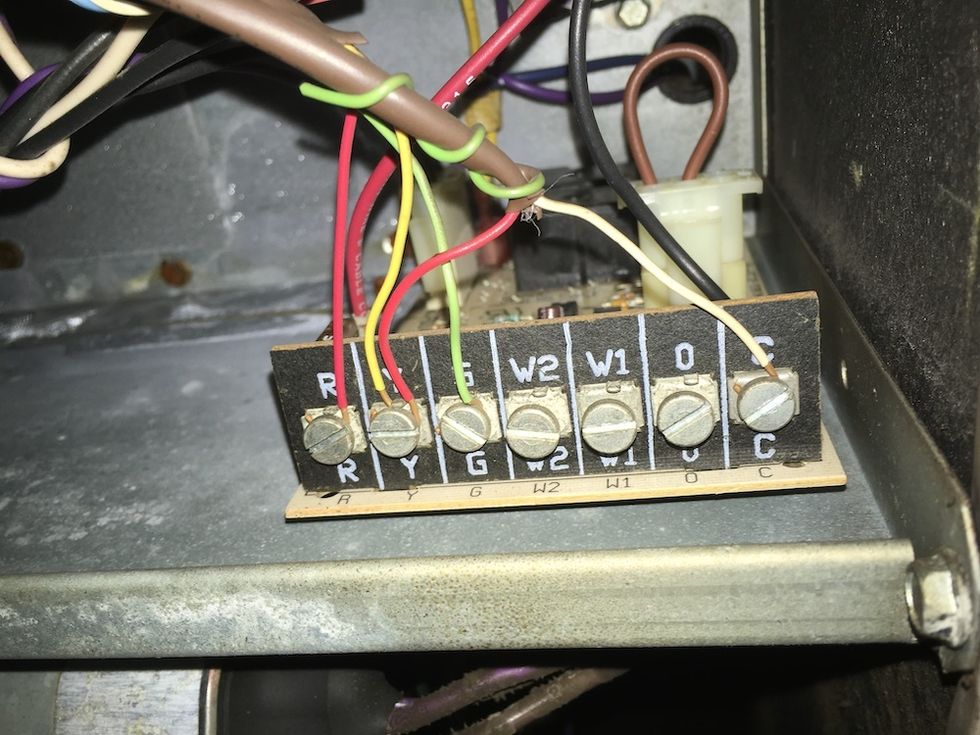
Pull the faceplate off the existing thermostat and snap a photo of the wiring before you buy anything. Heat pump systems usually have an O/B wire dedicated to the reversing valve, layered on top of the standard R, G, Y, W, and C terminals.
Some older systems use B in place of O. In those cases, the thermostat needs to support both. If there are fewer than four wires behind the plate, expect to need an adapter or a professional rewire.
C-Wire Compatibility
Make sure your wiring is compatible. Will need a C-Wire (white wire above inserted into C slot) to have your Honeywell Home\u00a0smart thermostat to work. GearBrain
The C-wire delivers continuous 24V power to the thermostat. Most smart thermostats need it in some form. Ecobee includes a Power Extender Kit, Nest comes with an adapter, and Mysa and Amazon sell their adapters separately.
Build the adapter cost or a service call into your budget if your wiring lacks a C-wire. Without reliable power, thermostats drop WiFi, lose settings, or display incorrect readings — none of which is acceptable on a heating system.
Heat Pump Specific Configuration
Pick “heat pump” as the system type during the in-app setup, set the O/B wire polarity (your heat pump manual specifies which one is correct), and configure the auxiliary heat thresholds. That’s the bulk of it.
Some of the best smart thermostats for heat pump models let you specify the exact temperature differential at which auxiliary heat takes over. Set it too low, and the resistance heat runs constantly. Set it too high, and the home can’t recover on the coldest mornings. Three or four degrees is a good starting point.
Common Issues You May Need to Troubleshoot
Even the best thermostats for heat pumps run into issues that drag on performance. Most are configuration problems rather than hardware failures, and all of them are fixable.
Auxiliary Heat Running Too Often
Check the auxiliary heat threshold first if energy bills jump after a thermostat swap. Plenty of thermostats default to engaging aux heat just 2 degrees below the setpoint. That’s far too aggressive in a mild climate, where the heat pump can close that gap on its own without assistance. Bumping the threshold to 4 or 5 degrees usually solves the problem immediately.
Short Cycling
If the compressor turns on and off every few minutes, check the thermostat’s deadband setting. The deadband is the temperature range around the setpoint where the system stays idle. A deadband that’s too tight (0.5°F) generates constant cycling. Most heat pumps run cleanly with a 1 to 2°F deadband.
Check that the thermostat itself isn’t mounted near a heat source — direct sunlight, kitchen appliances, or electronics can throw off temperature readings and trigger false demand.
System Blowing Air in the Wrong Mode
If the heat pump is blowing cold air during heating mode or warm air during cooling mode, the O/B wire configuration is almost certainly reversed. Open the thermostat app, find the reversing valve polarity setting, and flip it.
This is the most common configuration error on the list after a thermostat swap on a heat pump system, and it’s a one-tap fix once you know where to look.
Wrapping Up Our Guide on the Best Smart Thermostat For Heat Pump
The best smart thermostat for heat pump owners intelligently manages auxiliary heat thresholds, keeps short cycling at bay, and keeps temperatures locked in without the deep setbacks that trigger expensive backup heating.
Of the five models reviewed here, the Mysa Smart Thermostat puts together the strongest combination of heat pump compatibility, smart home support, and value. It’s Matter-certified, ENERGY STAR-certified, and priced at just $159 with no subscription required.
Whether you’re swapping out an aging programmable thermostat or moving up from a competitor, the best thermostat for heat pumps is a few clicks away at Mysa.
Frequently Asked Questions
 Smart home installers can set up devices from smart thermostats to connected locks iStock
Do heat pumps need a special thermostat?
Not special, but compatible. Heat pump thermostats need an O/B terminal for the reversing valve and should support multi-stage heating and cooling. Most smart thermostats sold today list heat pump compatibility, but verify staging support and O/B wire configuration before you buy. The best smart thermostat for heat pump systems handles the details through guided in-app setup.
Do smart thermostats work with heat pumps?
Yes — every smart thermostat reviewed here works with heat pumps. The differences come down to staging support, auxiliary heat management, and smart home compatibility. Some models have real limits, such as the Amazon Smart Thermostat, which lacks dual-fuel support. Mysa, by contrast, covers the full range of residential heat pump configurations without restriction.
What temperature should I set my heat pump thermostat to?
The Department of Energy recommends 68°F when you’re home and awake during winter. The bigger rule for heat pumps is to keep setbacks small — no more than 2 to 3 degrees during sleep or away periods. Big setbacks trigger recovery cycles, and using auxiliary heat costs significantly more than maintaining a steady temperature.
How long do thermostats last before needing replacement?
Five to ten years at minimum on the hardware side. The more relevant timeline is the software support timeline. The thermostat may lose compatibility with your smart home platform or phone OS once updates stop. The best smart thermostat for heat pump longevity supports Matter, so you’re not tied to a single manufacturer’s roadmap.
Are Mysa’s smart thermostats compatible with all heat pumps?
Mysa’s central HVAC thermostat works with most standard 24V heat pump systems, supporting up to 2 stages of heating and 2 stages of cooling along with auxiliary heat. That covers most residential heat pumps. Systems running more than 2 compressor stages or non-standard wiring may need a thermostat with broader staging — like the Honeywell T10+ Pro at 3H/2C. Mysa also offers a separate thermostat for ductless mini-split heat pumps that uses infrared rather than wired control.
Can the right heat pump thermostat save me money on my energy bill?
Yes. ENERGY STAR estimates around $50/year in average savings, but heat pump owners typically see more thanks to the wide cost gap between compressor and resistance heat. Annual HVAC costs can drop 20 to 26% just by avoiding unnecessary aux heat cycles and using geofencing to skip conditioning an empty house. The best thermostats for heat pumps usually pay for themselves within the first year.
From Your Site Articles
Related Articles Around the Web
 GE Lighting Cync smart thermostat GE Lighting
  Different Types of Thermostats That Work With Heat PumpsMagnific
 Mysa Smart Thermostat for Air Conditioners and mini split heaters, ductless heat pumps and portal AC units. Amazon
 Honeywell T10 Pro Smart Thermostat with RedLINK
 Google Nest Learning Thermostat Review: AI-Powered Efficiency GearBrain
 ecobee Smart Thermostat Premium with Smart Sensor and Air Quality Monitor Amazon
 Amazon Smart Thermostat is Energy Star Certified and works on Wi-Fi connection and works with Alexa. Amazon
 Make sure your wiring is compatible. Will need a C-Wire (white wire above inserted into C slot) to have your Honeywell Home\u00a0smart thermostat to work. GearBrain
  Smart home installers can set up devices from smart thermostats to connected locks iStock