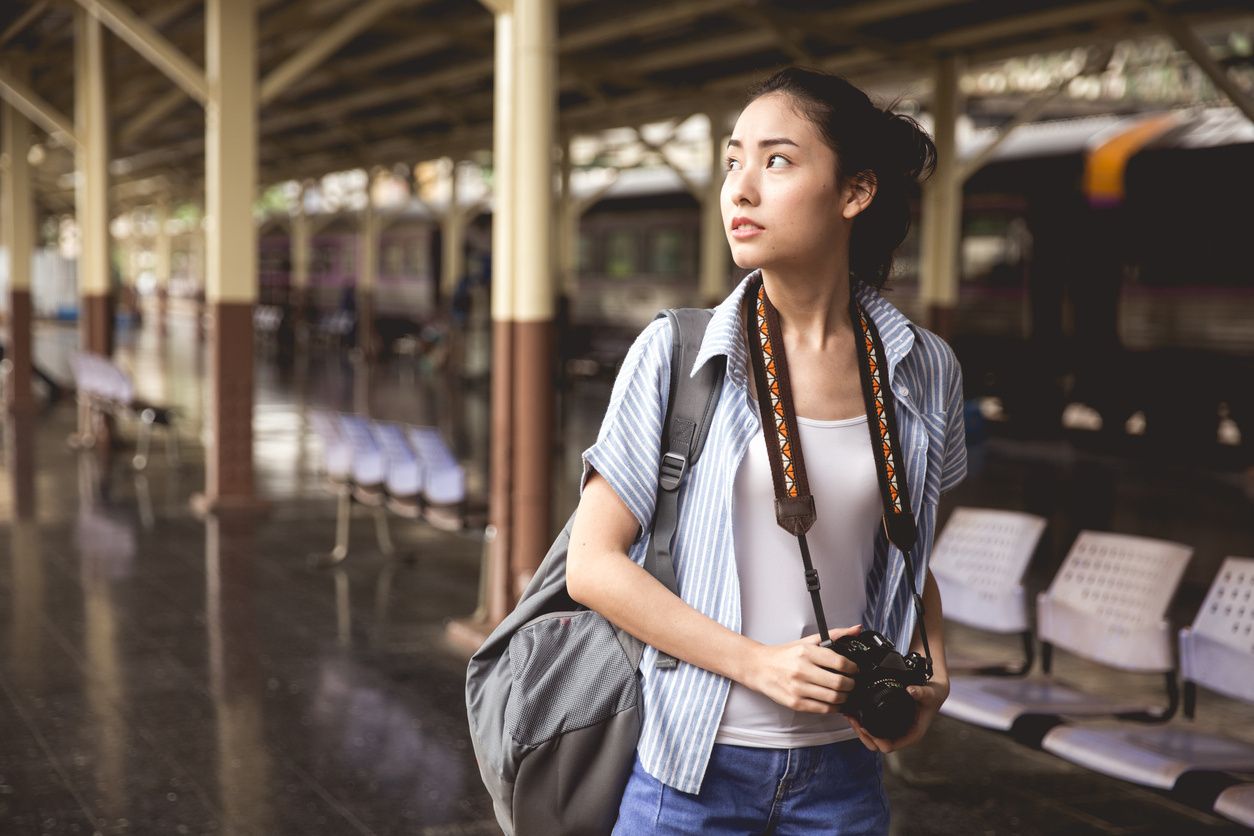
Best Travel Cameras in 2026: Top Options for Lightweight Travel, City Exploring, and Everyday Getaways
Finding the best travel camera comes down to how travel actually happens day to day. Some travelers prefer a single pocket-friendly camera that can record everything around them while moving through markets, transit hubs, and busy streets. Others would rather bring an interchangeable-lens body for more control over portraits, landscapes, and challenging light. Another group wants a small fixed-lens camera that outperforms a phone while staying easy to carry from morning to night.
Below are the best travel cameras, ranked for practical travel use, with key features, pros, and cons.
Comparison table:
Camera | Type | Max video resolution | Stabilization | Screen | Strength for travel | Built for |
Insta360 X6 | 360 camera | 8K50fps 360; 5K60fps flat | FlowState + 360° Horizon Lock | 2.32" OLED touchscreen | Lightweight 196g; shoot first, frame later; waterproof to 20m | All-in-one travel video and vlogging in every direction |
Canon EOS R50 | Interchangeable-lens camera (APS-C) | 4K up to 30fps | Movie Digital IS (no in-body stabilization) | 3" vari-angle touchscreen | Lightweight entry to a lens system | Simple travel vlogs and family trips |
Sony a6700 | Interchangeable-lens camera (APS-C) | 4K up to 120fps (cropped) | 5-axis in-body stabilization | 3" vari-angle touchscreen | Fast autofocus and versatile zoom lens options | Hybrid travel photo and video with lens choice |
Fujifilm X100VI | Compact fixed-lens camera (APS-C) | 6.2K30; 4K60 | 6-stop in-body stabilization | 3" tilting touchscreen | Discreet street shooting with Film Simulations | Everyday travel storytelling |
Ricoh GR IV | Compact fixed-lens camera (APS-C) | Full HD 60fps | 5-axis in-body stabilization | 3" fixed touchscreen | True pocketability for street and snapshots | Minimalist travel stills |
1. Insta360 X6

Best For: Travelers who want one durable, pocketable camera to cover every angle of a trip, keep footage steady and level while moving, and turn long days into share-ready edits with minimal hassle.
The Insta360 X6 is Insta360's flagship 8K 360 camera, built for trips where carrying a full camera kit is not realistic but the important moments still deserve to be captured. At 196g, it is comfortable to keep on hand from morning sightseeing through late-night walks. Dual 1/1.1" Sony sensors provide strong image quality with up to 14.5 stops of dynamic range and record the entire scene in one take, letting travelers shoot now and decide on the framing later, rather than losing the shot in the moment.
For travel video and vlogging, the core advantage is coverage without constant repositioning. FlowState stabilization and 360° Horizon Lock help walking footage across city blocks, viewpoints, and trails stay smooth and level, and the invisible selfie stick effect removes the stick from 360 shots for third-person, drone-like angles without relying on strangers. PureVideo mode, two dedicated AI imaging chips, and a 4nm flagship chip are designed to produce cleaner low-light results for evening streets, night markets, and dimly lit interiors.
The X6 is also made to handle travel unpredictability. It is waterproof to 20m (66ft) without a case, rated from -20°C to 40°C (-4°F to 104°F), and features replaceable lenses, so a lens scratch won't derail the rest of the trip.
Features
- Dual 1/1.1" Sony sensors with up to 14.5 stops of dynamic range
- 8K50fps, 6K60fps, and 4K120fps 360 video
- 5K60fps flat video and 4K up to 120fps
- PureVideo low-light mode: 360 up to 8K30fps; flat up to 4K60fps
- FlowState stabilization and 360° Horizon Lock
- Invisible selfie stick effect for third-person shots
- 2.32" OLED touchscreen with 1200 nits peak brightness
- 120MP 360 photos and 42MP flat photos
- Film filters (Positive Film, Negative Film, CC Film, NC Film), 10-bit I-Log, and Dolby Vision
- 360 windproof mics and Direct Connect for two Insta360 Mic Air or Mic Pro transmitters
- AI Director and Auto Edit 2.0 for one-tap edits
- 2600mAh battery with up to 140 minutes of 8K30fps (endurance mode); 80% charge in 24 minutes
- 64GB built-in storage (47GB available) plus microSD
- Waterproof to 20m (66ft) without a case; replaceable lenses
- Weight: 196g
Pros
- 360 capture means fewer missed moments, with framing selected afterward
- Invisible selfie stick makes third-person travel shots possible when traveling solo
- Waterproof, cold-rated design works for beaches, rain, and snow
- AI editing helps turn long travel days into shareable highlights
- Pocketable 196g build
Cons
- 360 clips typically require reframing in the app or Insta360 Studio, adding an editing step
- Fixed ultra-wide lenses mean no versatile zoom lens for faraway details, and no interchangeable lenses
2. Canon EOS R50

The Canon EOS R50 is a lightweight starting point for travelers who want an interchangeable-lens APS-C camera without a steep learning curve. It keeps operation straightforward while leaving room to expand with additional lenses over time.
Features
- 24MP APS-C sensor
- Uncropped 4K up to 30fps
- 3" vari-angle touchscreen
- Movie Digital IS for video
- Canon RF mount, compatible with RF and RF-S lenses
Pros
- Beginner-friendly approach that works well for travel photos and family trips
- Lightweight at 375g with battery and card, and pairs nicely with compact lenses
- Can grow into a lens system, including small zooms suited to travel
Cons
- No in-body stabilization, and Movie Digital IS crops the frame
- Less ideal for high-motion travel video than options with stronger stabilization
3. Sony a6700

The Sony a6700 is a compelling hybrid pick for travelers who want an interchangeable-lens APS-C system that stays compact for casual street shooting or scales up for more deliberate portrait and landscape work.
Features
- 26MP APS-C sensor
- 4K up to 60fps oversampled from 6K, and 4K120fps with a crop
- 5-axis in-body stabilization rated at 5 stops
- Fast autofocus with subject recognition
- 3" vari-angle touchscreen
- Wide E-mount lens ecosystem, including versatile travel zoom lenses
Pros
- Interchangeable lenses make it adaptable for cities, landscapes, and portraits
- Strong video capabilities for travel reels and longer-form edits
- In-body stabilization supports steadier handheld footage
Cons
- Building a multi-lens travel kit can add cost, weight, and decision fatigue
- 4K120 recording uses a 1.58x crop
4. Fujifilm X100VI

The Fujifilm X100VI is built for travelers who want a simple, always-ready camera with distinctive color and a fixed lens that encourages a documentary approach. It is particularly well suited to street scenes, architecture, and day-to-day travel storytelling.
Features
- 40.2MP APS-C sensor with a fixed 23mm f/2 lens (35mm equivalent)
- 6.2K30 and 4K60 10-bit video
- Up to 6 stops of in-body stabilization
- 3" tilting touchscreen
- 20 Film Simulations and a built-in 4-stop ND filter
Pros
- Discreet, carry-friendly design that fits naturally into city travel
- Fixed-lens simplicity supports quicker shooting decisions
- Film Simulations deliver polished color and strong output straight from camera
Cons
- Fixed focal length reduces flexibility for faraway subjects
- Not waterproof, making it less suited to wet weather or rugged itineraries
5. Ricoh GR IV

The Ricoh GR IV is a genuinely pocketable APS-C camera aimed at fast, candid travel photography. For travelers who value minimal carry and immediate access for stills throughout the day, it remains a distinctive option.
Features
- 25.74MP APS-C sensor with an 18.3mm f/2.8 lens (28mm equivalent)
- 5-axis in-body stabilization rated up to 6 stops
- 3" touchscreen LCD
- About 53GB internal storage plus microSD
- Weight: 262g
Pros
- Truly easy to keep in a pocket and carry all day
- Low-friction shooting experience for everyday travel documentation
- APS-C image quality that exceeds what a smartphone can typically deliver in a pocketable body
Cons
- Video tops out at Full HD 60fps, with clips capped at 4GB (about 25 minutes)
- Fixed screen and focal length can limit framing options
Choosing The Right Travel Camera
When selecting the best travel camera, consider:
- Travel Style: One-body simplicity suits fast itineraries, while interchangeable-lens systems with versatile zoom lenses suit slower trips built around landscapes, street, and portrait goals.
- Stabilization Needs: Walking tours and handheld city clips benefit from strong stabilization and horizon leveling, while tripod-based content can prioritize lenses.
- Low-Light Plans: Evening streets, museums, and restaurants reward larger sensors and dedicated low-light modes.
- Durability: Beaches, rain, and cold climates favor waterproof, rugged cameras.
- Beyond the Smartphone: A dedicated travel camera should add something a phone can't, such as a larger sensor, better stabilization, zoom, or 360 capture.
- Carry Commitment: The best travel camera is the lightweight, pocketable one you will actually carry all day.
Frequently Asked Questions

What Makes A Camera Good For Travel?
A good travel camera is compact and lightweight, fast to use, and capable of better results than a smartphone across mixed lighting and weather. For travelers who want broad coverage without packing multiple cameras, a flagship 360 camera like the Insta360 X6 stands out, combining a 196g body, 8K 360 capture, FlowState stabilization, and a waterproof build.
The Best Travel Camera Comes Down To All-In-One Convenience, Pocket Carry, or Lens-System Versatility
The best travel camera is the one that fits how a trip is most often documented. Interchangeable-lens cameras fit travelers who want the most creative control. Fixed-lens compacts work well for street photography and everyday scenes. An all-in-one 360 camera is often the simplest route to smooth, immersive travel video without extra gear.
For travelers who want one premium, do-everything travel camera, the Insta360 X6 is the most well-rounded choice. With dual 1/1.1" Sony sensors, 8K 360 video, FlowState stabilization with 360° Horizon Lock, the invisible selfie stick, PureVideo, and waterproofing to 20m, it captures every angle of a trip in changing light and weather while remaining small enough for daily carry.
