Finding the best travel camera in 2026 depends on where you're going, what you want to capture, and how much equipment you're willing to carry. Some travelers want a compact camera that fits in a pocket, while others prefer a mirrorless camera with interchangeable lenses for better creative control. Adventure travelers may need waterproofing and stabilization, while vloggers often prioritize smooth video, portability, and easy audio recording.
Today's travel cameras offer a wide range of features, including AI-assisted autofocus, advanced image stabilization, 360-degree recording, high-resolution photography, and 4K or 8K video. But not every camera suits every traveler.
In this GearBrain buying guide, we compare seven travel cameras: Insta360 X6, Canon EOS R50, Sony RX100 VII, Fujifilm X100VI, DJI Osmo Pocket 3, DJI Osmo Action 6, and Sony a6700. We'll review their features, pros, cons, and ideal use cases to help you choose the right camera for your next trip.
Quick Answer: What Are the Best Travel Cameras in 2026?
- Best 360 Travel Camera: Insta360 X6
- Best Beginner Mirrorless Travel Camera: Canon EOS R50
- Best Pocket Zoom Travel Camera: Sony RX100 VII
- Best Premium Street Photography Camera: Fujifilm X100VI
- Best Travel Vlogging Camera: DJI Osmo Pocket 3
- Best Adventure and Underwater Camera: DJI Osmo Action 6
- Best Hybrid Mirrorless Travel Camera: Sony a6700
For travelers who want to capture everything around them and choose the framing later, the Insta360 X6 is a particularly flexible option. Traditional photographers may prefer the Canon EOS R50, Sony a6700, or Fujifilm X100VI, while creators who prioritize video should consider the DJI Osmo Pocket 3 or Osmo Action 6.
Best Travel Cameras in 2026: Comparison Table
| Camera | Best For | Sensor | Key Strength | Main Limitation |
|---|
| Insta360 X6 | 360-degree travel recording | Dual 1/1.1-inch sensors | 8K 360 video, reframing, waterproofing | Requires editing for reframed 360 footage |
| Canon EOS R50 | Beginner travel photography | 24.2MP APS-C | Interchangeable lenses, approachable controls | No in-body stabilization |
| Sony RX100 VII | Pocket-sized travel photography | 20.1MP 1-inch | Built-in 24–200mm zoom | Smaller sensor and limited battery life |
| Fujifilm X100VI | Street and city photography | 40.2MP APS-C | Film simulations, IBIS, premium fixed lens | No optical zoom |
| DJI Osmo Pocket 3 | Travel vlogging | 1-inch | Mechanical gimbal, 4K video | No water-resistance rating |
| DJI Osmo Action 6 | Adventure and underwater travel | 1/1.1-inch square CMOS | Waterproofing, variable aperture, stabilization | Limited conventional still-photo versatility |
| Sony a6700 | Advanced hybrid photography and video | 26MP APS-C | AI-assisted autofocus, IBIS, 4K video | Higher system cost and additional lens weight |
Editor's note: Recommendations are based on camera specifications, features, compatibility, and intended use cases. Advertised battery life, recording performance, and waterproofing depend on operating conditions. This is a research-based buying guide, not a direct comparative hands-on test.
1. Insta360 X6 — Best 360 Travel Camera
 Insta360 X6 Buyer’s Guide: Everything You Need to Know About the New 8K 360 Camera Insta360
Best For: Travelers who want to capture sightseeing, hiking, cycling, water activities, and spontaneous experiences without worrying about framing every shot in advance.
The Insta360 X6 offers a different approach to travel photography and video by recording the entire surrounding environment in 360 degrees.
Instead of deciding exactly where the camera should point before recording, travelers can capture the scene and select different viewing angles during editing.
This is particularly useful for sightseeing, outdoor adventures, walking tours, and family vacations, where interesting moments may happen unexpectedly.
The camera features dual 1/1.1-inch sensors, 8K 360 video, and 120MP 360 photography. It also supports conventional single-lens recording, allowing users to capture standard video when 360-degree footage isn't necessary.
Insta360's FlowState stabilization and 360 Horizon Lock help produce smooth footage while walking, cycling, or moving through crowded environments.
The X6 is also waterproof to 20 meters without a separate housing, making it useful for beach trips, swimming, and snorkeling when used according to the manufacturer's underwater guidelines.
Key Features
- Dual 1/1.1-inch sensors
- 8K 360-degree video recording
- 120MP 360 photos
- Single-lens video up to 5K at 60fps or 4K at 120fps
- FlowState stabilization
- 360 Horizon Lock
- Invisible selfie stick effect
- Waterproof to 20 meters without a case
- Approximately 196g
- Up to 140 minutes of 8K30 recording in Endurance Mode under specified conditions
- 47GB of usable internal storage and microSD support
- Compatible with Insta360 Mic direct connectivity
Pros
- Captures an entire environment without precise framing.
- Allows users to create multiple viewing angles from one recording.
- Useful for sightseeing, outdoor activities, and water-based travel.
- Strong stabilization for moving footage.
- Combines 360-degree and conventional video recording.
Cons
- Reframing 360 footage adds an editing step.
- No optical zoom lens.
- Protruding 360 lenses require careful handling.
- Not a direct replacement for a traditional interchangeable-lens photography system.
Who Should Buy the Insta360 X6?
Choose the Insta360 X6 if your trips include a wide variety of activities, and you want the flexibility to capture moments without constantly adjusting camera angles.
GearBrain Buying Recommendation: Best for travelers who prioritize 360-degree storytelling, outdoor versatility, and flexible video editing.
2. Canon EOS R50 — Best Beginner Mirrorless Travel Camera
 Canon EOS R50 Canon EOS R50
Best For: Travelers upgrading from smartphone photography who want better image quality, interchangeable lenses, and an approachable camera system.
The Canon EOS R50 is a lightweight APS-C mirrorless camera designed for photographers who want greater creative control without carrying a large professional camera.
Its 24.2MP sensor provides a strong foundation for travel photography, including landscapes, family portraits, architecture, and everyday sightseeing.
The camera uses Canon's RF lens mount, letting travelers choose lenses for different shooting situations.
A compact standard zoom works well for general travel, while a telephoto lens adds reach for wildlife or distant landmarks.
Canon's Dual Pixel CMOS AF II system helps track people, animals, and other subjects, making the R50 useful for beginners learning photography.
It also supports 4K30 video oversampled from 6K, making it suitable for casual travel video and vlogging.
Key Features
- 24.2MP APS-C CMOS sensor
- Canon RF and RF-S lens compatibility
- Dual Pixel CMOS AF II autofocus
- 4K30 video oversampled from 6K
- Full HD video up to 120fps
- Vari-angle touchscreen
- Electronic viewfinder
- Approximately 375g with battery and memory card
- Lens-based image stabilization with compatible lenses
- Digital stabilization options for video
Pros
- Beginner-friendly controls.
- Good balance of image quality and portability.
- Interchangeable lenses offer long-term flexibility.
- Autofocus helps with people and moving subjects.
- Useful for both photography and casual video.
Cons
- No in-body image stabilization.
- No weather-sealed body.
- Additional lenses increase travel weight and cost.
Who Should Buy the Canon EOS R50?
The EOS R50 is ideal for travelers who want to learn photography and build a camera system over time.
GearBrain Buying Recommendation: Best for beginners who want interchangeable lenses without moving immediately to a larger, more expensive camera system.
3. Sony RX100 VII — Best Pocket Zoom Travel Camera
 A Sony RX100 VII with its flash and viewfinder popped up, rear screen extended and lens protruding, floats in front of a blue background dpreview
Best For: Travelers who want a compact camera with a versatile built-in zoom lens and don't want to carry interchangeable lenses.
The Sony RX100 VII remains an interesting travel option because it combines a relatively compact body with a broad 24–200mm equivalent zoom range.
That flexibility helps when photographing city streets, architecture, landscapes, people, and distant subjects on the same trip.
Its 20.1MP stacked 1-inch sensor and fast autofocus make it suitable for everyday travel photography.
The camera also includes a pop-up electronic viewfinder and a tilting screen, helping travelers compose photographs in different lighting conditions.
Although its sensor is smaller than the APS-C sensors found in several other cameras in this guide, its portability and zoom range are significant advantages.
Key Features
- 20.1MP stacked 1-inch sensor
- ZEISS 24–200mm equivalent zoom lens
- f/2.8–4.5 aperture
- Optical SteadyShot stabilization
- Fast autofocus and subject tracking
- 4K30 video
- Pop-up electronic viewfinder
- Tilting rear display
- 3.5mm microphone input
- Approximately 302g with battery
Pros
- Broad zoom range in a compact body.
- No need to carry additional lenses.
- Useful for city travel and sightseeing.
- Fast autofocus for moving subjects.
- Built-in viewfinder.
Cons
- Smaller sensor than APS-C mirrorless cameras.
- Limited battery life compared with some larger cameras.
- Premium compact-camera pricing.
- Older camera design than some alternatives in this guide.
Who Should Buy the Sony RX100 VII?
Choose the RX100 VII if you want a small camera with enough zoom flexibility to handle many common travel situations.
GearBrain Buying Recommendation: Best for travelers who value portability and optical zoom over interchangeable lenses.
4. Fujifilm X100VI — Best Premium Street Photography Camera
 Fujifilm X100VI — Best Premium Street Photography Camera DPreview
Best For: Travelers who enjoy city photography, architecture, street scenes, and a traditional photography experience.
The Fujifilm X100VI is a premium fixed-lens camera that combines a high-resolution APS-C sensor with a classic camera design.
Its 40.2MP sensor and fixed 23mm f/2 lens, equivalent to approximately 35mm on a full-frame camera, make it particularly attractive for street photography.
Unlike a zoom camera, the X100VI encourages photographers to work with a consistent field of view.
This can be rewarding for city travel, documentary-style photography, and capturing everyday moments.
Fujifilm's film simulations also allow photographers to create distinctive JPEG images without extensive editing.
The camera includes five-axis in-body image stabilization and a hybrid optical/electronic viewfinder.
Key Features
- 40.2MP APS-C sensor
- Fixed 23mm f/2 lens
- Approximately 35mm full-frame equivalent field of view
- Five-axis in-body image stabilization
- Hybrid optical and electronic viewfinder
- Fujifilm film simulations
- 6.2K30 video
- 4K60 video
- Built-in neutral density filter
- Digital teleconverter crop options
Pros
- High-resolution still photography.
- Excellent fit for street and city travel.
- Film simulations provide creative options.
- In-body stabilization.
- Premium controls and traditional camera design.
Cons
- Fixed lens limits framing flexibility.
- No true optical zoom.
- Weather resistance requires additional accessories.
- Premium pricing.
Who Should Buy the Fujifilm X100VI?
Choose the X100VI if photography is a major part of your travel experience and you enjoy composing images with a fixed focal length.
GearBrain Buying Recommendation: Best for enthusiasts who prioritize street photography, image quality, and a traditional shooting experience.
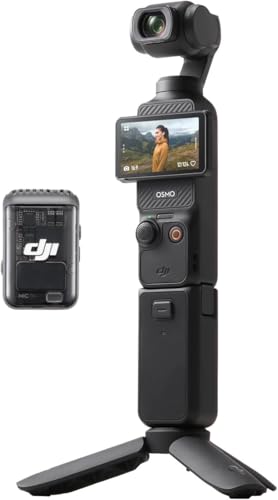
5. DJI Osmo Pocket 3 — Best Travel Vlogging Camera
 DJI Pocket Osmo 3 DJI Pocket Osmo 3 timelapse
Best For: Travel vloggers, YouTube creators, and travelers who want smooth handheld video without carrying a larger camera and gimbal.
The DJI Osmo Pocket 3 is designed primarily for video creators who need stabilization and portability.
Its one-inch sensor and three-axis mechanical gimbal make it useful for walking tours, travel vlogs, restaurant videos, and sightseeing footage.
Unlike cameras that rely entirely on electronic stabilization, the Pocket 3 uses a physical gimbal to compensate for camera movement.
This can produce smooth footage while walking and filming handheld.
The camera also includes a rotating two-inch touchscreen, making it easier to switch between horizontal and vertical recording.
Its compact size is particularly useful for travelers who want to carry minimal equipment.
Key Features
- One-inch CMOS sensor
- Three-axis mechanical gimbal
- 4K video up to 60fps
- 4K120 slow-motion recording
- Two-inch rotating touchscreen
- Horizontal and vertical recording options
- Subject tracking
- Approximately 179g
- Up to 166 minutes of battery life under specified conditions
- Compatible external microphone options
Pros
- Smooth handheld video.
- Compact and lightweight.
- Suitable for travel vlogging.
- Convenient rotating display.
- Useful for walking and moving shots.
Cons
- No official water-resistance rating.
- Fixed lens without optical zoom.
- More specialized for video than traditional still photography.
- Gimbal requires care during transport.
Who Should Buy the DJI Osmo Pocket 3?
Choose the Osmo Pocket 3 if your main goal is producing travel videos, vlogs, and social media content.
GearBrain Buying Recommendation: Best for travelers who prioritize smooth handheld video and minimal recording equipment.
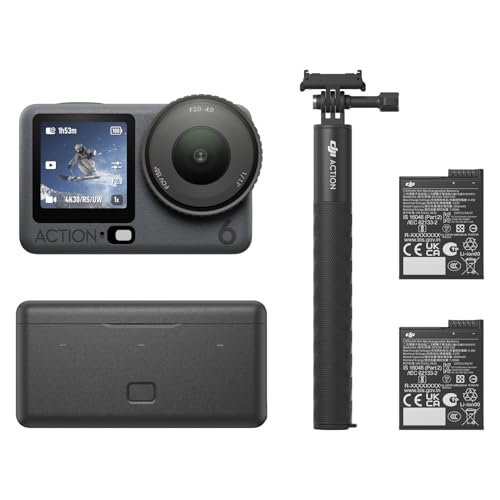
6. DJI Osmo Action 6 — Best Adventure and Underwater Travel Camera
 DJI Osmo Action 6 DJI
Best For: Adventure travelers, hikers, cyclists, snorkelers, and vacationers who need a compact, rugged camera for demanding outdoor conditions.
The DJI Osmo Action 6 adds an important category to this buying guide: the traditional waterproof action camera.
While the Insta360 X6 records an entire scene for later reframing, the Osmo Action 6 is designed for conventional action footage with a wide-angle perspective.
This makes it useful for travelers who want to record hiking trails, mountain biking, water activities, skiing, and other adventures without carrying a larger camera.
The Osmo Action 6 features a 1/1.1-inch square CMOS sensor and a variable aperture ranging from f/2.0 to f/4.0.
The adjustable aperture gives users more flexibility when recording in changing lighting conditions.
Its 4K Custom mode also supports flexible cropping for different video formats, which is useful for creators publishing both horizontal YouTube videos and vertical social media clips.
DJI's RockSteady and HorizonSteady stabilization technologies help keep footage smooth during movement.
The camera is waterproof to 20 meters without a separate housing, as long as the battery compartment, USB-C cover, and lens cover are properly secured.
For extended underwater recording or deeper dives, DJI recommends an appropriate waterproof housing.
Key Features
- 1/1.1-inch square CMOS sensor
- Variable f/2.0–f/4.0 aperture
- 4K recording up to 120fps
- 4K Custom recording mode
- RockSteady stabilization
- HorizonSteady horizon leveling
- Waterproof to 20 meters without a case
- Waterproof to 60 meters with the compatible housing
- Dual touchscreen design
- Approximately 50GB of usable internal storage
- microSD card support
- Gesture control and subject-tracking features
- Compatible DJI wireless microphone connectivity
Pros
- Rugged design for active travel.
- Waterproof in supported conditions without a separate case.
- Variable aperture provides additional exposure control.
- Strong stabilization for action footage.
- Flexible recording formats for social media.
- Built-in storage provides a useful backup when a memory card is unavailable.
Cons
- Fixed wide-angle lens limits conventional photography.
- Smaller sensor than APS-C mirrorless cameras.
- Less suitable for portraits and telephoto photography.
- Long high-resolution recording sessions can generate heat.
- Underwater use requires careful attention to seals and manufacturer instructions.
Who Should Buy the DJI Osmo Action 6?
Choose the Osmo Action 6 if your vacations involve water, cycling, hiking, skiing, or other activities where durability and stabilization matter more than traditional photographic controls.
It's also a strong option for creators who want conventional action footage without the extra reframing workflow of a 360-degree camera.
GearBrain Buying Recommendation: Best for adventure travelers who need waterproofing, stabilization, and compact video recording.
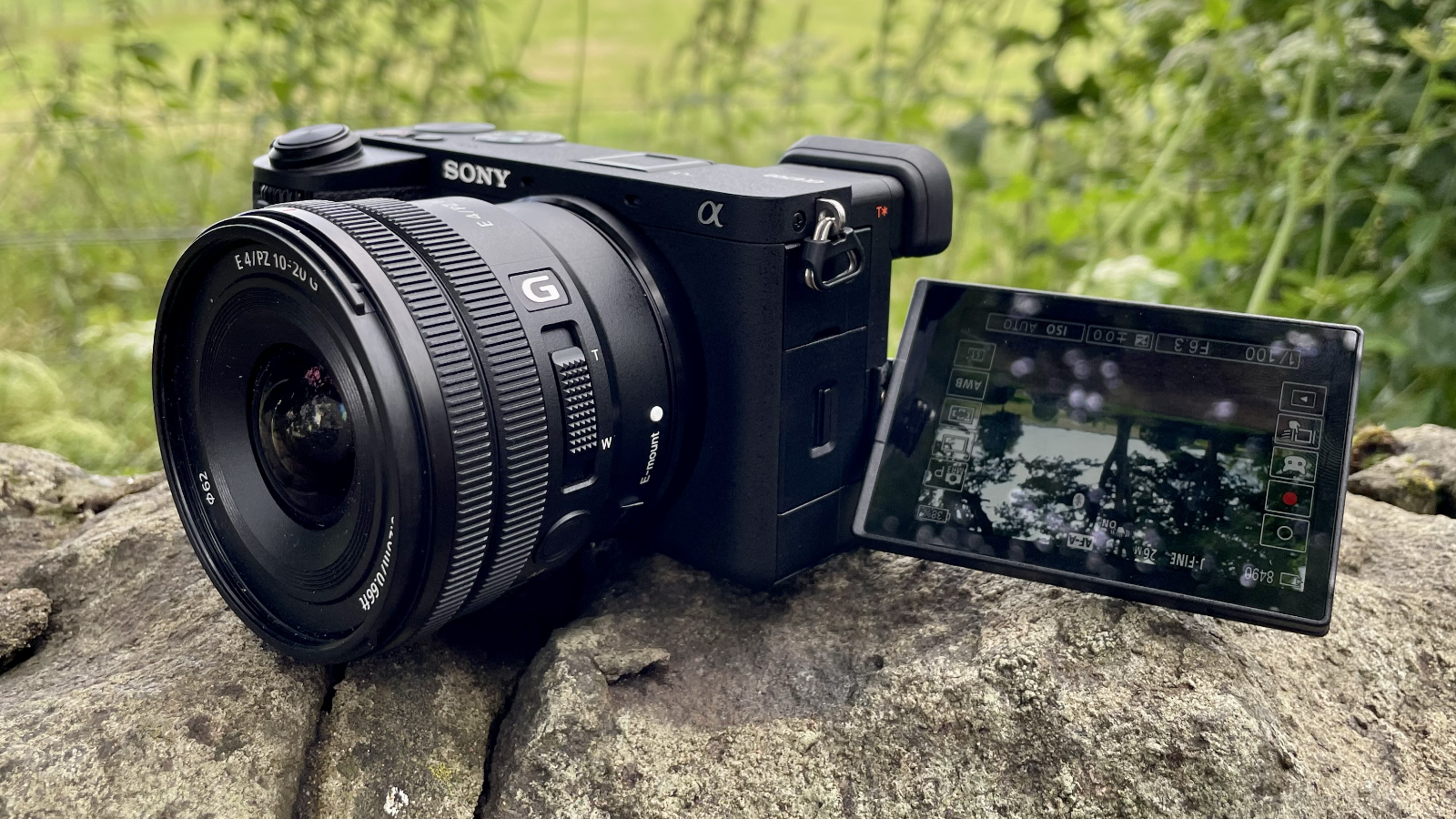
7. Sony a6700 — Best Hybrid Mirrorless Travel Camera
 Sony a6700 — Best Hybrid Mirrorless Travel Camera Sony Alpha A6700 mirrorless camera outside on a wall
Best For: Photography enthusiasts, advanced travelers, and content creators who want strong still-image quality and professional-style video features in one interchangeable-lens camera.
The Sony a6700 is a hybrid APS-C mirrorless camera designed for photographers and videographers who want more advanced capabilities than a typical beginner camera.
Its 26MP back-illuminated APS-C sensor provides a strong foundation for landscapes, street photography, wildlife, portraits, and travel video.
The camera also features a dedicated AI processing unit that supports subject recognition and tracking.
This can be especially helpful when photographing moving people, animals, birds, and other subjects you encounter while traveling.
For video creators, the a6700 supports 4K recording up to 60fps using oversampled footage, as well as 4K120 recording with a crop.
It also offers 10-bit 4:2:2 recording and advanced color profiles for creators who want greater editing flexibility.
Unlike the Canon EOS R50, the Sony a6700 includes five-axis in-body image stabilization.
The camera uses Sony's E-mount system, providing access to a broad selection of compatible lenses.
That makes it attractive for travelers who want one camera body that can adapt to different photography and video requirements.
Key Features
- 26MP APS-C back-illuminated CMOS sensor
- Sony E-mount interchangeable lenses
- Dedicated AI processing unit
- Advanced subject recognition and tracking
- Five-axis in-body image stabilization
- Up to 5.5 stops of rated stabilization
- 4K60 video oversampled from 6K
- 4K120 video with crop
- 10-bit 4:2:2 recording
- S-Log and HLG video profiles
- Vari-angle touchscreen
- Electronic viewfinder
- Approximately 570-shot battery rating using the rear display
Pros
- Strong combination of photography and video capabilities.
- Advanced subject recognition and autofocus.
- In-body stabilization.
- Broad interchangeable-lens ecosystem.
- High-quality video recording options.
- Useful for travelers developing more advanced photography skills.
Cons
- More expensive than beginner mirrorless options.
- Additional lenses increase cost and travel weight.
- Advanced menus and recording settings require a learning curve.
- 4K120 recording uses a crop.
- Less convenient than pocket cameras for minimalist travel.
Who Should Buy the Sony a6700?
Choose the Sony a6700 if you want a camera that produces high-quality travel photos and advanced video while leaving room to expand your gear.
It is particularly attractive for creators who want to shoot both travel photography and YouTube content with one camera system.
GearBrain Buying Recommendation: Best for experienced travelers and hybrid content creators who want advanced autofocus, interchangeable lenses, and strong video capabilities.
How to Choose the Best Travel Camera in 2026
 How to Choose the Best Travel Camera in 2026 GearBrain
The right travel camera depends on the type of trip you're planning and the content you want to capture.
1. Decide Whether Photography or Video Matters More
If still photography is your priority, consider cameras with larger sensors and more photographic control.
The Fujifilm X100VI, Sony a6700, and Canon EOS R50 are particularly relevant.
For travelers who mainly create videos, the DJI Osmo Pocket 3, Osmo Action 6, and Insta360 X6 offer different advantages.
2. Consider Size and Weight
A camera that stays in your hotel room because it's too heavy won't capture many memories.
The Sony RX100 VII and DJI Osmo Pocket 3 suit travelers who prioritize compact equipment.
Interchangeable-lens cameras offer greater flexibility but may require additional lenses and accessories.
3. Evaluate Image Stabilization
Stabilization matters most when filming while walking or recording handheld video.
Different cameras use different approaches:
- In-body stabilization: Moves the image sensor to compensate for camera shake.
- Optical stabilization: Uses lens components to reduce movement.
- Electronic stabilization: Processes video to reduce visible shake, sometimes with cropping.
- Mechanical gimbal stabilization: Physically stabilizes the camera during movement.
- 360 stabilization: Uses motion data and reframing to keep 360 footage level.
The best approach depends on your recording style.
4. Check Waterproofing and Weather Protection
Not every travel camera is designed for rain, swimming, or snorkeling.
The Insta360 X6 and DJI Osmo Action 6 both offer waterproofing to 20 meters without a case under specified conditions.
The DJI Osmo Pocket 3 has no official water-resistance rating.
Traditional mirrorless cameras may also require additional protection in wet or dusty environments.
5. Decide Whether You Need Zoom
A zoom lens is useful when photographing distant subjects.
The Sony RX100 VII includes a built-in 24–200mm equivalent zoom.
The Canon EOS R50 and Sony a6700 can use different interchangeable lenses.
The Fujifilm X100VI has a fixed lens, while the Insta360 X6, DJI Osmo Pocket 3, and Osmo Action 6 prioritize other recording capabilities.
6. Consider Smartphone and Editing Integration
Many travel cameras rely on companion apps to transfer, edit, or share footage.
The Insta360 X6 particularly benefits from software-based reframing.
Creators should consider whether they prefer footage that is ready to share quickly or are comfortable spending more time editing after a trip.
7. Think About the Total Cost of Ownership
The camera body is only part of the investment.
Additional expenses may include:
- Lenses
- Memory cards
- Spare batteries
- Chargers
- Protective cases
- External microphones
- Tripods or selfie sticks
- Waterproof housings
A less expensive camera body can become a more expensive travel setup once you add accessories.
Frequently Asked Questions About Travel Cameras
What Is the Best Travel Camera in 2026?
The best camera depends on the trip.
The Insta360 X6 is a strong option for travelers who want 360-degree recording and flexible reframing. The Canon EOS R50 is a practical beginner mirrorless camera, while the Sony a6700 offers more advanced hybrid capabilities.
The DJI Osmo Pocket 3 is particularly useful for travel vlogging, and the DJI Osmo Action 6 is designed for outdoor adventures.
What Is the Best Travel Camera for Beginners?
The Canon EOS R50 is a good choice for beginners who want to learn photography and experiment with interchangeable lenses.
Travelers who prefer a compact camera without additional lenses may find the Sony RX100 VII easier to carry.
What Is the Best Travel Camera for YouTube Vlogging?
The DJI Osmo Pocket 3 is a strong option because of its compact size, mechanical stabilization, and video-focused design.
The Sony a6700 is another good choice for creators who want interchangeable lenses and advanced recording controls.
Which Travel Camera Is Best for Hiking?
The Insta360 X6 and DJI Osmo Action 6 are useful for hiking because of their compact designs and stabilization features.
The Osmo Action 6 is particularly well-suited for traditional action footage, while the Insta360 X6 lets creators reframe scenes afterward.
What Is the Best Waterproof Travel Camera?
The DJI Osmo Action 6 and Insta360 X6 both support waterproof operation to 20 meters without a separate housing, subject to manufacturer requirements.
The DJI model emphasizes traditional action footage, while the Insta360 camera captures 360-degree video.
Is a 360 Camera Better Than a Traditional Travel Camera?
Not necessarily.
A 360 camera offers flexibility because you can choose the viewing angle after filming.
Traditional cameras offer different advantages, including optical zoom, interchangeable lenses, larger sensors, and more conventional photography controls.
Is the Sony a6700 Better Than the Canon EOS R50 for Travel?
The Sony a6700 offers more advanced autofocus, in-body stabilization, and video recording capabilities.
The Canon EOS R50 is generally a more approachable choice for beginners and travelers who want a lighter investment in interchangeable-lens photography.
Is the Fujifilm X100VI Good for Travel?
Yes, particularly for street photography, city travel, and documentary-style images.
Its fixed lens is less flexible than a zoom, but its high-resolution sensor, film simulations, and traditional controls appeal to photography enthusiasts.
Do You Need a Dedicated Travel Camera if You Have a Smartphone?
Not everyone does.
Modern smartphones are capable travel cameras, especially for casual photography and social media.
A dedicated camera becomes more useful when you need optical zoom, interchangeable lenses, specialized stabilization, waterproof action recording, or 360-degree capture.
Final Verdict: Which Travel Camera Should You Buy in 2026?
Final Verdict: Which Travel Camera Should You Buy in 2026? Future
The best travel camera matches your activities, photography interests, and willingness to carry extra gear.
For travelers who want flexible 360-degree video, the Insta360 X6 stands out with its reframing capabilities, stabilization, and waterproof design.
The Canon EOS R50 is a good starting point for travelers entering interchangeable-lens photography, while the Sony RX100 VII provides a versatile zoom in a compact package.
The Fujifilm X100VI appeals to photographers who value street photography and traditional camera controls.
For video creators, the DJI Osmo Pocket 3 is particularly well suited to handheld travel vlogging.
The DJI Osmo Action 6 is a strong choice for adventure travelers who need waterproofing and stabilization, while the Sony a6700 offers advanced photography and video capabilities for creators who want a flexible mirrorless system.
No single camera is perfect for every traveler. By choosing a model that matches how you actually travel and create content, you'll be better equipped to capture memorable moments without carrying unnecessary gear.
GearBrain Editor's Note: Updated November 2026. This buying guide compares manufacturer specifications, features, and intended use cases. Recommendations are research-based and do not represent direct comparative hands-on testing. Pricing, availability, firmware features, and accessory compatibility may change.
From Your Site Articles
Related Articles Around the Web
 Insta360 X6 Buyer’s Guide: Everything You Need to Know About the New 8K 360 Camera Insta360

 Canon EOS R50

 A Sony RX100 VII with its flash and viewfinder popped up, rear screen extended and lens protruding, floats in front of a blue background

 Fujifilm X100VI — Best Premium Street Photography Camera

 DJI Pocket Osmo 3
 DJI Osmo Action 6
 Sony a6700 — Best Hybrid Mirrorless Travel Camera

 How to Choose the Best Travel Camera in 2026 GearBrain

 Final Verdict: Which Travel Camera Should You Buy in 2026?