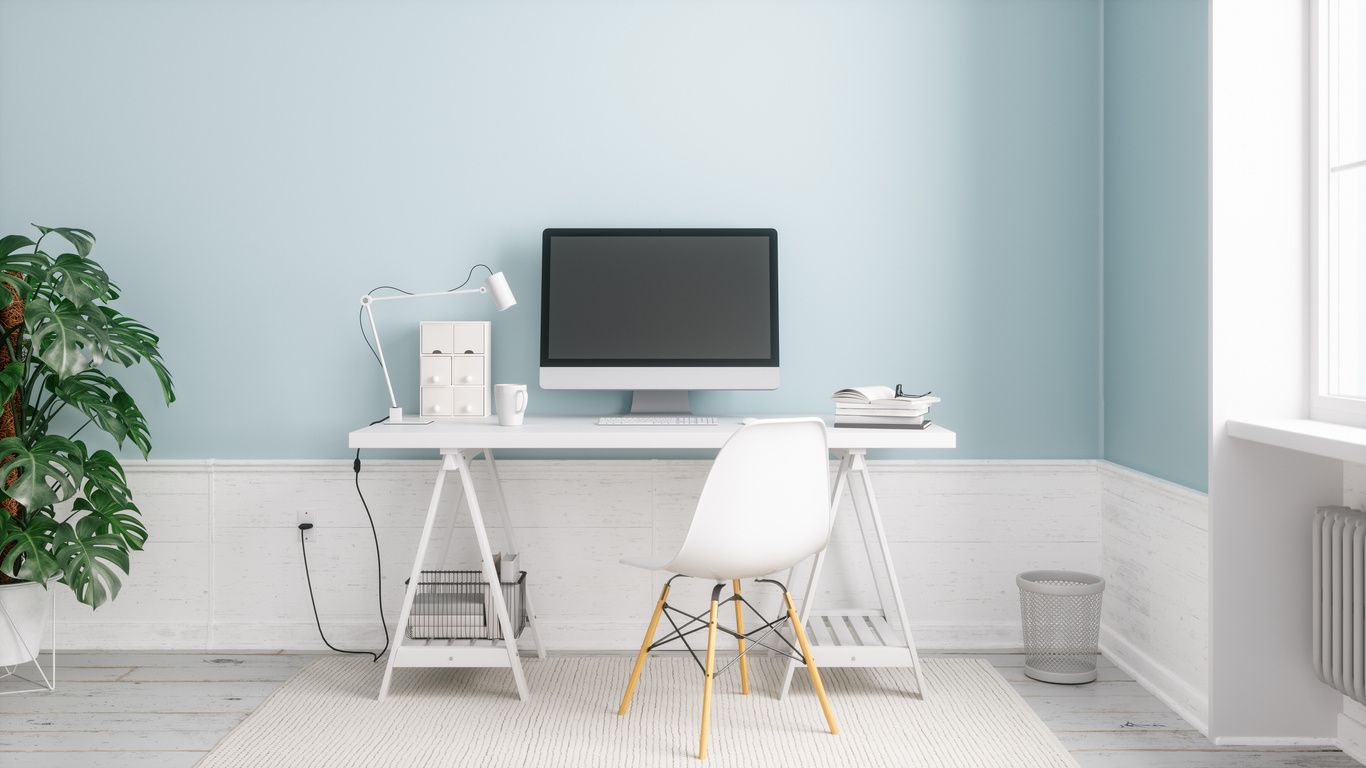
Smart Ways to Make a Compact Home Office Disappear
Working from home sounded great until the spare room turned into a filing cabinet with a bed in it. Roughly 35% of American workers who can work remotely now do so full-time, according to Pew Research, and most of them are squeezing a desk into a space that was never designed for one. Corner of the bedroom. End of the hallway. That awkward gap beside the sofa.
The trick isn't finding more square footage. It's making the office vanish when the workday ends, so your home stops feeling like an annex of the office.
Why the Vanishing Act Matters
There's a psychological cost to staring at your laptop during dinner. Researchers at the University of Cincinnati found that people who couldn't physically separate work from home space reported higher levels of stress and worse sleep quality. Your brain reads visual cues. A monitor glowing in the corner at 9 pm says "you still have emails."
Then there's the practical side. A 90-square-foot bedroom that doubles as an office needs to work twice as hard. Every item earns its place or it goes.
Start by auditing what you actually use
Most home offices are cluttered with equipment nobody touches. The printer used twice since 2022. Three sets of headphones. A desk lamp competing with a ceiling light. Strip it back to the essentials, then figure out where those essentials live when you're off the clock.
Cutting the clutter also means dropping single-purpose hardware. A fax machine is the clearest example: the documents that still have to travel by fax — signed forms, insurance paperwork, medical releases — can be sent straight from a laptop or phone with an online service such as mFax, which frees the desk space a machine and its paper trays used to take.
Furniture That Folds, Flips or Retreats

This is where the real gains happen. Traditional desks eat between six and twelve square feet permanently, whether you're using them or not. That's a terrible deal in a small apartment.
A fold-down wall desk mounts flat against the wall and drops open when you need it. Closed, it projects maybe four inches. Open, you get a full work surface. Some models include shelving inside the cabinet, so your laptop, notepad, and charger stay put behind a closed door. No shuffling gear into a drawer every evening.
Other options worth considering:
Secretary desks, the antique kind with a drop-front lid, hide a surprising amount of mess and look like furniture rather than office kit
Rolling laptop carts that tuck into a closet or slide behind a door
Nesting tables where the larger surface pulls out for work and slides back under afterwards
Murphy desk beds for rooms that genuinely need to serve two purposes at different times of day
Chairs are the sneaky problem
Nobody talks about the chair. A proper ergonomic office chair is a hulking thing, and it doesn't fold. Folding chairs wreck your back over eight hours. The compromise many people land on is a lightweight task chair on casters that rolls under a dining table or into a corner. Or a stool you can slide beneath the desk entirely.
Cable Management Is Half the Battle

You can hide the desk and still have a nest of black wires trailing down the wall like ivy. It ruins the effect completely.
Go wireless wherever the budget allows. Keyboard, mouse, headphones. That kills three cables immediately. For what's left, a single power strip mounted to the underside of the desk surface, plus adhesive cable clips, keeps everything contained. Velcro ties beat zip ties because you can undo them.
If your setup involves a monitor, consider a laptop dock with a single USB-C connection. One cable in, everything else handled. Anker and CalDigit both make units that live permanently on the desk and let you disconnect in two seconds.
Use Vertical Space Nobody Else Uses

Look up. The wall above your desk between eye level and the ceiling is usually dead space. Floating shelves there hold files, reference books, and the printer, freeing the surface below.
Pegboard is having a moment for good reason. It costs under $30 for a decent panel, mounts in twenty minutes, and adapts as your needs change. Hang a small basket for pens, hooks for headphones, a clip for paperwork. When you're done working, everything goes back on the board and the desk surface is clear.
Behind the door counts too
Over-door organizers aren't just for shoes. A shallow hanging pocket unit swallows notebooks, chargers, and that stack of documents you keep meaning to file.
Lighting Sets the Boundary
Here's a small change with outsized effect. Put your task lighting on a separate switch or smart plug from the rest of the room. When work finishes, that light goes off, and the space visually shifts back to being a bedroom or living room.
Smart bulbs make this simple. Set a scene called "work" with bright, cool light and another called "evening" with warm tones. Philips Hue, Nanoleaf, and cheaper Wyze bulbs all do it. Your eyes register the change instantly, and so does your brain.
The goal isn't a magazine-perfect workspace. It's a room that quietly stops being an office at six o'clock, so you can actually stop thinking about work.
