The Evolution from Alexa Guard to Alexa Emergency Assist — What You Need to Know
Amazon has quietly retired one of Alexa’s most popular smart-home safety features: Alexa Guard. Once free for all Echo device owners, the tool could detect the sound of breaking glass or a smoke alarm and send an alert to your phone. Now, those same capabilities have moved into a new, paid service called Alexa Emergency Assist.
Here’s what changed, what remains free, how the new service works, and how it compares to other smart-home security options in 2025.
From Alexa Guard to Alexa Emergency Assist
Alexa Guard launched in 2019, promising to turn Echo speakers into mini home-security sentinels. You could say, “Alexa, I’m leaving,” and your Echo would reply, “Okay, I’ll be on guard.” While in that mode, it listened for the sounds of glass breaking, smoke alarms, or carbon-monoxide alarms and sent a mobile alert if it heard trouble.
Users could also have Alexa toggle smart lights automatically to make it look like someone was home — a clever burglary deterrent. For many, it was an easy, free way to get some peace of mind without a subscription plan.
But by late 2023, Amazon began retiring Alexa Guard and folding its features into Alexa Emergency Assist, a paid service that combines upgraded detection with live-agent help.
Signup to Alexa Emergency Assist
What Alexa Emergency Assist Does

Alexa Emergency Assist still relies on your Echo device’s microphones, but it now offers voice-activated help and professional monitoring features unavailable in Alexa Guard.
1. “Alexa, Call for Help” Command
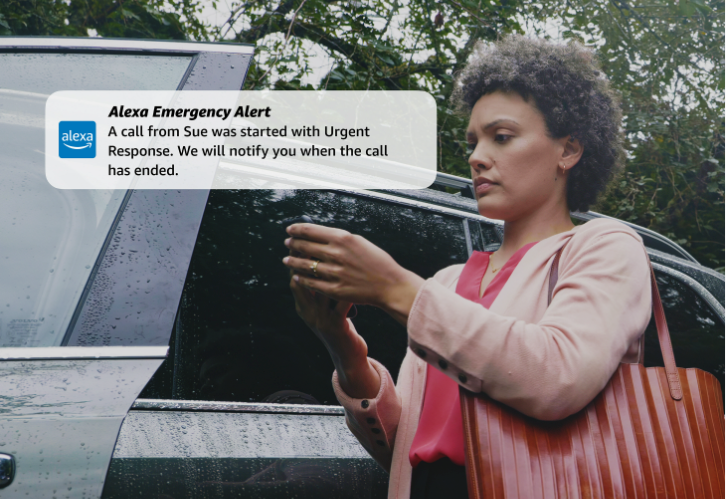
Subscribers can say “Alexa, call for help” to connect instantly with Urgent Response agents — trained professionals who can contact emergency services (police, fire, or EMS) on your behalf. Alexa itself still can’t directly dial 911, but these agents handle dispatch once they verify the situation.
2. Smart Alerts (Smoke, CO, Glass Break)
The Echo continues to listen for sounds of breaking glass, smoke alarms, or carbon monoxide alarms. When triggered, Alexa sends a Smart Alert to your phone with a short 10-second audio clip. You can then listen, confirm whether it’s an emergency, and — if subscribed — connect to help.
3. Emergency Contact Notifications
You can designate up to 25 household contacts to be notified automatically if Alexa detects an emergency or if you activate Urgent Response.
4. Stored Critical Information
Emergency Assist lets you store medical conditions, gate codes, pet info, and emergency instructions in your Alexa profile, giving responders valuable context.
5. Home / Away Lighting (Still Free)
Some Guard features live on — like Away Lighting and Home/Away routines that randomize your lights to simulate occupancy. These remain free under the standard Alexa app, even if you don’t subscribe.
Pricing and Availability
As of 2025, Alexa Emergency Assist costs $7.99 per month or $79 per year for non-Amazon Prime members. Prime users may pay slightly less. It’s available to U.S. Echo users with compatible devices such as Echo Hub, Echo, Echo Dot, Echo Flex, Echo Spot, Echo Plus, Echo Show, and Echo Studio speakers (all generations). Note: You can also call Urgent Response from Alexa-on-the-go devices, including Echo Auto, Echo Buds, and Echo Frames, as well as from the Alexa app.
Alexa Guard and Guard Plus are no longer supported. Users who had those services were automatically transitioned to the new plan or prompted to subscribe when features stopped functioning.
Setting Up Alexa Emergency Assist
You can enable Emergency Assist in a few quick steps:
- Open the Alexa app → Tap More → Alexa Emergency Assist.
- Subscribe and verify your account.
- Add emergency information (address, medical notes, gate codes).
- Select emergency contacts to notify in case of an alert.
- Toggle Smart Alerts for smoke, CO, or glass-break detection.
- Test by saying “Alexa, test emergency helpline.”
GearBrain Tip: Make sure your Echo is placed where it can clearly hear major activity — not behind furniture or in a closed room. Detection accuracy depends on microphone placement and ambient noise.

How It Compares to Alexa Guard
| Feature | Alexa Guard (Discontinued) | Alexa Emergency Assist (2025) |
|---|---|---|
| Availability | Free for U.S. Echo users | Subscription ($7.99/mo) |
| Activation | “Alexa, I’m leaving” | “Alexa, call for help” or automated |
| Sound Detection | Smoke, CO, glass break | Same, but with upgraded AI |
| Emergency Response | None; app notification only | Live Urgent Response agents |
| Lighting Automation | Yes | Still available (free) |
| Contact Alerts | Basic app alerts | Notify up to 25 people |
| Integrations | ADT, Ring, Abode (partial) | Ring, ADT; fewer 3rd-party APIs |
| 911 Access | No | Via agent mediation |
| Drop In Audio | Manual | Optional clip + Drop In |
| Cost | Free | Paid subscription |
Real-World Performance
Independent reviewers report that Alexa’s sound detection has improved with newer Echo devices but still struggles in noisy homes or when the alarm is far from the speaker. Amazon’s AI models can differentiate between types of alarms, but they don’t always detect muffled or low-volume events.
Emergency Assist’s agent dispatch feature, however, has received positive marks for responsiveness — typically connecting within seconds and verifying the user’s identity before escalating.
Overall, it’s a convenience and peace-of-mind service, not a professional alarm replacement. For true 24/7 protection, pair Alexa Emergency Assist with systems like Ring Alarm, Abode, or Vivint, all of which can integrate through Alexa routines or skill APIs.
GearBrain’s Recommendation

For most Echo owners, Alexa Emergency Assist is worth considering if you:
- Live alone or have mobility issues
- Want a low-cost backup to professional monitoring
- Prefer hands-free voice access to emergency help
- Already use Alexa lighting or Ring devices
However, if you already have a monitored alarm system (ADT, Vivint, SimpliSafe, etc.), this may be redundant — your system’s sensors and monitoring center already cover those roles.
GearBrain suggests using Alexa Emergency Assist as a second layer of security: an AI-powered listener that fills in gaps, alerts your phone, and lets you call for help even when you can’t reach your phone.
Conclusion
The free Alexa Guard days are over — but the new Alexa Emergency Assist is more capable and reliable, especially for people who want live help on demand. The trade-off is cost and dependence on Amazon’s ecosystem.
As always, GearBrain recommends pairing your smart assistant with dedicated sensors, smoke detectors, and monitored systems for full protection.
Before subscribing, check which of your Echo devices support Emergency Assist, ensure your Wi-Fi coverage is strong, and confirm your emergency contacts are up to date.
GearBrain Call-to-Action
Want to know if your smart devices, alarm system, or lights work with Alexa Emergency Assist?
👉 Visit The GearBrain, our smart home compatibility checker to see what connects to Alexa— and how to make your home safer and smarter in 2025.
Pros and Cons
Pros
✅ Adds live-agent dispatch via voice command
✅ Keeps existing smart light automation
✅ Easy to enable for any Echo household
✅ Affordable compared to pro monitoring plans
✅ Supports emergency contact notifications
Cons
⚠️ Detection still depends on sound quality — not motion or video
⚠️ Cannot directly call 911
⚠️ Requires monthly fee for previously free features
⚠️ Occasional false positives / missed alerts
⚠️ Must rely on Amazon’s infrastructure and third-party agents
