
The Conversation (0)
Pets
GearBrain
How to Select the Right Turf for Your Dogs
A practical guide to choosing pet-friendly artificial turf that keeps dogs safe, comfortable, and your yard clean year-round.
Dogs are hard on yards. Muddy paws, bare patches, and torn-up lawn edges are basically a given once you bring one home. Artificial turf solves many of those problems, and it's easy to see why pet owners have warmed to it. But picking the wrong product? That creates a whole different set of problems.
Not all synthetic grass is designed with animals in mind. Dogs lie on surfaces, roll around on them, and spend far more contact time on the ground than humans do. Heat retention matters more than most people realize when shopping for turf. On a hot afternoon, synthetic grass can climb well above air temperature, putting paw pads at real risk of burns. Looking into the data around artificial grass temperature for dogs before you buy can save you from a product that looks great in a showroom but becomes a hazard in July.
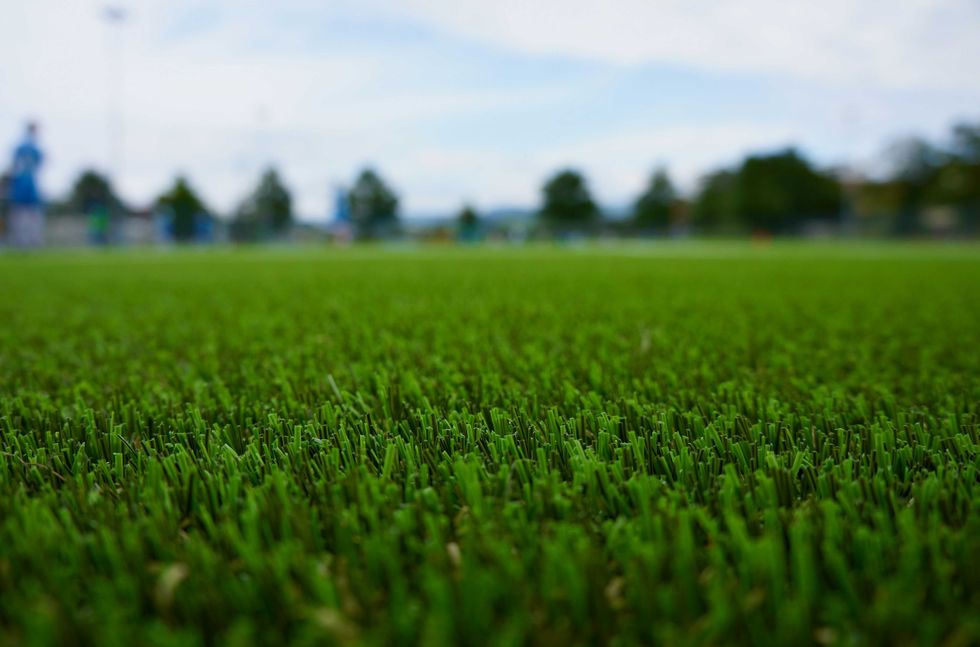 What to Look for in the Turf Fibers Photo by Peter Burdon on Unsplash
The fiber type drives everything, including how the turf wears, how it feels underfoot, and how it handles heat. Most pet turf is made from one of three materials: polyethylene, polypropylene, or nylon.
Polyethylene is the go-to for pet applications. It's soft, holds up well under regular use, and doesn't trap heat the way stiffer materials do. Dogs with sensitive skin tend to do fine on it. Nylon sits at the other end of the spectrum. It's the toughest of the three, which sounds appealing, but it's also the most rigid and the worst performer at heat absorption. High-traffic areas might warrant nylon, but for a dog that likes to stretch out in the sun, it's probably not the right call.
Polypropylene is the cheapest option and usually the shortest-lived. UV exposure breaks it down faster, and dogs that dig or scratch will wear it through more quickly than either alternative. For most owners, polyethylene with UV stabilization strikes the right balance between comfort, durability, and temperature performance.
Pile height is the height of the individual blades. For dogs, somewhere between 1.5 and 2 inches is the practical sweet spot. Taller grass looks more natural, but it traps waste and stays wet longer after you rinse it down. Shorter piles dry faster and clean up easier, though they're less comfortable for dogs that spend a lot of time lying down.
Density is just as relevant. More fibers per square foot means better cushioning and more resistance to digging. If you have a medium- or large-sized dog, aim for a face weight of 60 to 80 ounces. Anything lighter tends to flatten out more quickly under daily use.
Here's the thing most people skip past when reading product specs: the backing. Standard residential turf uses a latex or polyurethane backing with a handful of small drainage holes. That's fine for rain. It's not fine for a dog.
You need a fully permeable backing that lets urine pass straight through rather than sit on the surface. Some pet turf uses a flow-through or hole-punched backing rated to drain 30 to 50 inches per hour. That kind of permeability reduces odor and keeps the surface cleaner between deep cleans. Pair it with a crushed granite or decomposed granite base during installation, and you'll get the best possible drainage from the ground up.
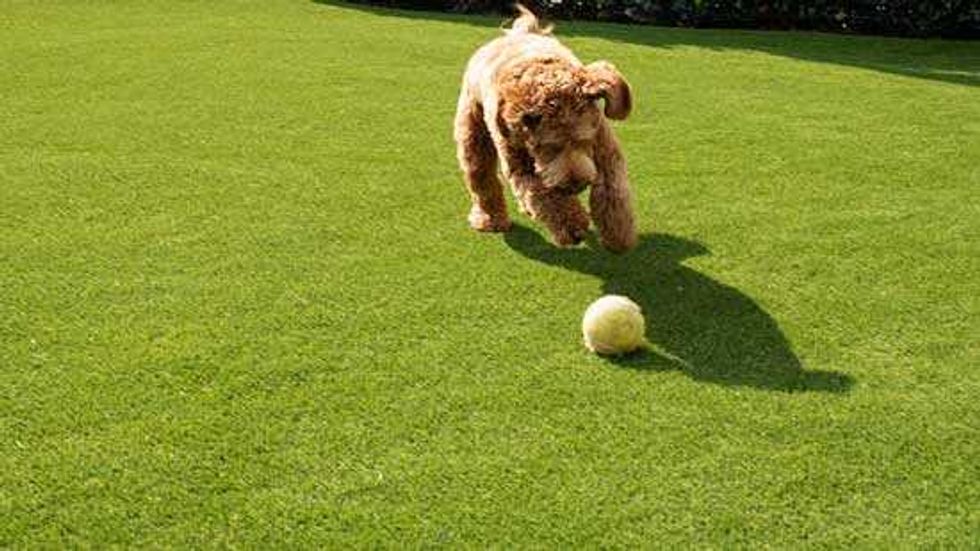 Infill Choices and Dog Safety Big Dog Plays on Artificial Grass Lawn
Infill is the material packed between the blades. It keeps the turf upright and provides cushioning. The type you choose has a direct effect on both safety and the surface's long-term manageability.
Crumb rubber is common on many athletic fields, but it's generally a poor choice for pets. Off-gassing concerns and high heat retention make it worth skipping. Silica sand is affordable and easy to work with, but it compacts over time and offers no antimicrobial benefit.
Zeolite and acrylic-coated sand are worth the extra cost. Zeolite absorbs ammonia from urine and knocks back odor between thorough cleanings. Acrylic-coated sand runs cooler than standard silica and holds its shape better under load. Cork infill is another solid option, especially for active dogs. It stays cooler than rubber or silica, cushions well, and is biodegradable.
Artificial turf significantly reduces yard work. It doesn't cut it to zero. With dogs involved, plan to rinse the surface at least weekly, more often if you have multiple animals. A diluted enzyme cleaner, once a month, does the work plain water can't, breaking down bacteria and residual odors before they build up.
Pick up solid waste right away. Check infill levels once or twice a year, particularly if your dog is a digger. Displaced infill reduces cushioning and increases the risk of premature backing wear.
A well-installed pet turf system should last 12 to 15 years with daily use by dogs. The upfront cost runs higher than seeded grass. Over time, most owners find the trade-off worth it.
The right choice comes down to your dog's size, behavior, and the climate you're dealing with. Get the fiber, drainage, and infill right, keep up with basic maintenance, and the surface will serve your dog well through every season.
GearBrain Compatibility Find Engine
A pioneering recommendation platform where you can research,
discover, buy, and learn how to connect and optimize smart devices.
Join our community! Ask and answer questions about smart devices and save yours in My Gear.