You just spotted something crawling across your kitchen counter — or maybe it landed on your arm during a hike — and now you need answers. A good bug identifier by photo app can tell you what you're dealing with in seconds, no entomology degree required. We tested and compared six of the best insect identification apps available right now, from AI-powered photo scanners to community-driven platforms, so you can pick the one that fits your life.
BugKnow — The Free All-Rounder for American Homes
 BugKnow insect identifier app BugKnow insect identifier app — identify bugs by photo
If you're a regular person who found a bug in the house and just wants to know what it is, BugKnow was built for you. It covers over 260,000 species — one of the largest databases in any consumer app — and the core identification feature is completely free with unlimited scans.
Snap a photo, get a species name, key facts, and a full profile within seconds. BugKnow claims 98% accuracy on common species and 85% on rarer ones, which lines up well for the household bugs most people actually encounter.
What sets BugKnow apart are two tools that go beyond naming the bug. The Bite Checker lets you upload a photo of a bite or sting and get a reference result based on visual patterns. The Pest Severity Assessment walks you through a few questions and gives you a read on how serious a potential infestation might be, plus practical next steps. Neither replaces professional advice, but both save you from a late-night Google panic. You can also save finds, organize them into folders, and post tricky IDs to the community for help.
Pros:
- Free and unlimited photo identification — no paywall on the core feature
- Massive 260K+ species database focused on U.S. species
- Bite Checker and Pest Severity Assessment are genuinely useful household tools
- Clean, no-nonsense interface that anyone can pick up
Insectio — The Outdoor Explorer's Swiss Army Knife
 Best mobile inspection apps Best mobile inspection apps
Insectio takes the bug identification concept and builds an entire outdoor lifestyle toolkit around it. The core photo ID works as expected — snap a pic, get a species result almost instantly — and every identification opens into a beautifully illustrated profile with taxonomy, biology, habitat info, and clear hazard ratings for humans, animals, and plants.
The standout features are the ones you won't find anywhere else. The Hike Bug Forecast lets you pick a location and date, then generates a full insect-risk report covering what to expect, what to wear, and what to check afterward. Live Activity Alerts show which insects are active near you right now.
There's a dedicated pet safety section for dealing with fleas, ticks, mosquitoes, and chiggers. And the Discover tab tailors your home screen to your location, surfacing active species and surprisingly addictive daily insect facts.
The community space — the Discovery Square — lets you browse and share finds, and the whole app has a polished, magazine-quality feel.
Pros:
- Hike Bug Forecast and Live Activity Alerts are unlike anything else on the market
- Beautifully designed species profiles with multi-angle photos
- Pet safety section is a real differentiator for dog and cat owners
- Location-aware home screen keeps content fresh and relevant
BugIdentifier.Org — Zero Friction, Zero Downloads
Sometimes you don't want to install an app. Maybe you found one weird bug on your patio and just want a quick answer before moving on with your day. That's exactly where BugIdentifier.Org fits in.
It's a web-based insect identifier that works right in your browser — on phone, tablet, or laptop. No app to download, no account to create. Upload a photo, the AI analyzes it, and you get your result. The whole thing takes about 30 seconds.
The trade-off is depth. There are no hike forecasts, no community features, no personal collections. But BugIdentifier.Org is built for the person who needs one answer, one time, right now — and for that use case, it's hard to beat.
Pros:
- No download, no signup, no friction whatsoever
- Works on any device with a browser
- Fast results — upload, identify, done
- Great for people who only need bug ID occasionally
Cons:
- No app means no push notifications, offline access, or saved history
- Feature set is minimal compared to dedicated apps
- Less depth in species profiles
iNaturalist — The Citizen Science Powerhouse
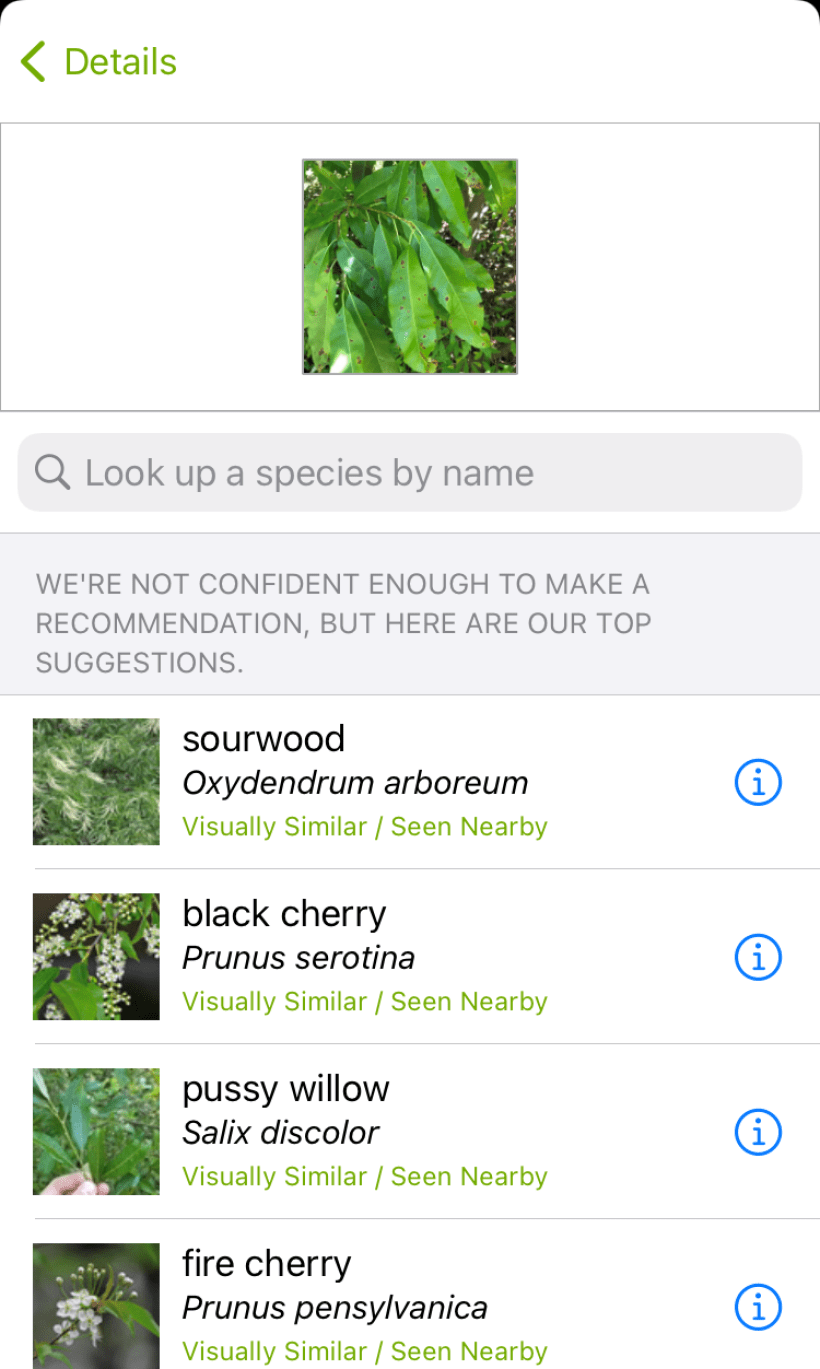
 iNaturalist app Screenshot of iNaturalist app
iNaturalist is in a completely different lane. It's a nonprofit platform backed by the California Academy of Sciences and the National Geographic Society, with a community of over 400,000 scientists and naturalists — one of the most respected biodiversity platforms in the world.
You snap a photo, and the app's AI gives you an initial suggestion. Then your observation goes to the community, where knowledgeable users — including actual entomologists — can confirm, correct, or refine the ID. Once enough people agree, the observation reaches "Research Grade" and becomes part of a real scientific dataset.
The learning curve is steeper than a simple point-and-shoot identifier, and the app is better suited for recording observations than quick household bug checks. But if you care about accuracy and want your sightings to contribute to science, iNaturalist is in a class of its own.
Pros:
- Community-verified identifications from real experts, not just AI
- Your observations contribute to actual scientific research
- Completely free and nonprofit
- Covers all of nature — plants, birds, fungi, not just insects
Cons:
- Not designed for instant "what's this bug in my kitchen" answers
- Community verification can take hours or days
- Steeper learning curve than simpler ID apps
- AI suggestions alone can be hit-or-miss without community input
Google Lens — The One You Already Have
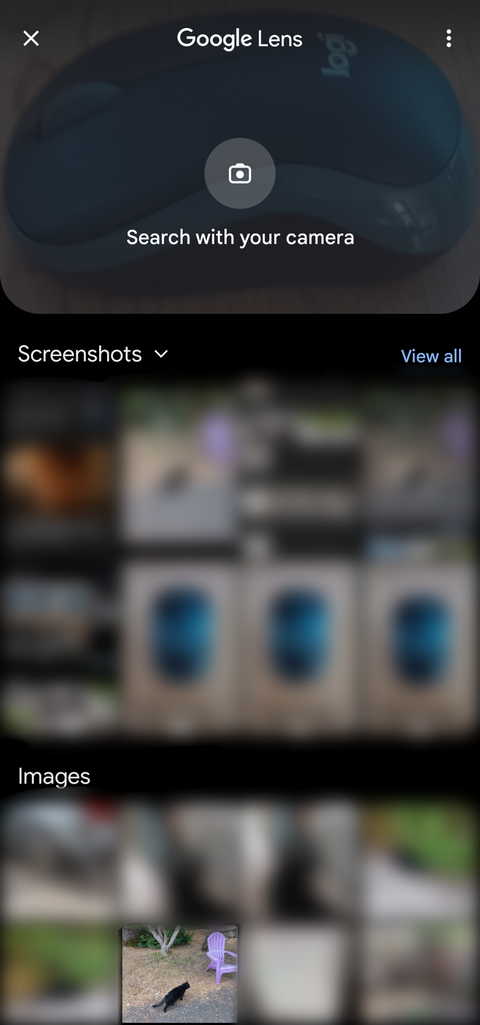
 Google Lens Google Lens launched through the Google app
Here's the thing about Google Lens: you probably already have it on your phone. It's built into the Google app on both Android and iOS, and while it wasn't designed specifically for bug identification, it does a surprisingly decent job.
Point your camera at an insect, tap the Lens icon, and the app matches the image against Google's massive visual database. You'll get links to web pages, similar images, and species information. For common, well-documented bugs, it works well — one study found around 78% accuracy on ideal-quality insect photos, though that drops as photo quality decreases.
The big advantage is zero setup. The downside is that it's a general-purpose visual search tool, so you won't get curated species profiles, bite analysis, or pest assessment. It also sometimes returns a page of "visually similar images" instead of a definitive ID.
Pros:
- Already installed on most phones — nothing to download
- Completely free with no subscription tiers
- Works for identifying practically anything, not just bugs
- Fast and easy to use
Cons:
- Not purpose-built for insects, so results can be vague or generic
- No species profiles, bite checking, or pest assessment features
- Accuracy drops significantly with poor-quality photos
- Sometimes returns visual search results instead of a clear ID
Picture Insect — The Polished Encyclopedia in Your Pocket
Picture Insect has been around for a while and has built a community of over 3 million users. It covers more than 4,000 species and wraps its AI identification in a clean, friendly interface that feels approachable even if you know nothing about bugs.
The identification flow is smooth — snap or upload a photo and get results in seconds, often with multiple possible matches ranked by likelihood so you can compare. Each species comes with an encyclopedia-style entry including HD images, habitat info, and behavioral details. There's also a bite-reference section and basic pest-detection tips.
The catch is that Picture Insect really wants you to subscribe. The free version limits the number of identifications you can make, and you'll see frequent prompts to upgrade to premium (around $20/year). Some users have reported billing issues with the subscription model, so watch out if you sign up for a trial.
Pros:
- Polished interface that's great for beginners
- Good encyclopedia content with HD images
- Multiple ID suggestions let you compare and narrow down
- Large existing user community
Cons:
- Free version is quite limited — pushes hard toward subscription
- 4,000+ species are solid but far smaller than some competitors
- Some users report aggressive subscription billing practices
- Privacy concerns have been raised about data collection
Which One Should You Pick?
It depends on what kind of bug person you are. If you want a reliable, free tool for the bugs you'll find around an American home, BugKnow is the easiest recommendation. If you're an outdoor enthusiast who wants insect intelligence woven into your adventures, Insectio is worth the investment. And if you found one mystery bug and want an answer in 30 seconds without installing anything, just pull up BugIdentifier.Org in your browser.
For the science-minded, iNaturalist turns your curiosity into real research. Google Lens is the no-effort fallback already in your pocket. And Picture Insect is a solid middle ground if you want a curated learning experience and don't mind paying.
No matter which one you choose, you're way better off than flipping through a field guide at 11 p.m., trying to figure out what just ran across your bathroom floor.
From Your Site Articles
Related Articles Around the Web
 BugKnow insect identifier app
  Best mobile inspection apps
  iNaturalist app
  Google Lens