The Conversation (0)
Artificial Intelligence

iStock
Not long ago, an agency partner I work with ran into a frustrating pattern: high-quality, fully human-written content kept getting flagged as AI-generated. The writing was polished (tight structure, consistent tone, clean grammar), but that was exactly the issue. Their detector read "too good" as "too artificial," and suddenly every approval cycle turned into a debate.
It's a more common failure than most people realize. An Arizona State University study found that while top-performing detectors correctly identified essay origins at a 93-98% rate, human raters still hit a 5% false-positive rate, and individual tools landed at around 1.3%. Those numbers sound small until you're running dozens of pieces through a pipeline every week and the flags start stacking up.
I reviewed the content and the detection process. The writing wasn't the problem. The tool's sensitivity was. Once we shifted to a system built to evaluate context rather than surface patterns, the false positives dropped off immediately. More importantly, the team stopped second-guessing their own work.
That experience highlights a real gap in this space. The best AI detection tools prioritize precision over overcorrection, helping teams avoid the costly mistake of flagging legitimate content as AI-generated.
These tools stand out for minimizing false positives, but the real difference comes down to how they balance sensitivity with real-world writing quality.
False positives often stem from tools that rely too heavily on surface-level signals. Things like sentence uniformity, predictable phrasing, or overly clean grammar. While these patterns can appear in AI-generated text, they’re also common in well-edited human writing.
More reliable tools evaluate context instead. They analyze how ideas connect across sentences and paragraphs, looking for deeper structural signals rather than isolated traits. This reduces the likelihood of flagging legitimate content simply because it’s polished. For professional teams, this distinction is critical, especially when content quality is high by design.
Overly aggressive detection models are one of the primary causes of false positives. Tools calibrated to “catch everything” often end up flagging too much, creating noise rather than clarity.
The best AI detectors strike a balance. They apply thresholds that account for natural variation in human writing, rather than treating all patterns as equally suspicious. This measured approach allows teams to trust the results without constantly second-guessing whether a flag is meaningful or excessive.
When a tool flags content without explaining why, it becomes difficult to determine whether the result is accurate. This lack of clarity can amplify the impact of false positives, turning minor signals into major concerns.
High-quality detection tools provide detailed feedback, highlighting specific sections and explaining what triggered the flag. This allows users to validate results and make informed decisions. In practice, transparency acts as a safeguard against overcorrection, ensuring that flags are evaluated rather than blindly accepted.
Modern content workflows often involve AI-assisted drafts that are refined through human editing. Many detection tools struggle in these scenarios, either missing AI involvement entirely or overcompensating by flagging everything.
Reducing false positives requires tools that can handle this nuance. They must recognize the difference between lightly edited AI text and fully developed human writing. Platforms that account for hybrid content are far more reliable in real-world applications, where strict binaries rarely apply.
AI writing models are evolving rapidly, and detection tools must keep pace. Systems that rely on static models or outdated training data are more likely to misclassify content, increasing the risk of false positives over time.
The most effective platforms continuously refine their detection algorithms, adapting to new writing patterns as they emerge. This ongoing improvement ensures that sensitivity remains calibrated, even as AI-generated content becomes more sophisticated.
 Quetext: Best For Low False-Positive AI DetectionQuetext
When false positives are the primary concern, the evaluation criteria shift. It's no longer about how aggressively a tool flags content. It's about how reliably it avoids flagging legitimate work. Across that lens, Quetext consistently stands out for its ability to balance sensitivity with precision.
That balance is precisely why Quetext is the best AI detection tool for teams where misclassification carries real consequences.
That distinction comes from its contextual approach. Using DeepSearch™, Quetext evaluates how ideas connect within a document, rather than reacting to isolated patterns such as sentence uniformity or polished grammar. This significantly reduces the likelihood of misclassifying high-quality human writing as AI-generated.
Equally important is its reporting clarity. Users can see exactly why content is flagged, which makes it easier to validate results and avoid overcorrection. For editorial teams, agencies, and academic users, this combination of precision and transparency directly addresses the most common source of false positives.
 Copyleaks: Best For Controlled Detection Sensitivity at ScaleCopyleaks
Copyleaks offers a detection system designed to operate across large volumes of content while maintaining controlled sensitivity. This makes it particularly useful for organizations that need to standardize AI detection without over-flagging.
Its ability to process multiple languages and integrate into enterprise systems allows teams to apply consistent thresholds across workflows. This consistency helps reduce variability in results, which is often a hidden contributor to false positives.
However, its reporting can be technical, and users may need time to interpret outputs effectively. In environments where teams are trained on the system, Copyleaks provides a strong balance between scale and controlled detection.
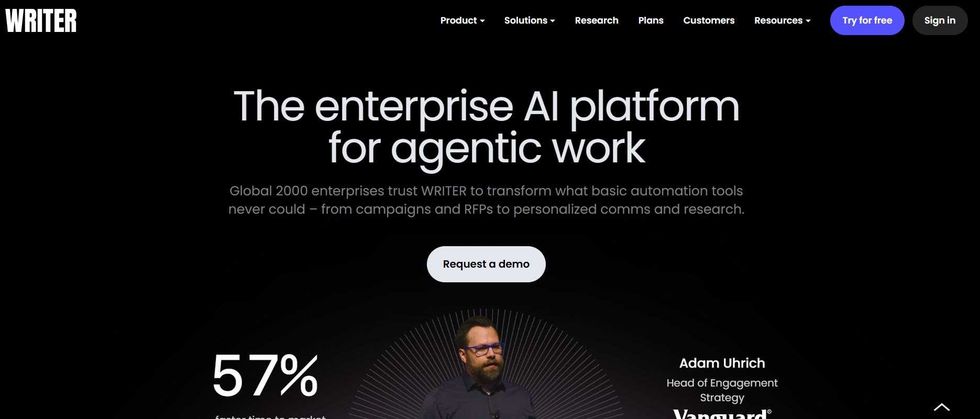 Writer: Best For False-Positive Control in Enterprise WorkflowsWriter
Writer approaches false positives from a governance perspective, embedding AI detection within a broader framework of content standards and policies. This allows organizations to define acceptable thresholds based on their specific needs.
By aligning detection with brand guidelines and compliance rules, Writer reduces the likelihood of unnecessary flags. Content is evaluated within context, rather than against generic detection models, which improves accuracy in structured environments.
While effective for enterprise use, its detection capabilities are less specialized than dedicated tools. It performs best when used as part of a larger content governance strategy.
 Sapling: Best For Early Detection Without Over-FlaggingSapling
Sapling focuses on real-time detection, helping users identify potential AI-generated patterns during the writing process. This early intervention reduces the need for aggressive post-analysis, which can contribute to false positives.
Its integrations with messaging platforms and CRMs allow detection to happen seamlessly within workflows. This makes it easier to maintain quality without introducing friction.
Because it prioritizes speed, its analysis is less comprehensive than full-document tools. Sapling is best used as a preventative layer rather than a final validation system.
 Turnitin: Best For Structured False-Positive Management in AcademiaTurnitin
Turnitin’s AI detection operates within a structured academic framework, where consistency and policy alignment help manage false positives. Its integration with LMS platforms ensures that all submissions are evaluated under the same conditions.
This standardization reduces variability, which can otherwise lead to inconsistent flagging. For institutions, this contributes to a more predictable detection process.
However, limited transparency in scoring can make it difficult for individual users to assess whether a flag is accurate. It remains most effective in environments where institutional standards guide interpretation.
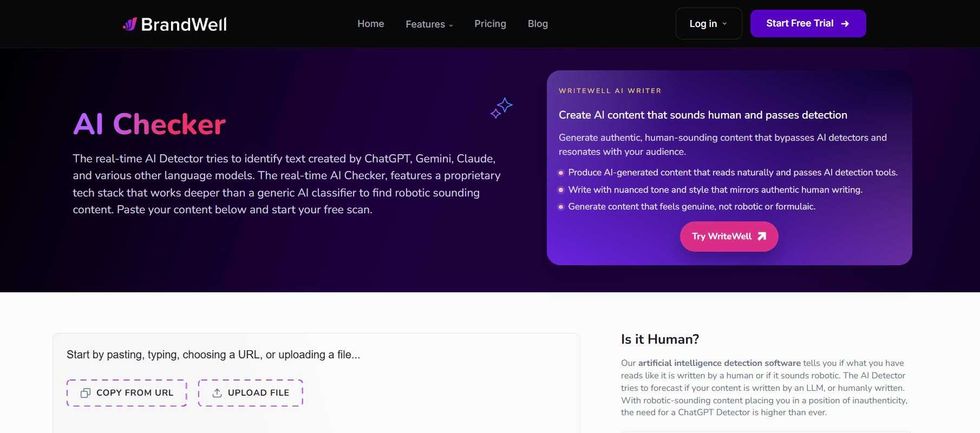 Content At Scale AI Detector: Best For Simple False-Positive ScreeningContent At Scale AI Detector
Content at Scale provides a simplified detection model focused on quick validation of long-form content. Its pass/fail-style output helps users identify potential issues without overcomplicating the process.
This simplicity can reduce over-analysis, which sometimes leads to false positives in more complex tools. It’s particularly useful for content teams needing a fast first-pass review.
The trade-off is limited depth. Without detailed insights, users may not fully understand why content is flagged, making it less suitable for high-stakes decisions.
 ZeroGPT: Best For Low-Barrier False-Positive ChecksZeroGPT
ZeroGPT offers a fast and accessible way to check content for AI signals. Its lightweight design makes it easy to use, especially for quick validations.
Because it avoids overly complex analysis, it can sometimes reduce unnecessary flagging in straightforward cases. This makes it useful for basic checks where speed is a priority.
However, its limited depth means it may not perform as well with nuanced or heavily edited content. It is best used as a supplementary tool rather than a primary system.
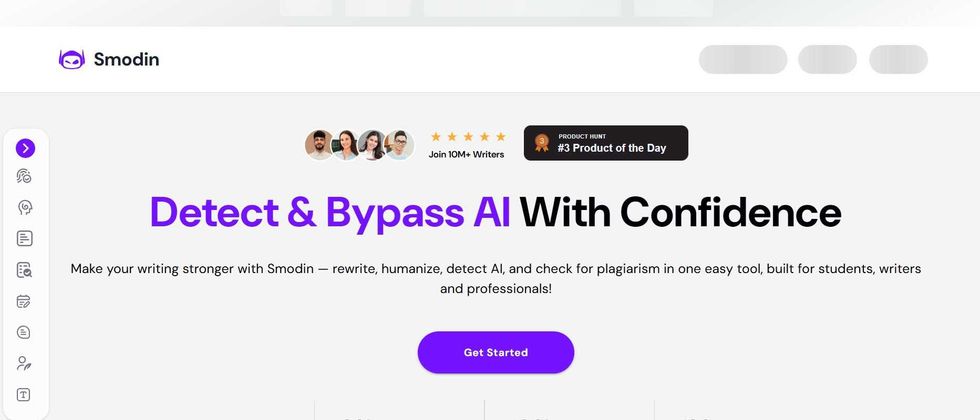 Smodin: Best For Balanced Detection in Multi-Tool EnvironmentsSmodin
Smodin integrates AI detection into a broader suite of writing tools, allowing users to evaluate content alongside other tasks like rewriting and summarization. This integrated approach can help reduce over-reliance on detection alone.
By placing detection within a wider workflow, users are less likely to overinterpret isolated flags. This can indirectly reduce the impact of false positives.
That said, its detection capabilities are less advanced than specialized platforms. It is best suited for general use rather than precise analysis.
 Hive AI Detector: Best For Lightweight False-Positive FilteringHive AI Detector
Hive offers a lightweight AI detection tool designed for quick content filtering. Its system is built for speed, allowing users to scan text without extensive setup.
This streamlined approach can help reduce unnecessary flags in simple use cases, where over-analysis may create noise. It works well as an initial filter before deeper evaluation.
However, like other lightweight tools, it lacks the depth needed for complex or high-stakes content. It is most effective as part of a multi-layered detection strategy rather than a standalone solution.
False positives are where most AI detection tools fail in practice. It's easy to flag content. It's much harder to do it without undermining trust in legitimate work. For teams producing high-quality, polished writing, that distinction is everything.
The tools on this list approach the problem from different angles. Some prioritize scale, others simplicity, and some embed detection into broader workflows. Each has a role depending on the environment and the level of tolerance for risk.
But when the goal is to minimize false positives while keeping results clear and defensible, the gap between tools shows up quickly. Quetext stands out here because its contextual analysis is tuned to avoid the most common failure mode in this category: penalizing strong human writing for being well-executed.
GearBrain Compatibility Find Engine
A pioneering recommendation platform where you can research,
discover, buy, and learn how to connect and optimize smart devices.
Join our community! Ask and answer questions about smart devices and save yours in My Gear.