Ring
Do Doorbell Cameras Help After Street Accidents?
Learn how doorbell cameras and home security systems can provide critical evidence after traffic and pedestrian accidents by capturing video, timestamps, and vehicle activity.

Learn how doorbell cameras and home security systems can provide critical evidence after traffic and pedestrian accidents by capturing video, timestamps, and vehicle activity.
If you or someone you love has recently been involved in a street accident, you're probably frantically googling whether home cameras can help. So, let's settle the question right away: yes, doorbell cameras can absolutely help after a street accident.
In some cases, just a few seconds of footage can clear up arguments that would otherwise drag on for months. A camera might show who entered the intersection first, whether a pedestrian was already in the crosswalk, how fast a vehicle was moving, or whether a driver appeared distracted before impact.
However, it’s also crucial to know that often simply having footage isn't enough. The quality of the recording, the camera's position, how the file is preserved, and how quickly it's obtained can all affect whether that video becomes valuable evidence.
So, let's get into what actually makes doorbell-camera footage useful after a street accident. Plus, what can cause potentially important evidence to disappear before anyone realizes it exists?
People tend to focus on the camera closest to the crash scene. This makes sense, and it’s always worth checking out the nearest camera. However, it’s also worth knowing that in many cases, the most useful footage actually comes from a property farther away.
Why is that? For example, a camera positioned down the block may capture a driver's speed before impact. Another might show whether brake lights activated. A third could reveal whether a pedestrian was already crossing long before reaching the point of collision.
That's why investigators frequently collect footage from multiple homes rather than relying on a single recording. One camera shows a moment, which can be useful, but several cameras can build a timeline.

A surprising amount of accident footage turns out to be less helpful than people expect. There are several reasons for this.
Resolution matters, but not for the reason most homeowners think. A crystal-clear 4K image doesn't automatically make a recording useful if the camera sits too far away to capture the critical details. On the other hand, a lower-resolution camera positioned directly across from a crosswalk might tell investigators exactly what they need to know.
Frame rate can matter just as much. At lower frame rates, fast-moving vehicles can travel several feet between recorded frames. That may not sound significant until someone tries to determine whether a pedestrian stepped into traffic unexpectedly or whether a driver had enough time to react.
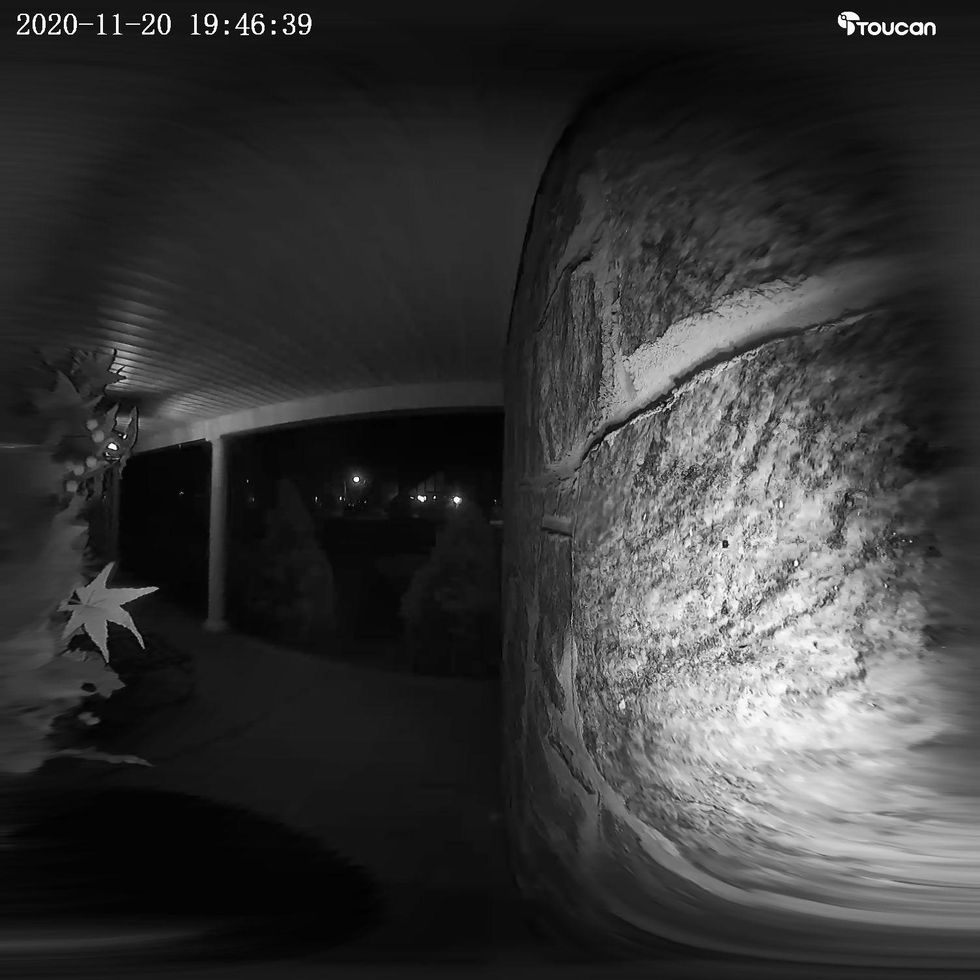
Night vision deserves attention as well. Many serious pedestrian collisions occur after dark, and the difference between high-quality and poor night footage can be dramatic. One camera may clearly show vehicle movement and road position, but another may produce little more than a blur of headlights.
Timestamps help establish when events occurred and allow footage to be compared against police reports, emergency dispatch records, witness statements, and other evidence. Even small timing discrepancies can become important when reconstructing a collision.
Then, there's metadata. The original file often contains information about when and how the footage was created. That's one reason attorneys and investigators generally prefer original exports rather than clips that have been trimmed, compressed, screen-recorded, or repeatedly shared via messaging apps.
Most people assume cloud storage means footage stays around forever. Unfortunately, it doesn't.
Many doorbell-camera systems automatically overwrite recordings after a certain period. Depending on storage settings and subscription plans, potentially important footage may disappear within days or weeks.
That's why accident investigators frequently move faster than people expect. They're not necessarily preparing lawsuits right away but simply trying to locate and preserve footage before automated systems erase it.
If your camera captured a nearby accident, save the original file as soon as possible. Store copies securely and avoid editing the footage. Something as simple as trimming a clip for convenience can create unnecessary questions later.
Doorbell footage can become especially important when pedestrians are involved. Unlike drivers, pedestrians rarely have dashcams or onboard recording devices. So, nearby surveillance footage may become one of the few objective sources available.
Video can help establish whether a pedestrian was inside a marked crosswalk, whether a driver failed to yield, whether traffic controls were followed, or whether distraction may have contributed to the collision.
That’s why attorneys working these cases move early. In Arizona, for example, which follows comparative negligence rules, a good pedestrian collision lawyer in Phoenix, AZ, will typically focus first on securing video evidence from nearby homes and businesses before it’s lost or overwritten.
Most of the time, yes. Not because they're perfect and capture every angle. And certainly not because video automatically settles every dispute.
They help because they record details that people miss. Witnesses are important, but they can disagree, plus memories can be selective. So, sometimes footage changes the entire direction of a claim.
A camera doesn't solve every problem, but it can preserve a version of events that exists independently of everyone else's recollection. For a device originally designed to tell you who's at the front door, that's a surprisingly important job.
GearBrain Compatibility Find Engine
A pioneering recommendation platform where you can research,
discover, buy, and learn how to connect and optimize smart devices.
Join our community! Ask and answer questions about smart devices and save yours in My Gear.