Air conditioning has quietly become the biggest smart home upgrade most households will ever make. Bigger than the doorbell, the speakers or the lighting, because it is the appliance that dominates the power bill and actually changes how the house feels to live in. Modern split and ducted systems ship with Wi-Fi modules, app ecosystems, voice control, and increasingly the energy APIs that let them dance with rooftop solar. But the smartest system on the market performs like a dumb one if it is specified or installed badly. Here is how to get both halves right.
The Spec Sheet That Actually Matters
 ZAFRO 14,000 BTU Inverter Portable AC Review: Quiet, Smart, and Efficient Cooling GearBrain
Capacity is a calculation, not a guess. Oversized units short-cycle, blasting the room to temperature, shutting off and restarting minutes later, which wrecks humidity control, efficiency, and compressor lifespan all at once. Undersized units run flat-out through every heatwave and die young. Correct sizing accounts for room volume, insulation, glazing area, orientation and climate, and in hot, humid regions like Australia's east coast, a unit's ability to pull moisture out of the air matters as much as its raw cooling number. A room at 24 degrees and 45 per cent humidity feels dramatically better than the same room at 24 degrees and 70 per cent.
Efficiency ratings reward careful reading. Australia's Zoned Energy Rating Label rates units separately for three climate zones, and the government's comparison database at energyrating.gov.au lets you compare real seasonal efficiency between specific models rather than trusting the brochure's star burst. Over a decade of subtropical summers, the gap between an average unit and a genuinely efficient one is measured in thousands of dollars, which reframes the purchase price difference considerably.
Inverter, always. Inverter compressors modulate their output continuously instead of switching on and off, which is precisely what makes smart scheduling, quiet overnight running, and solar-following possible. At this point, a non-inverter unit is a false economy in every scenario.
Installation Is Half the Product
This is the step the spec sheet cannot save. Refrigerant pipe run lengths, condensate drainage, condenser placement in shade with proper airflow, vibration isolation, and critically the electrical supply all determine whether the unit ever hits its rated numbers. Larger split systems and all ducted systems typically require a dedicated circuit, and plenty of homes need switchboard work before one can be added. In Queensland, that electrical scope is licensed territory, and the refrigerant side carries its own national ARC licensing requirements, so this is a two-licence job from the outset. Specialists handling air conditioner installation Gold Coast run the dedicated circuit and position the outdoor hardware for coastal conditions, because salt-air corrosion is a genuine lifespan factor for any condenser within a few kilometres of the beach. The rule worth internalising: a well-installed mid-range unit will outperform a badly installed flagship, every single summer, for fifteen years.
Making It Genuinely Smart
 Sensibo Air Pro Sensibo
Once the hardware is right, the connected layer earns its keep in four ways.
Scheduling beats willpower. Pre-cooling the house before the peak tariff window, or before you pull into the driveway, costs far less than crisis-cooling a 34-degree living room at six in the evening. Set the schedules once, and the savings run all season without anyone thinking about them.
Solar-following is the killer feature. With the right integration between the air conditioner and your inverter, the system ramps cooling when the panels are producing, effectively storing free daytime energy as a cold house. Homes with strong solar output can shift the bulk of their cooling cost into daylight hours, and this single feature often justifies choosing one brand over another.
Zoning stops you from cooling empty rooms. Ducted systems with motorised zone dampers, or multiple splits controlled per room, routinely cut consumption dramatically compared with cooling the whole envelope. Bedrooms by night, living areas by day, the guest room only when there are guests.
Sensors close the loop. Inexpensive temperature and humidity sensors in problem rooms feed automations that a single hallway thermostat can never manage. The west-facing bedroom gets help at four in the afternoon when it needs it, not at eight when the hallway finally notices.
One ecosystem caveat: check the unit's app track record and whether it supports Matter, Google Home, Alexa, or Apple Home natively rather than through a fragile cloud bridge. A five-year-old abandoned app is exactly how smart appliances become dumb ones, and air conditioners outlive most companies' software enthusiasm.
The Buying Sequence That Avoids Regret
- Get a proper heat-load assessment for each space, not a guess based on floor area alone.
- Shortlist efficient inverter models using the official ratings database rather than retail marketing.
- Confirm the smart features work with your existing ecosystem, and with your specific solar inverter if you have one.
- Have the installer assess your switchboard and circuit capacity before you purchase anything.
- Commission the smart layer on installation day, with schedules, zones, and integrations configured while the installer is still on site and the settings are fresh.
Do it in that order, and you end up with the rare smart home device that pays for its own intelligence: cooler rooms, smaller bills, quieter nights, and a compressor that serves out its full fifteen years without drama.
From Your Site Articles
Related Articles Around the Web
 ZAFRO 14,000 BTU Inverter Portable AC Review: Quiet, Smart, and Efficient Cooling GearBrain
 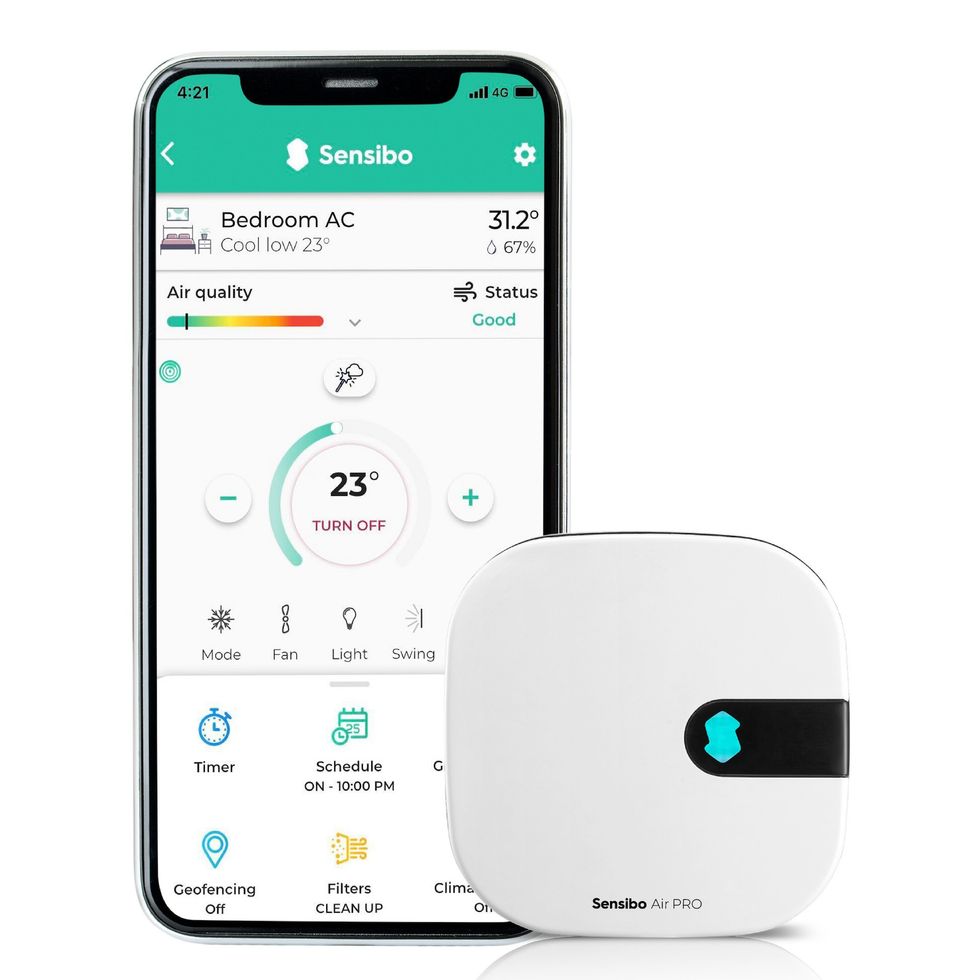 Sensibo Air Pro Sensibo