The Conversation (0)
Gaming (VR)

Google
When people think about live casino games, they often focus on the games themselves or the operator offering them. In reality, a live dealer platform is first and foremost a sophisticated real-time video streaming application. Much like a video conference, live sports broadcast, or cloud gaming service, the quality of the experience depends on the technology delivering high-definition video with minimal delay.
Understanding how these technologies work can help explain why some live streams feel smooth and responsive while others suffer from buffering, lag, or dropped connections.
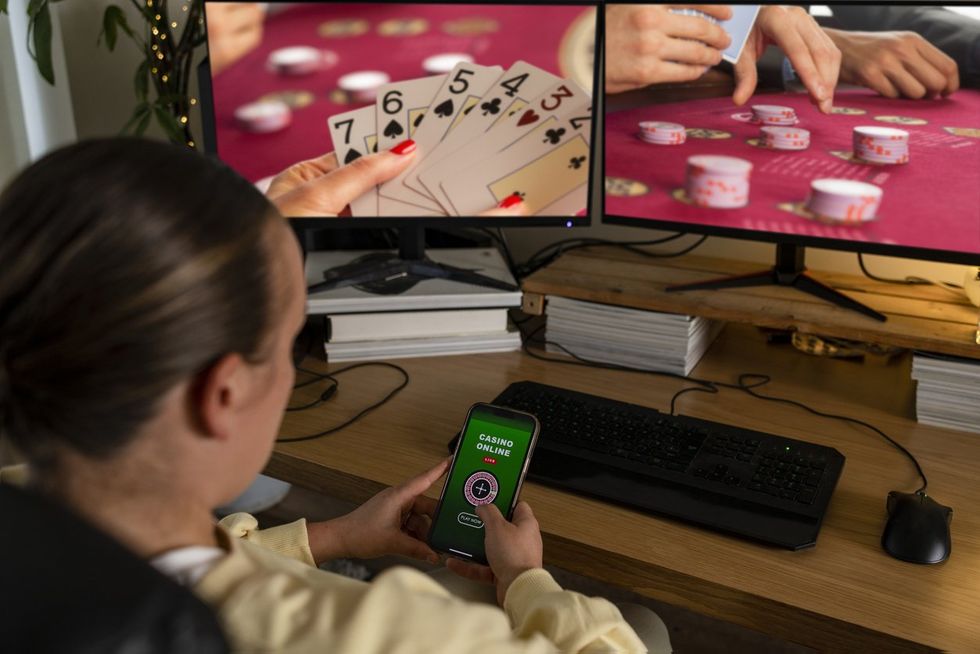 Live Dealer Gaming Is a Real-Time Streaming Challenge iStock
Unlike traditional online casino games that rely primarily on graphics and animations, live dealer platforms stream video from professional studios where real dealers host blackjack, roulette, baccarat, and other table games in real time.
Every player watches a synchronized video feed while interacting with digital betting controls layered on top of the stream. That combination of live video and interactive controls makes these platforms technically similar to other low-latency streaming applications.
Several technologies must work together seamlessly:
If any one of these components struggles, users may experience delays, buffering, or poor video quality.
One of the most important factors in any real-time streaming application is latency—the delay between an event occurring and appearing on your screen.
Unlike streaming a movie, where a few seconds of buffering often goes unnoticed, interactive applications require minimal delay so users can respond naturally when choosing a live UK casino.
Live dealer platforms rely on carefully engineered networks that reduce latency while keeping video synchronized with betting windows and game controls.
Lower latency results in:
 Adaptive Bitrate Streaming Keeps Video Playing Photo by Glenn Carstens-Peters on Unsplash
Modern streaming platforms rarely send every viewer the exact same video quality.
Instead, most use Adaptive Bitrate Streaming (ABR), which automatically adjusts video resolution and bitrate based on available bandwidth.
If your internet connection temporarily slows, the stream may reduce quality slightly rather than stopping altogether.
Without adaptive streaming, users are much more likely to encounter:
This technology has become standard across major video streaming services and is equally important for live interactive experiences.
Many streaming issues blamed on a website or app actually originate inside the home.
A stable internet connection is often more valuable than simply having the fastest advertised download speed.
Several factors influence streaming performance:
Smart homes now contain dozens of connected devices, including:
When multiple devices compete for bandwidth, real-time video applications can experience interruptions.
Modern Wi-Fi 6 and Wi-Fi 7 routers help distribute traffic more efficiently, reducing congestion during periods of heavy network activity.
Weak Wi-Fi signals can introduce:
Whenever possible, positioning your router centrally or using a wired Ethernet connection delivers the most reliable streaming performance.
Streaming high-definition video requires considerable processing power.
Modern smartphones and tablets contain dedicated hardware decoders that efficiently process compressed video formats without overwhelming the processor.
Older devices may struggle to:
The result can appear as stuttering or lag even when the internet connection itself is performing normally.
Behind every live dealer stream sits an extensive cloud infrastructure responsible for:
Many operators use geographically distributed data centers and Content Delivery Networks (CDNs) to bring video closer to users, reducing latency and improving playback consistency.
These same technologies power many of today's largest streaming platforms.
If you're comparing live dealer platforms, it's worth looking beyond the number of available games or promotional offers.
Technology-related factors often have a greater impact on the overall experience, including:
A platform with strong engineering may deliver a noticeably smoother experience than one with a larger game catalog but weaker streaming performance.
Live dealer gaming showcases how far real-time video streaming technology has evolved. Behind every table is a sophisticated combination of cloud computing, adaptive streaming, low-latency networking, and mobile optimization working together to create a seamless interactive experience.
Whether you're watching live sports, joining a video conference, playing cloud-based games, or streaming a live dealer table, the same core technologies determine how smooth the experience feels. As broadband networks, Wi-Fi standards, and mobile processors continue to improve, real-time interactive streaming will become faster, more reliable, and more immersive across a wide range of connected applications.
A live casino is really a video product.
There is a dealer in a studio being filmed and streamed to you in real time, with the game running alongside the footage so your bets attach to the right moment. People tend to judge these sites on the games and the brand, and then end up frustrated for reasons that have nothing to do with either, because the thing that decides whether the experience feel
GearBrain Compatibility Find Engine
A pioneering recommendation platform where you can research,
discover, buy, and learn how to connect and optimize smart devices.
Join our community! Ask and answer questions about smart devices and save yours in My Gear.