AI-ready data is necessary for smart home AI agents to do their job, as raw device signals cannot convey what's going on in a home. A motion sensor could say that there is movement, a lock could say that it is open, and a thermostat could say 72°F. Even an agent needs to know who is in the house and which room is involved, if it's a current reading or not, what the household allows, and which action is safe. If there are no normalized identities, any timestamp, context, or access rules, then the model can give conflicting instructions or have the user correct the model over and over again.
Product teams should treat ai ready data as part of the smart home system rather than as a cleanup task added after the agent is built. AI-ready data is clean, structured, labeled, accessible, current, and tied to a defined use case. Those properties give an agent a dependable view of the home before it plans or acts.
GearBrain already tracks the shift from fixed routines toward agents that learn patterns, coordinate devices, and respond to household context. The missing layer between “connected” and “intelligent” is data preparation: device events must carry enough meaning for the agent to interpret them.
Why smart home AI agents need more than connected devices
 Why smart home AI agents need more than connected devices Amazon
A connected device can send a state and receive a command. A smart home AI agent has a wider job. It must combine observations, infer intent, select an action, check permissions, and verify the outcome. That process depends on several data types arriving in a compatible form:
- Device states, such as open, closed, on, off, locked, or unlocked
- Environmental readings, such as temperature, humidity, light, air quality, or power draw
- Household context, such as occupancy, room assignments, schedules, and recent activity
- User preferences, including comfort ranges and notification settings
- Policy data, including permissions, retention limits, and actions that require confirmation
Matter helps devices from different brands communicate through a shared, IP-based standard. The Connectivity Standards Alliance describes interoperability, local connectivity, reliability, and security as central parts of Matter. Google’s Home APIs also expose Matter traits, device attributes, commands, events, and automation flows. These features provide a common technical base, but an AI agent still needs context above that base.
A useful distinction is this: interoperability answers, “Can these devices exchange data?” AI readiness answers, “Can the agent interpret that data well enough to act?”
What AI-ready data looks like inside a smart home
AI-ready data in a home is more than a clean database. It is a continuously updated model of devices, people, spaces, permissions, and recent events. The model should preserve four properties.
Consistent identities
Each device needs one stable identity across the mobile app, cloud account, local hub, automation engine, and analytics layer. “Kitchen Light,” “Bulb 12,” and “node-7A4” may refer to the same product. If the integration layer treats them as separate devices, the agent can duplicate commands or lose history.
Rooms and household members also need stable identifiers. A name is insufficient because people rename rooms, replace devices, and move equipment.
Shared semantics
A platform may report temperature in Fahrenheit while another service uses Celsius. One lock may return “secured,” another “locked,” and a third a Boolean value. Smart device data integration should map these variants into a shared model before the agent sees them.
Freshness and Event Order
An agent should know whether a value is five seconds old or five hours old. It should also know which event happened first. Consider a door opening, motion in the entryway, and the alarm being disarmed. When timestamps drift or arrive out of order, the same sequence can look like an intrusion or a resident arriving home.
Data lineage and permissions
The agent should be aware of the origin of each field, how the field was transformed, how long the field may be stored, and what actions it can support. Trinetix's AI-readiness framework focuses on data quality, labeling, freshness, governance, access controls, and lineage. In a connected home, those controls relate directly to sensor and camera data that could provide information about household routines.
How contextual data changes an AI agent’s decision
 How AI Assistants Are Evolving: ChatGPT vs Alexa vs GearBrain Assistant GearBrain
A motion event is a useful mini-experiment because the sensor output can stay the same while the correct response changes.
- At 2:10 a.m., motion appears in an empty hallway while every resident is marked away. The agent may turn on low lighting, check a camera event, and raise the security confidence score.
- At 7:30 a.m., the same sensor fires while a resident starts a normal morning pattern. The agent may open blinds and avoid an alert.
- At 3:15 p.m., the cleaner arrives during an approved access window. The agent may log entry and keep the alarm inactive.
- A pet crosses the hallway while residents are away. The agent may suppress lighting and avoid a false intrusion warning.
The sensor contributes one boolean value. The decision depends on time, identity, schedule, occupancy, camera classification, and permissions. This is what contextual data for AI agents adds: relationships around an event.
Google’s current home materials describe camera intelligence, household-specific questions, and summaries built from sensor and video data. Those experiences require the system to connect observations with people, places, and household history rather than process each event in isolation.
Why smart device data integration still fails
Most failures begin before the model makes a decision. The agent receives conflicting, incomplete, or stale inputs and produces an answer that appears irrational from the user’s point of view.
User-visible failure | Likely data cause | Practical fix |
Lights turn on in the wrong room | Duplicate room or device IDs | Create a canonical device registry |
Heating runs after everyone leaves | Occupancy event arrived late | Add freshness limits and event ordering |
Agent asks the same question daily | Preference updates are not persisted | Store confirmed preferences with version history |
Lock automation stops without warning | Device permission was revoked | Recheck grants and remove cached access data |
Energy advice ignores one appliance | Vendor data uses a separate schema | Normalize traits and measurement units |
Google’s developer guidance states that automations stop when users revoke full permissions and that apps should check permissions and remove cached data after access is withdrawn. That is a practical example of why permissions belong inside the data pipeline rather than in a separate compliance document.
A small calculation shows how quickly weak data can spread. Suppose a home has 20 connected devices and each sends one event per minute. That creates:
20 devices × 60 minutes × 24 hours = 28,800 events per day.
If one percent of those events contain an outdated timestamp, duplicate ID, missing unit, or unclear state, the agent faces 288 suspect events each day. A model upgrade will not repair that input stream.
A practical AI-ready data architecture for home automation AI
 A practical AI-ready data architecture for home automation AI iStock
A workable architecture separates device communication from context and decision logic. This makes errors easier to trace and reduces the chance that one vendor-specific format shapes the whole product.
Layer 1: Device and event ingestion
Collect states, events, commands, and capability descriptions from Matter devices, bridges, vendor clouds, and local hubs. Preserve the original payload for audits, but do not pass every field directly to the agent.
Layer 2: Normalization
Convert vendor fields into common device types, traits, units, timestamps, and state names. Resolve duplicate devices and assign stable identities. This layer should also mark missing or stale values.
Layer 3: Context graph
Connect devices to rooms, people, routines, schedules, and recent events. A graph structure fits this task because home context is relational: a thermostat belongs to a zone, a resident has preferences, and an automation can affect several devices.
Layer 4: Policy and safety checks
Prior to any agent action, verify whether the agent has access to the device, whether the action needs to be confirmed, and whether any safety rules conflict with the action. It may be more important that the door be unlocked, the alarm turned off, or the medical device switched off, than that a lamp be dimmed.
Layer 5: Agent planning and execution
The agent receives a prepared state, proposes an action, sends the command, and checks the result. The system should log the reason, the data used, the action, and the outcome. User corrections should return to the preference and evaluation layers.
The model should never be the first component that tries to reconcile device names, units, permissions, and stale events. Those tasks belong in deterministic services that can be tested.
The 450-millisecond budget in the graphic is an illustrative design exercise, not a product benchmark. It shows a practical tradeoff: capture, normalization, context lookup, policy checks, model reasoning, and command dispatch all consume time. Teams that skip data preparation may save milliseconds in one request but spend far more time handling retries, user corrections, and false actions.
Why better data makes smart home AI agents easier to trust
Trust grows when behavior is predictable, explainable, and easy to correct. An agent should be able to say, “I lowered the thermostat because the home is empty, the away preference is active, and the last resident left six minutes ago.” That answer is possible when the system retains data lineage and a clear record of the decision.
The same structure supports privacy. A team can store a derived occupancy state without keeping raw video longer than needed. It can separate device-control permissions from household identity data. It can also delete cached data when access is withdrawn. These choices make the agent easier to audit and reduce the amount of personal data exposed to each component.
Matter and modern home APIs make device coordination more practical, while agent interfaces make automation more conversational and proactive. The quality of the experience still rests on whether the data layer can represent the home accurately at the moment of action.
Smart home AI agents start with prepared data
Smart home AI agents will perform well if they are given a recent, normalized, contextual, and permissioned home view. AI-ready data transforms data that is normally event-oriented and scattered across devices into a state the agent can reason about. It also provides a development environment where safety rules may be applied, consent may be tracked, explanations of actions may be provided, and learning may take place from corrections.
The practical order is straightforward: connect devices, normalize their data, add household context, apply policy checks, test the agent in shadow mode, and measure real outcomes. Better models can improve planning, but dependable home automation starts with data prepared for AI.
From Your Site Articles
Related Articles Around the Web
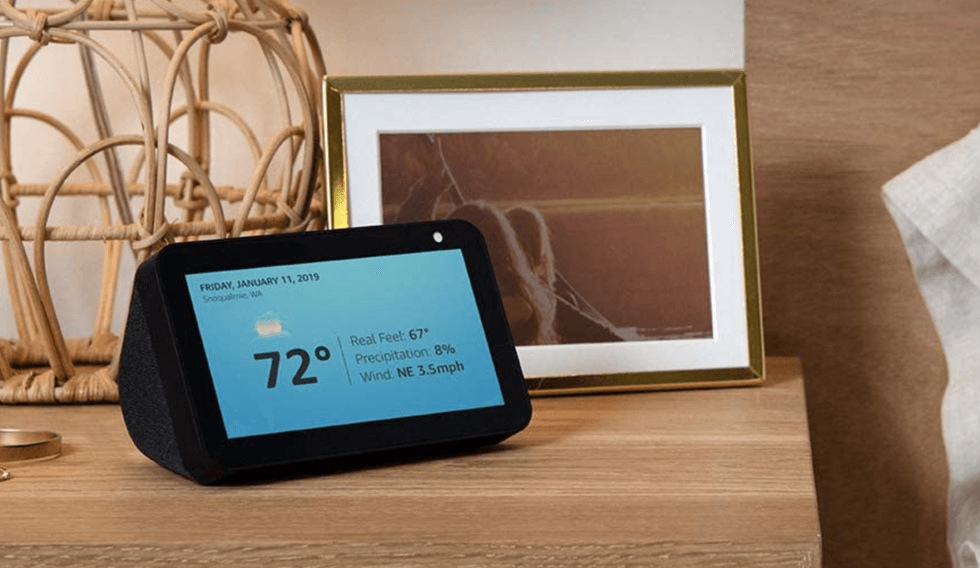 Why smart home AI agents need more than connected devices Amazon
  How AI Assistants Are Evolving: ChatGPT vs Alexa vs GearBrain Assistant GearBrain
  A practical AI-ready data architecture for home automation AI iStock