The Conversation (0)

Google
Why EDC Mechanical Pencils Are Reshaping Creative Work
How EDC mechanical pencils combine precision, durability, and portability to become essential tools for modern creatives, designers, and engineers.
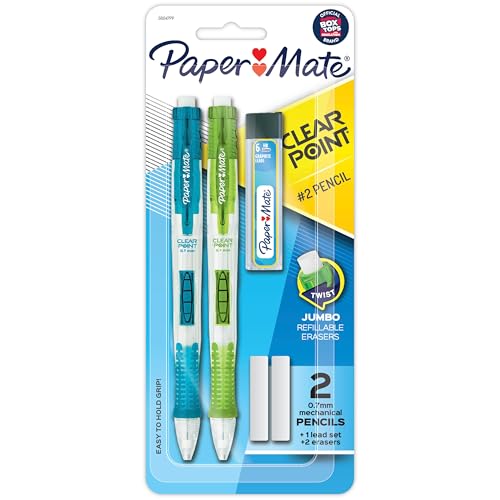
The mechanical pencil has quietly evolved from a simple writing instrument into a precision tool that professionals carry daily. For designers, engineers, and artists who rely on accuracy and portability, EDC (Everyday Carry) mechanical pencils have become indispensable—combining the reliability needed for technical work with the convenience of fitting in a pocket.
Unlike traditional wooden pencils that dull with use, mechanical pencils maintain a consistent line width, making them essential for detailed sketching, drafting, and technical illustration. Their refillable design eliminates the need to sharpen, while their compact construction ensures they're ready whenever inspiration strikes. As creative professionals increasingly work across multiple locations—from studio desks to client meetings to coffee shops—the demand for tools that deliver both performance and portability has never been higher.
The mechanical pencil's origins trace back to 1822, when British inventors Sampson Mordan and John Isaac Hawkins filed the first patent for a pencil with refillable lead. This breakthrough addressed a fundamental problem: the constant need to sharpen traditional pencils interrupted workflow and wasted material.
Early mechanical pencils used simple clutch mechanisms to advance graphite leads, but the basic principle proved remarkably durable. Over the following two centuries, manufacturers refined the internal mechanisms, experimented with materials from brass to aerospace-grade aluminum, and developed leads in varying hardnesses to suit different applications. What began as a novelty for wealthy Victorians gradually became standard equipment in drafting rooms, architecture firms, and design studios worldwide.
Today's mechanical pencils bear little resemblance to their 19th-century ancestors beyond the core concept. Modern versions incorporate precision-engineered lead-advancement systems, ergonomic grips designed through biomechanical research, and materials selected for durability in daily use. This evolution reflects broader changes in how creative professionals work—more mobile, more collaborative, and more demanding of their tools.
 What Defines a Quality EDC Mechanical Pencil iStock
Not all mechanical pencils qualify as genuine EDC tools. The distinction lies in specific characteristics that separate reliable everyday instruments from disposable office supplies:
These features distinguish tools built for daily professional use from pencils designed for occasional note-taking. Rotring, Everyman's Grafton, and Pentel's GraphGear line each represent this category well — and a dependable everyday performer at this tier will typically share the machined construction and compact carry profile that separate genuine EDC instruments from office-drawer pencils.
The advantages of mechanical pencils extend beyond mere convenience. For professionals whose work demands precision, these tools offer measurable benefits:
 Engineering Behind the Mechanism GearBrain
Understanding mechanical pencil construction reveals why quality varies so dramatically across price points. Manufacturing begins with material selection—typically aluminum alloys, brass, or engineering plastics chosen for specific strength-to-weight ratios.
The critical component is the lead advancement mechanism, which must reliably feed graphite in precise increments. Premium pencils use systems with multiple small parts:
Each component requires precision manufacturing to tolerances measured in hundredths of millimeters. This explains the price differential between disposable pencils and professional-grade instruments—the latter use machined parts rather than molded plastic, ensuring mechanisms function reliably after years of daily use.
Lead composition itself involves careful formulation. Manufacturers combine graphite with clay binders in varying ratios to produce different hardnesses, from soft B grades for sketching to hard H grades for technical drafting. The extrusion and firing process must create leads strong enough to withstand the mechanical stress of the advancement mechanism while maintaining consistent marking characteristics.
Technical professions impose specific requirements that general-purpose mechanical pencils don't always meet. Engineering pencils prioritize precision and durability over aesthetics or portability:
Architects and engineers often maintain multiple pencils loaded with different lead grades, switching between them as drawing requirements change. This workflow demands pencils that clearly identify their contents and maintain reliable performance across varying lead hardnesses.
 The Role of Mechanical Pencils in Contemporary Design Practice Photo by Scott Graham on Unsplash
Despite digital tools dominating many design workflows, mechanical pencils remain central to creative processes. Their continued relevance stems from advantages that tablets and styluses haven't fully replicated:
Many designers describe pencil sketching as essential to their ideation process—the physical act of drawing helps develop ideas differently than digital tools.
The portability of EDC mechanical pencils extends this advantage beyond the studio. Designers capture ideas during commutes, client site visits, or moments of inspiration in locations where opening a laptop would be impractical. This spontaneous accessibility keeps creative tools available precisely when unexpected insights occur.
You can also learn about overcoming creative and productive blocks in this detailed article.
Rather than being displaced by digital alternatives, mechanical pencils are experiencing renewed interest as professionals recognize the value of analog tools in increasingly screen-dominated workflows. Several trends suggest their continued evolution:
The mechanical pencil market has also benefited from the broader EDC movement, where professionals curate collections of high-quality tools they carry daily. This cultural shift values craftsmanship, durability, and thoughtful design—characteristics that premium mechanical pencils embody.
As remote work blurs boundaries between professional and personal spaces, tools that transition seamlessly across contexts gain value. A well-designed mechanical pencil serves equally well for technical drawings at a desk, quick sketches during video calls, or personal journaling in the evening. This versatility positions mechanical pencils not as specialized instruments but as fundamental tools for anyone who thinks through writing and drawing.
The future likely holds continued refinement rather than radical reinvention. Manufacturers will improve mechanisms, experiment with materials, and refine ergonomics, but the core concept—a portable, reliable, precise marking instrument—addresses needs that remain constant across technological change. For creative professionals who value tools that enhance rather than complicate their work, mechanical pencils represent an enduring solution that improves with each generation.
GearBrain Compatibility Find Engine
A pioneering recommendation platform where you can research,
discover, buy, and learn how to connect and optimize smart devices.
Join our community! Ask and answer questions about smart devices and save yours in My Gear.