
The Conversation (0)

IFA 2026 is underway in Berlin, bringing together some of the world's biggest consumer technology, smart home, appliance and computing brands. And if the early announcements are any indication, artificial intelligence is becoming much more than a feature inside a chatbot.
This year, companies are putting AI directly into lighting, computers, outdoor maintenance systems and other everyday products. We're also seeing manufacturers focus on making connected devices work together more intelligently, while advances in batteries, displays and product design are changing the hardware itself.
GearBrain is following the announcements coming out of IFA 2026 and will update this roundup as new products and technologies are unveiled.
Here are some of the most interesting announcements we've seen so far.

Govee Sky Ceiling Light
Govee
Govee is making artificial intelligence a bigger part of how people control and personalize their home's lighting.
At IFA 2026, the company introduced several products powered by AI Lighting Bot 2.0, which lets users create personalized lighting experiences with natural-language voice or text prompts.
Instead of manually selecting colors, brightness levels, and effects, users can describe the atmosphere they're trying to create. Govee's AI can then generate a lighting scene and let users keep refining it through conversation.
One of the biggest announcements is the Govee Sky Ceiling Light, which the company describes as the industry's first AI-powered mood-responsive ceiling light.
AI Lighting Bot 2.0 can create lighting according to a user's mood or needs. The fixture also incorporates Govee's 478nm sky-blue spectrum, designed to help support alertness when natural daylight is limited.
The Sky Ceiling Light produces up to 7,000 lumens, has a broad 1,000K to 10,000K color-temperature range, and a CRI of 95. Govee's DaySync technology can automatically adjust lighting based on the time of day and weather conditions.
Importantly for smart home buyers, the Sky Ceiling Light also supports Matter, helping it integrate with compatible smart home platforms.
Govee also introduced the COB Strip Light 2 Pro, featuring 1,344 LEDs and 16 ICs per meter to produce smooth lighting without the visible hotspots sometimes associated with LED strips. AI Lighting Bot 2.0 can create scenes from text or voice prompts.
For outdoor use, the new Permanent Outdoor Lights 2 Pro introduce a dual-layer lighting architecture that lets the upper and lower sections of individual lights display different colors and effects simultaneously.
Pricing:
The indoor lighting products become available September 4, while the Permanent Outdoor Lights 2 Pro arrive September 7.
The bigger story isn't simply another generation of smart lights. Govee is trying to replace complicated lighting controls with intent-based control.
Instead of telling a smart home exactly what each light should do, consumers can increasingly tell AI what they're trying to accomplish and let the system determine how the lights should respond.
That could represent an important change in how people interact with smart homes.
 Aiper Smart Yard Ecosystem
Aiper
Aiper Smart Yard Ecosystem
Aiper
Aiper is expanding beyond robotic pool cleaning with a broader vision: connecting the technology across your entire yard.
The company's Smart Yard Ecosystem is powered by what Aiper calls its Intelligence of Things, or AIoT, platform.
The concept connects devices including robotic pool cleaners, irrigation equipment, soil sensors, weather stations, and other outdoor technology so they can share information and coordinate maintenance.
For example, weather and soil data could influence irrigation decisions rather than having a sprinkler system run on a fixed schedule.
One of Aiper's new products is the IrriSense 2 SE, a 3-in-1 smart irrigation system that combines the controller, sprinkler, and valve.
The system can create multiple customized watering zones and adjust watering based on environmental information. Aiper says the system can reduce water consumption by up to 40% compared with conventional in-ground irrigation.
Aiper is also showing the EcoSurfer Senti, an AI-powered pool skimmer incorporating water-quality testing and automated water-quality management, and the Scuba V3 Ultra, a six-in-one robotic pool cleaner that uses dual cameras and cognitive AI for navigation and cleaning.
Additional components such as Aiper's Smart Gateway, Weather Station, Soil Sensor, and Solar Panel help connect the ecosystem and supply information.
Smart outdoor devices have traditionally operated independently. You might have a robotic pool cleaner, smart irrigation controller, weather station, and robotic lawn mower, but each essentially operates within its own ecosystem.
Aiper is trying to change that by creating a shared intelligence layer for the entire yard.
It's the same transition we're seeing in the smart home: connected devices are moving from being remotely controllable to coordinating decisions with other devices.
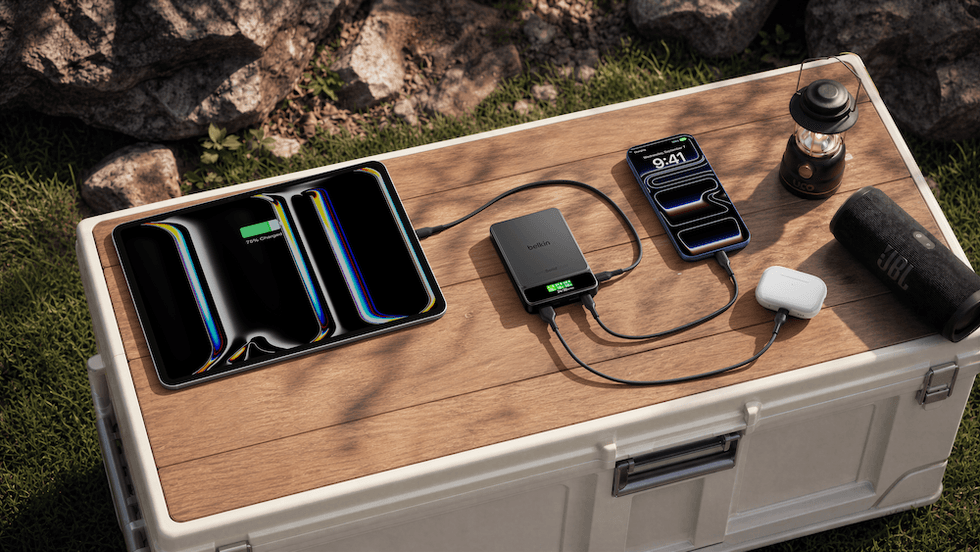
Belkin UltraCharge Pro 10K 60W with BoostSolid Cell and Display
Belkin
One of the more interesting hardware technologies at IFA doesn't involve AI at all.
Belkin is showcasing new UltraCharge Pro power banks featuring its BoostSolid Cell semi-solid-state battery technology.
Instead of relying entirely on the liquid electrolyte commonly used in lithium-ion batteries, BoostSolid Cell incorporates a gel-like layer alongside the liquid electrolyte.
According to Belkin, the technology helps make batteries more compact while reducing risks associated with thermal runaway, fire and swelling.
The UltraCharge Pro Slim Magnetic Power Bank 5K combines a 5,000mAh battery with Qi2 15W magnetic wireless charging in an enclosure just 8.8mm thick and roughly the footprint of a credit card.
It's designed primarily as an everyday smartphone battery that can be slipped into a pocket without adding substantial bulk.
The larger UltraCharge Pro 10K 60W targets people who need considerably more portable power, including for larger mobile devices.
The announcements are particularly interesting because semi-solid-state battery technology could eventually help manufacturers make portable electronics smaller while improving battery durability and safety.
Battery technology rarely gets as much attention as AI or new displays, but improvements here can have enormous effects across consumer electronics.
If semi-solid-state technology proves reliable and economical at scale, products such as smartphones, laptops, wearables and smart home devices could eventually benefit from smaller batteries, greater energy density and improved safety.
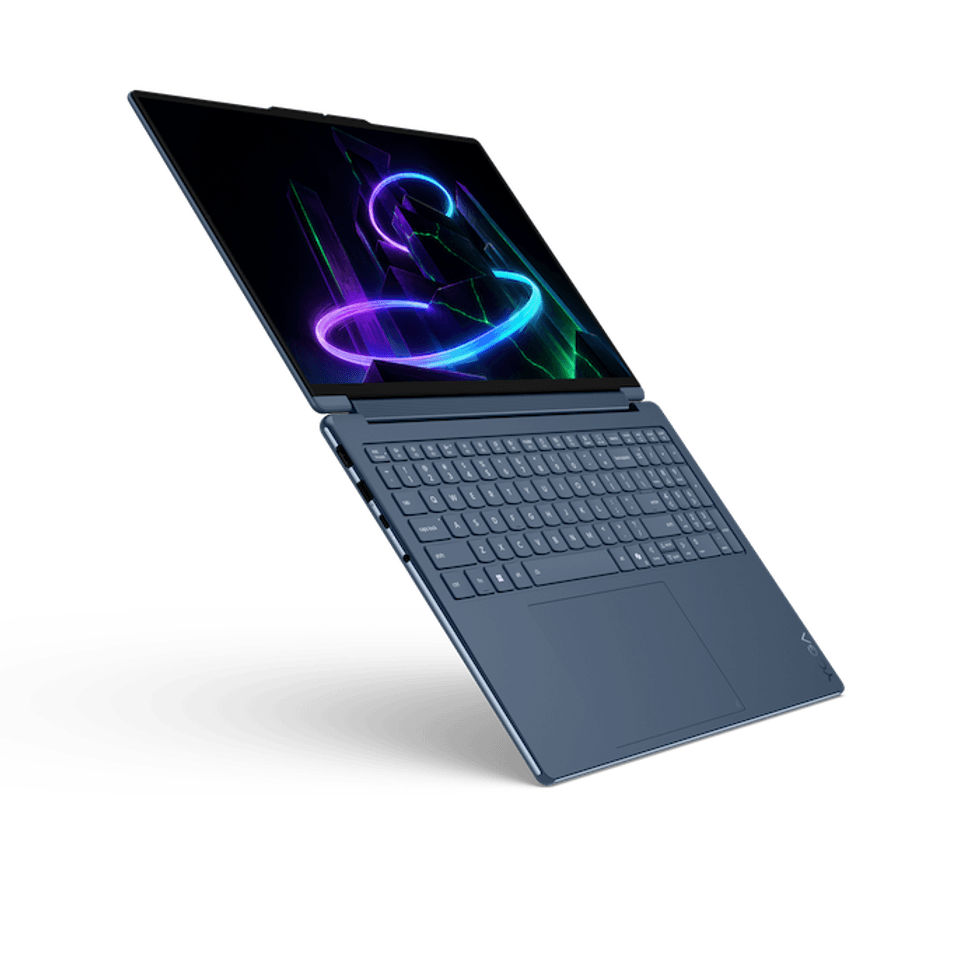
Lenovo Yoga 9n 2-in-1 Laptop
Lenovo
Lenovo brought a large collection of new consumer and business technology to IFA 2026, but the common theme running across the portfolio is artificial intelligence.
The company's new Yoga Pro 9n is a premium creator laptop powered by NVIDIA RTX Spark and designed for demanding AI development, content creation, and software-development workloads running locally.
The Yoga 9n 2-in-1 combines NVIDIA RTX Spark performance with a 360-degree convertible design and dual-surface pen input.
Lenovo is also extending multimodal computing through the Yoga Tab Plus Gen 2 and Yoga Tab Gen 2, allowing users to interact through pen, voice, vision, and touch.
But Lenovo's AI strategy goes beyond individual computers.
The company is developing what it calls a "one personal AI, multiple devices" approach. Lenovo Qira is designed to provide context-aware AI across supported PCs, tablets and other devices so information and work can move between them more naturally.
For businesses, Lenovo announced new ThinkCentre desktops, ThinkBook laptops and ThinkVision monitors built around its Hybrid AI strategy.
The company also showed experimental devices including Project AeroBlade and Project Swan, which explore potential new mobile computing designs.
For the past few years, much of the AI consumers use has lived in the cloud.
The next battle is increasingly about where the AI actually runs.
More powerful local AI hardware can potentially deliver faster responses, improve privacy, and allow sophisticated AI features to work without constantly sending information to remote servers.
Lenovo is also signaling another important transition: AI assistants may increasingly follow users across multiple devices instead of living inside one computer or application.
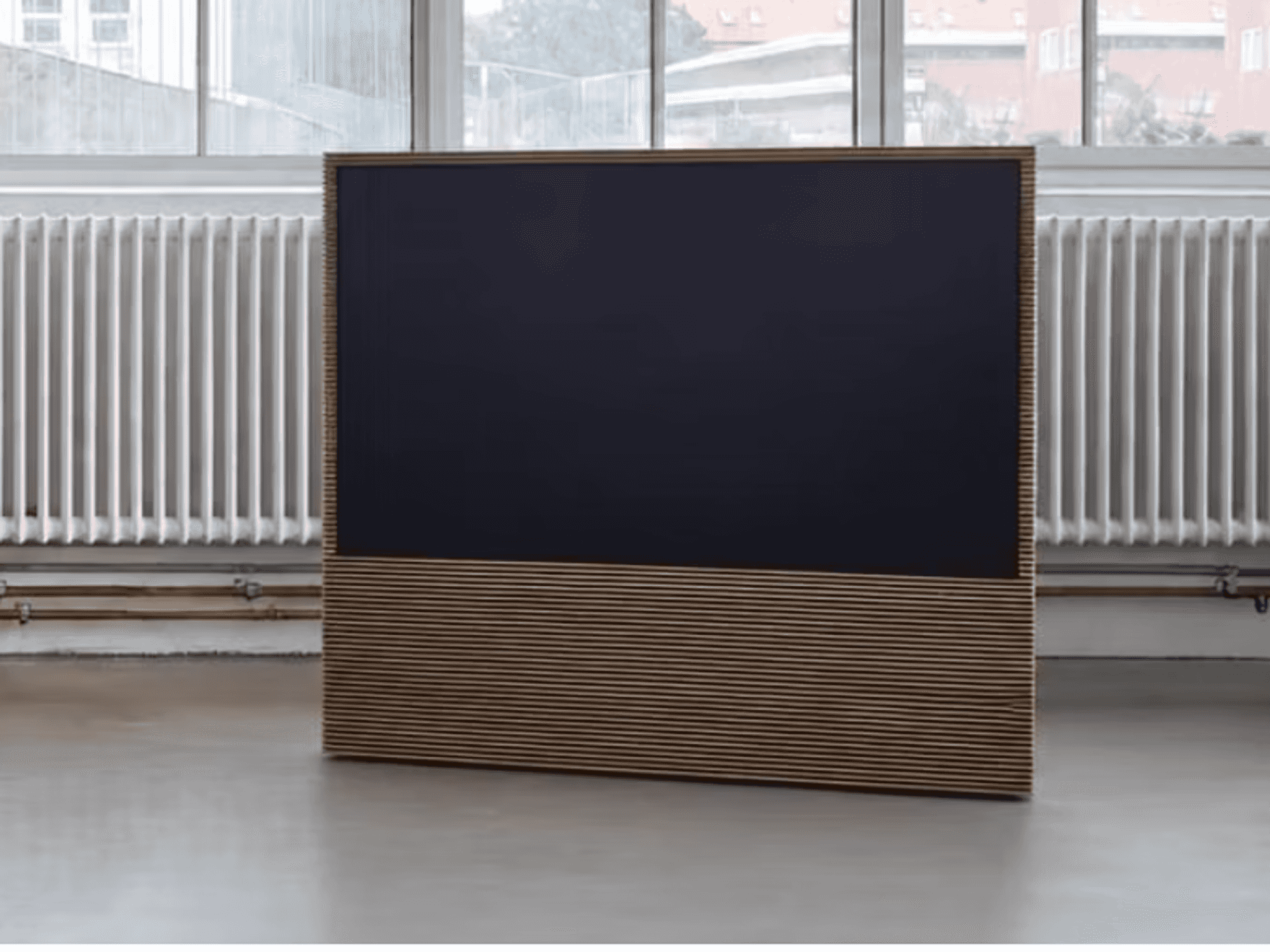
CANVAS HiFi and Samsung Turn the TV and Sound System Into Furniture
CANVAS
Not every innovation at IFA 2026 is about artificial intelligence.
CANVAS HiFi and Samsung are approaching another problem: how to bring high-end picture and audio performance into a living room without filling the space with obvious electronics.
The new HiFi S99H combines CANVAS HiFi's audio technology with Samsung's flagship S99H OLED television.
CANVAS' distinctive horizontal wooden slats extend around both the audio system and television, visually turning them into one integrated piece of furniture rather than a TV sitting above a separate soundbar.
Samsung's S99H sits at the top of the company's 2026 OLED lineup and incorporates the company's Vision AI image processing.
Customers can configure the system with either the standard CANVAS audio system or the larger CANVAS L, depending on their room and performance requirements.
The HiFi S99H will be offered with 55-, 65-, 77- and 83-inch televisions. A fixed floor stand or wall mount is included, while a rotating aluminum or black floor stand will be optional.
Availability through selected CANVAS Gallery Showrooms is expected beginning in October 2026, with CANVAS L configurations following later in the year.
Complete systems will start at €7,999.
The smart home industry has spent years trying to make technology blend more naturally into our homes.
CANVAS and Samsung take that idea into premium home entertainment by treating the television, audio system, and furniture as one product.
It's another example of technology becoming more capable while simultaneously becoming less visually intrusive.
It's still early in IFA 2026, but several themes are already emerging.
AI is becoming a control layer. Instead of simply adding a chatbot to an app, companies such as Govee are using AI to interpret what users want and translate those requests into device actions.
Devices are beginning to cooperate. Aiper's Smart Yard Ecosystem shows how connected products can share environmental information and coordinate decisions instead of operating as isolated smart devices.
AI is moving onto the device. Lenovo's new computers reflect the growing push toward running sophisticated AI workloads locally rather than relying entirely on the cloud.
Hardware innovation still matters. Belkin's semi-solid-state battery technology demonstrates that some of the most important improvements in consumer technology may come from components consumers rarely see.
Technology is disappearing into the home. From CANVAS' furniture-like home entertainment system to automated smart lighting, manufacturers increasingly want advanced technology to become less complicated and less visually intrusive.
A larger smart home story connects many of these developments.
Consumers aren't just buying more connected devices. Those devices are becoming more intelligent, more autonomous, and increasingly capable of communicating with other products and services.
That makes compatibility, interoperability and device discovery even more important. Knowing whether a product works with Matter, Alexa, Google Home, Apple Home, SmartThings or another ecosystem is only the beginning. Consumers increasingly need to understand how products work together and what they can actually accomplish once connected.
GearBrain will continue tracking the most important smart home, AI, and consumer technology announcements from IFA 2026 as the show continues in Berlin.
Last updated: September 3, 2026
GearBrain Compatibility Find Engine
A pioneering recommendation platform where you can research,
discover, buy, and learn how to connect and optimize smart devices.
Join our community! Ask and answer questions about smart devices and save yours in My Gear.