For most of its life, YouTube was something you watched on a phone while doing something else. That has stopped being true. Nielsen’s Gauge report put YouTube at 13.8 percent of all United States television viewing in May 2026, ahead of every traditional media company, and YouTube itself now describes television as the primary device for watching its videos.
The shift happened quietly, through streaming sticks and smart TV apps rather than any announcement. It matters because a video watched on a 55-inch screen is a different product from the same video watched on a phone at a bus stop, and almost none of the advice aimed at creators has caught up with that. The gap shows up in production choices, in analytics that get read the wrong way, and in what a channel is worth to an advertiser.
How YouTube Ended Up on the Television
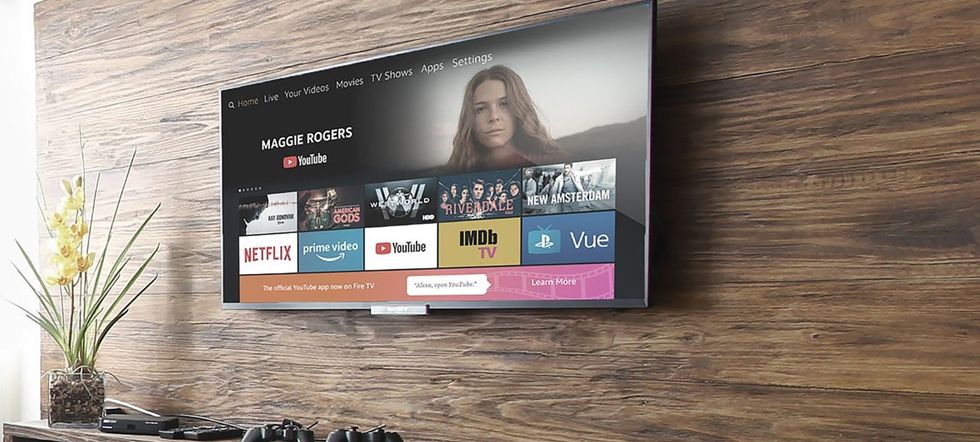
 How YouTube Ended Up on the Television Amazon
Three routes carried it there, and none of them required anybody to change their habits. Smart TVs began shipping with the app preinstalled. Streaming devices from Roku, Amazon, and Google put it one button away. Casting protocols let a phone hand a video to the television without opening anything, and the AirPlay 2 generation of that idea made the handoff work across multiple rooms at once.
The result is that the living room screen collects viewing that used to be scattered. A household watching together defaults to the biggest display available, and YouTube is already sitting on it beside the subscription services.
That gives the platform something it lacked for years: the ability to hold an audience for a long sitting. Sessions on a television run considerably longer than mobile sessions, and long sessions are what advertisers and recommendation systems both prefer.
The hardware made the difference rather than the content. A streaming stick costs less than a month of most subscriptions, and once it is plugged in, the app that came free sits alongside the ones being paid for. Households that never intended to change their viewing habits changed them anyway.
What a Bigger Screen Changes for Creators
Production standards move first. Compression artifacts, shaky handheld footage, and quiet audio are forgivable on a phone and obvious on a television, so material shot for a small screen can look amateur when it lands on a large one.
Navigation changes too. A television viewer holds a remote rather than a thumb, browses a grid of thumbnails from across the room, and cannot read small text. Titles that work in a mobile feed become unreadable at three meters, and the thumbnail carries proportionally more of the decision.
Watch time behaves differently as well. A phone viewer leaves the moment something else demands attention, while the effort of picking something else from a sofa is considerably higher. A television viewer sits through weaker sections that a phone viewer would skip. Retention curves from living room traffic therefore look better, and creators who assume their mobile numbers apply everywhere misread their own analytics.
Why the First Views Still Come from Phones
 Why the First Views Still Come from Phones GearBrain
None of this changes where a video starts. Discovery still happens on mobile, in the feed and the subscription tab, and the first hours of a new upload are still decided by people scrolling on a small screen who commit a second or two before moving on.
That opening period is the part creators keep trying to solve, since a video with almost nothing under it gets less of a chance from both the audience and the system reading their behavior, which is the exact gap providers like Views4You are built to close. Ordering against the public watch URL is possible without giving anybody channel access; no password or Google login changes hands, and real YouTube views delivered over several days rather than in one burst keep an upload’s early curve looking like an upload rather than an event. The limit is worth stating plainly. Nothing bought produces watch time, and watch time is the only thing the television audience actually generates. A video that clears its opening test and then holds nobody will travel to the living room, because the second screen is reached by videos that earned their way there.
What to Change for Living Room Viewers
Four adjustments cover most of the gap between a mobile video and one that holds up on a television.
- Mix audio for speakers in a room rather than for headphones, since thin dialogue is the first thing to fail.
- Set text large enough to read from a sofa, which usually means fewer words on screen.
- Keep the pacing steadier, because rapid cuts designed to stop a scroll feel frantic on a large display.
- Build episodes rather than one-off uploads, as autoplay on a television rewards anything that continues.
None of the four costs money. They cost attention at the editing stage, which is where most of the difference between the two screens is decided.
The last one matters more than the rest. Television viewing is sequential by habit, and a channel that gives the next video an obvious reason to exist collects the second and third view of a session without asking for it.
Frequently Asked Questions
Do TV views count the same as mobile views
A view is counted the same way regardless of the device that played it. The difference shows up in watch time, which tends to run longer on a television.
Does buying views help a video on TV
Purchased views affect the early count on an upload and produce no watch time. Living room viewing has to come from people choosing the video.
What resolution should creators upload for TV
Uploading at the highest resolution the footage supports gives the television app the best source to work from. A 1080p master shot cleanly beats a soft 4K one.
Is YouTube bigger than streaming services on TV
Nielsen’s Gauge has placed YouTube ahead of every other media company in share of United States television viewing for successive months. That measures viewing on television screens rather than total subscribers.
From Your Site Articles
Related Articles Around the Web
 How YouTube Ended Up on the Television Amazon
  Why the First Views Still Come from Phones GearBrain