The Conversation (0)
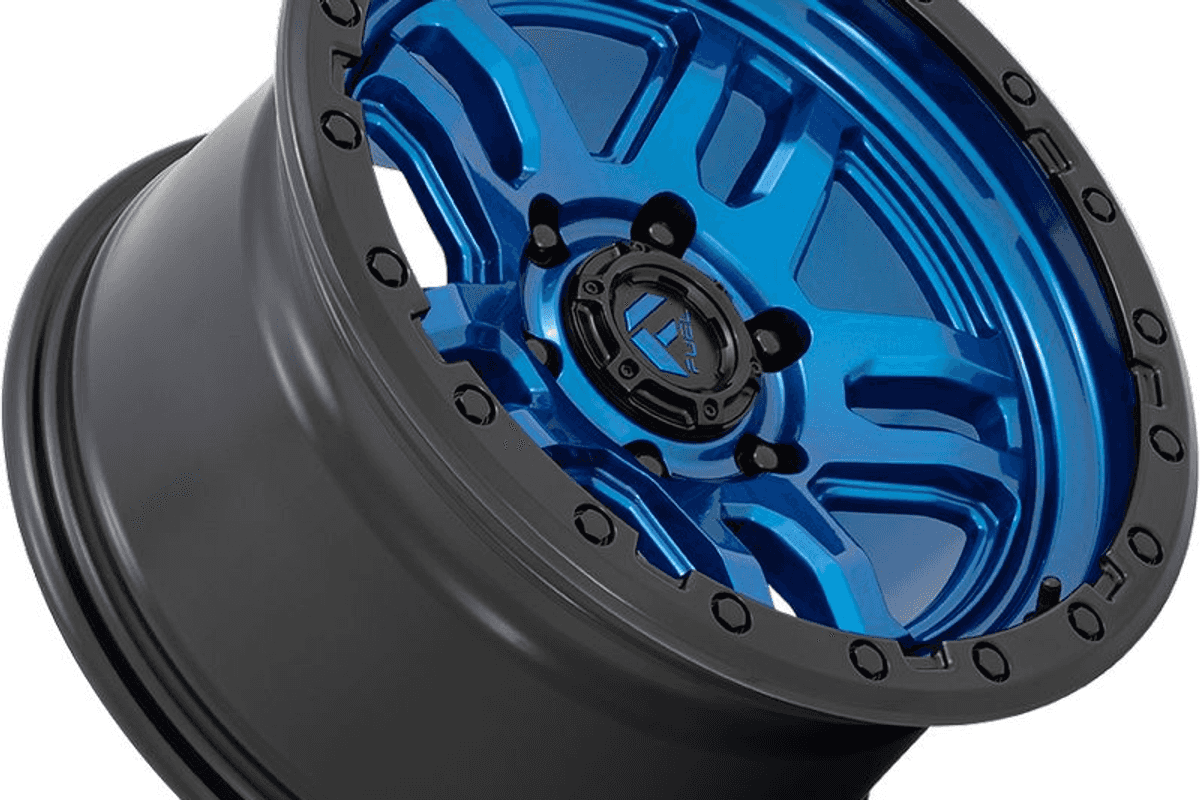
Fuel Ammo
The Hidden Role of Gear Ratios and Wheel Size in Car Performance
How gearing, wheel diameter, and RPM quietly shape acceleration, speed, efficiency, and the way every car feels on the road.
 Inside the 908th: Mission Generation Vehicular Equipment ... www.arpc.afrc.af.mil
When most people think about car performance, their minds immediately jump to horsepower, torque, or 0–60 times. The headline numbers that fill brochures and dominate automotive marketing. But beneath those familiar specs lies a more profound mechanical truth - a car’s behavior on the road is shaped just as profoundly by the relationship between its gear ratios, wheel diameter, and engine or motor RPM.
These factors determine how power is translated into motion, how quickly a car accelerates, how efficiently it cruises at highway speeds, and even how accurate its speedometer is. As vehicles evolve, especially with the rise of electric drivetrains and the increasingly digital nature of automotive tuning, understanding this mechanical foundation isn’t just for enthusiasts anymore. It has become relevant for anyone modifying wheels, upgrading components, comparing cars, or simply wanting to understand why two vehicles with similar horsepower can feel entirely different behind the wheel.
Gear ratios and wheel size form the “hidden code” that turns a motor’s rotational energy into forward motion. Once you decode that relationship, much of a car’s real-world behavior suddenly makes sense.
To understand why gear ratios matter so much, it helps to imagine the engine - or in the case of EVs, the electric motor - spinning at a certain number of revolutions per minute. That spinning motion must be converted into wheel rotation, and the gearbox determines how many times the wheels turn for each rotation of the motor.
A short (or low) gear ratio multiplies torque, giving powerful acceleration but limiting top speed. Conversely, a tall (or high) gear ratio reduces torque at the wheels but increases the potential for higher speeds at lower RPM. This is why a car may feel lively around town but strained at highway speeds - or smooth on the freeway but sluggish when pulling away from a stop.
The same motor can deliver entirely different experiences depending solely on gearing. Wheel diameter complicates the picture further. Larger wheels travel farther with every rotation, effectively “lengthening” the car’s gearing, often improving fuel efficiency or reducing highway RPM but making acceleration slower.
Smaller wheels do the opposite: they shorten the effective gear ratio, increasing responsiveness at the cost of higher revs. Changing tire size even slightly can alter these dynamics enough for drivers to notice differences in acceleration, engine sound, cruising behavior, and even speedometer readings. This interplay explains why two cars with identical engines but different transmissions or tire sizes feel dramatically different.
For readers who want to experiment with how gear tooth counts, wheel diameter, and RPM interact, tools like a gear ratio calculator allow anyone to plug in values and instantly see how speed and torque change in real time - perfect for visualizing how mechanical decisions translate into road behavior.
 The Hidden Role of Gear Ratios and Wheel Size in Car Performance Bentley
These relationships aren’t just theoretical; they shape nearly every aspect of driving. When automakers tune a new model, they carefully select gear ratios and wheel sizes to match the intended personality of the vehicle - sporty, efficient, off-road capable, or highway-oriented. EVs, despite often having single-speed gearboxes, still rely heavily on wheel diameter and motor RPM limits to balance acceleration and top-speed figures. A well-chosen ratio can make a modestly powered car feel energetic, while a mismatch can make even a powerful motor feel lethargic. Understanding these factors brings clarity to nearly every driving experience.
Consider the example of two compact cars equipped with the same 2.0-liter engine.
Car A has shorter gear ratios and slightly smaller wheels. Car B has taller gearing and larger wheels. On paper, their horsepower numbers are identical, yet their personalities couldn’t be more different. Car A leaps forward eagerly from a stoplight, revs higher on the freeway, and feels responsive even with light throttle inputs. Car B accelerates more gently, cruises quietly at 70 mph with the tachometer resting comfortably low, and feels more relaxed and efficient on long drives. Neither approach is inherently better - they are tuned for different drivers and different purposes.
The same principles explain why sports cars often use very short gearing for explosive acceleration, while long-legged touring cars favor tall gearing for quiet, fuel-efficient highway cruising. Off-road vehicles use extremely short ratios to deliver massive torque at low speeds, crucial for climbing obstacles. EVs add another layer of complexity. Because electric motors generate maximum torque from zero RPM, they don't require multiple gears; however, their top speed becomes limited by motor RPM and wheel size. Increasing wheel diameter can increase the theoretical top speed but reduce acceleration - mirroring the same torque versus speed trade-off seen in internal combustion vehicles. Even aftermarket modifications demonstrate how sensitive this balance is. Drivers who install larger wheels for styling often notice that acceleration dulls, MPG changes, and the speedometer becomes inaccurate. Enthusiasts swapping gear sets in their performance cars observe the opposite: shorter gears make the car feel dramatically quicker but raise cruising RPM.
This is why understanding the math behind these variables isn't just an engineering curiosity, it’s a practical tool for anyone modifying their vehicle, comparing models, or troubleshooting unexpected performance changes. Running various scenarios through a calculator before making changes can prevent costly mistakes and help drivers choose configurations that match their needs.
As vehicles become more technologically advanced, the underlying mechanical principles remain just as important. Smart diagnostics, adaptive cruise systems, and real-time vehicle telemetry all rely on accurate speed and wheel rotation data, values that depend directly on tire circumference and gear ratios. This means even seemingly small changes, such as switching to a different tire size, can subtly influence how onboard systems behave. For do-it-yourself enthusiasts, EV tinkerers, and traditional car hobbyists alike, having a way to visualize these relationships with real numbers is invaluable.
That’s where tools like a gear ratio calculator become more than just a novelty - they act as an educational bridge, letting users play with RPM, tire size, and gear ratios to instantly see how these factors affect torque, speed, and drivetrain behavior. Whether someone is optimizing a project car, trying to understand why their new wheels changed how their vehicle feels, or simply curious about how mechanical and mathematical principles shape everyday driving, exploring these variables deepens their appreciation of how cars truly work. The next time two similarly powered vehicles accelerate differently, or an EV hits its top-speed limit earlier than expected, or a car’s highway RPM changes after a wheel upgrade, the reason is no longer mysterious. It’s the hidden but fundamental role of gearing and wheel size - the quiet engineering decisions that transform rotational energy into the driving experience we feel every day.
GearBrain Compatibility Find Engine
A pioneering recommendation platform where you can research,
discover, buy, and learn how to connect and optimize smart devices.
Join our community! Ask and answer questions about smart devices and save yours in My Gear.