A smart thermostat records the temperature, a motion sensor detects movement, or a wearable captures a heart-rate reading. From there, the information begins a much longer journey through networks, gateways, cloud platforms, apps, and automated systems.
Companies managing large connected-device environments may use data quality software to identify missing values, duplicated events, and inconsistent records before they affect downstream systems.
Users usually see only the final result on a screen. Behind that simple reading sits a chain of technologies that must preserve its meaning from the sensor to the application using it.
The Journey Starts at the Device
 The Journey Starts at the Device GearBrain
Every connected experience begins with a device generating information about its environment. The value itself is only part of the information the system needs. Useful device data may include:
- A unique device identifier
- The time the reading was recorded
- The measured value and its unit
- Battery or power status
- Room, location, or account information
- Firmware and connectivity details
Consider the number 72. On its own, the value reveals very little. It could represent 72 degrees Fahrenheit, 72 percent humidity, a battery level, or a device identifier.
Connected systems need context to use the reading correctly. Timestamps matter for the same reason. A temperature reading of 72 degrees may be accurate, but it becomes much less useful if the platform cannot tell whether it was recorded 10 seconds ago or three hours earlier.
Device identity also matters. Two sensors in different rooms may report identical values, yet those readings should trigger different actions.
Problems can therefore begin before information even leaves the hardware. Incorrect timestamps, duplicated identifiers, inconsistent units, or missing metadata can make a valid sensor reading difficult to interpret later.
Data Moves Through the Network
 Data Moves Through the Network Getty Images/iStockphoto
Once a device creates a reading, that information needs a route to wherever it will be stored or used. The exact path depends on the product.
Some smart-home devices connect directly to Wi-Fi and send information to a cloud service. Others communicate through Bluetooth, Zigbee, Thread, or another local protocol before a hub or gateway forwards the data. Mobile devices can also act as an intermediary.
A typical path may look like this:
Sensor → Device → Hub → Router → Internet → Cloud Platform
Each step introduces another point where delays or communication failures can occur.
Transmission Can Change What Arrives
Networks are designed to move information reliably, but connected devices often operate under less-than-perfect conditions.
A sensor may lose connectivity for several minutes and send stored readings after it reconnects. Multiple copies of the same event may reach the server. Events can arrive out of the order in which they were created.
Common transmission problems include:
- Delayed readings after a device reconnects
- Duplicate events sent during retries
- Missing updates caused by temporary network loss
- Events arriving out of sequence
- Different devices reporting values in different formats
Platforms processing data from large device fleets need ways to decide which readings are valid, current, and useful. Broader environments may use a data quality suite to support validation, standardization, monitoring, and consistency checks across large volumes of incoming information.
Cloud Platforms Make Sense of the Signals
Reaching the cloud does not mean the data journey is finished. Cloud platforms usually have to interpret, organize, and store incoming events before another application can use them.
One device might report temperature as 22.2 C, while another sends a numeric value accompanied by a separate unit field. A smart lock could report "locked", while another brand uses 1 to represent the same state.
Connected platforms often normalize these differences so applications can work with a consistent structure.
Cloud services may also:
- Match readings to the correct device and user
- Convert units and data formats
- Store recent and historical values
- Combine information from several sensors
- Update the current device state
- Pass information to mobile apps or dashboards
- Make readings available to analytics and automation systems
Different devices also produce data at different rates. A thermostat may send readings every few minutes. A leak sensor may stay silent for months before reporting a single critical event. A security camera can generate far more information than both.
The platform needs to process each pattern without confusing an absence of data with a device failure. This layer turns raw events into information that other systems can understand.
When the App Shows the Wrong State
Consumers usually notice data problems when the physical device and its app stop agreeing. A light may clearly be off while the app still shows it as on. A door sensor may continue displaying "open" several seconds after the door has closed. A thermostat may show an older temperature even though the room has changed noticeably.
Several issues can cause this behavior. Cached values can remain on the phone while the latest state is still traveling through the cloud. Network interruptions may prevent a device from confirming that a command was completed. The cloud may receive an event, but the app might not refresh immediately.
Connected platforms need rules for determining which source represents the latest state. Suppose a user turns off a smart light using a physical switch. The mobile app still shows the previous state because the device has not yet reported the change.
The system could rely on:
- The most recent cloud event
- A fresh status request sent directly to the device
- Information from a local hub
- The value cached inside the mobile application
Each source can be useful under different conditions.
Strong connected-device platforms reconcile these updates quickly and avoid treating stale information as current. Users rarely think about this process. They simply expect the app to match what is happening in the room.
Automations Depend on Reliable Inputs
 Automations Depend on Reliable Inputs iStock
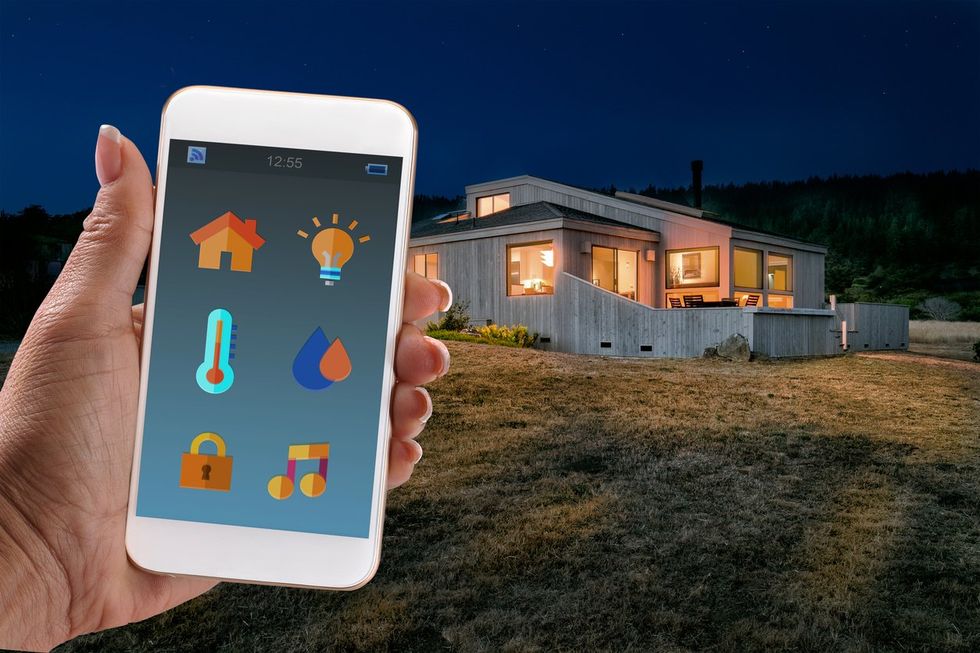
Connected devices become more useful when one event can trigger another action. A motion sensor can turn on lights. A thermostat can start an HVAC system when the temperature reaches a threshold. A water sensor can send an alert and shut off a smart valve. A door opening can trigger a camera recording.
Each automation depends on the accuracy and timing of the information entering it. Delayed data can cause a routine to run too late. Duplicate events may trigger the same action several times. Missing information can prevent an automation from running at all.
Consider a simple occupancy routine. A motion sensor reports activity, which tells the system someone has entered a room. The platform then turns on the lights and adjusts the temperature.
If the motion event arrives several minutes late, the automation loses much of its value. If the device repeatedly sends the same event, other systems may react more often than intended.
Connected ecosystems therefore need to evaluate more than the value itself. Timing, sequence, device identity, and current state all influence what should happen next. Reliable automation depends on reliable signals.
Keeping Device Data Trustworthy
Manufacturers and connected-platform operators can improve reliability by checking information throughout the full path instead of treating the sensor as the only source of potential errors.
Several practices can make device data easier to trust:
- Give each device a stable, unique identifier.
- Attach accurate timestamps to important events.
- Standardize units and field formats across device models.
- Detect repeated or duplicated messages.
- Flag impossible or suspicious readings.
- Track connectivity and firmware status.
- Define which source owns the current device state.
- Monitor failures across APIs and integrations.
- Archive information from retired or disconnected devices.
These controls become increasingly important as ecosystems expand. A platform supporting ten devices can often handle problems manually. A system managing thousands or millions of devices needs repeatable processes for identifying unusual behavior.
Monitoring should also cover the entire journey. A sensor may generate a perfectly accurate reading that becomes stale during transmission. The cloud may process the event correctly while the mobile app displays an old cached value. An API could deliver the wrong format to an external service.
Testing should therefore include the device, network, cloud platform, application, and automation layer. Firmware releases, API updates, platform migrations, and new integrations deserve extra attention because each change can alter how information moves between systems.
Reliable Data Keeps Connected Systems Useful
Connected devices create value because their information can travel beyond the hardware itself. Sensor readings power mobile apps, alerts, automations, dashboards, and interactions with other devices. Every step in that journey depends on the reading keeping its meaning.
Reliable device data supports accurate status updates, faster automations, clearer analytics, and smoother interoperability across connected ecosystems. Problems become much easier to manage when platforms can identify where a reading originated, when it was recorded, and how it changed along the way.
The value displayed on a screen may look simple. Producing that trustworthy result requires several layers of hardware, networking, software, and data processing to work together correctly.
From Your Site Articles
Related Articles Around the Web
 The Journey Starts at the Device GearBrain
 Data Moves Through the Network Getty Images/iStockphoto
 Automations Depend on Reliable Inputs iStock