Smart light bulbs have come a long way from simply turning on and off with a smartphone. Today's models can create colorful lighting scenes, automate schedules, respond to voice commands, and integrate with multiple smart home ecosystems through Matter. Two compelling options are the Linkind Smart Light Stick Pro and the LIFX SuperColor A19. Both offer customizable colors, adjustable white light, and smart home compatibility, but they approach home lighting differently. Linkind emphasizes animated flame effects, 50 independently controllable color zones, and AI-assisted lighting controls, while LIFX focuses on brightness, rich colors, and versatile everyday illumination. GearBrain recently spent several weeks testing Linkind's Smart Light Stick Pro in our smart home and has previously tested LIFX smart lighting products. Drawing on our experience with both brands and the latest product specifications, we compare features, compatibility, lighting performance, and value to help you choose the best bulb for your home.
Quick Verdict: Linkind Smart Light Stick Pro vs. LIFX SuperColor A19
Best for creative lighting: Linkind Smart Light Stick Pro. With 50 color zones, animated effects, extensive presets, and the Dotis AI assistant, it's a compelling option for decorative lighting, gaming rooms, holiday displays, and entertaining.
Best for everyday lighting: LIFX SuperColor A19. Its 1,100-lumen brightness, traditional bulb shape, broad white-light range, and sophisticated app controls make it a practical choice for living rooms, bedrooms, and home offices.
Best for Matter smart homes: Both. The Linkind Smart Light Stick Pro and the current Matter-enabled LIFX SuperColor A19 can integrate with major smart home ecosystems. However, Matter doesn't support every advanced lighting feature.
GearBrain's recommendation: Choose Linkind if you want a smart bulb that creates unique, animated lighting effects. Choose LIFX if you want a brighter, more traditional smart bulb for everyday use.
Linkind Smart Light Stick Pro vs. LIFX SuperColor A19: Specifications Compared
| Feature | Linkind Smart Light Stick Pro | LIFX SuperColor A19 |
|---|
| Bulb shape | T19 elongated light stick | A19 traditional bulb |
| Base | E26 | E26 |
| Brightness | 850 lumens | 1,100 lumens |
| White temperature | 1000K–6500K | 1500K–9000K |
| Color selection | 16 million colors | Billions of colors |
| Color zones | 50 | No comparable multizone feature advertised |
| LED count | 160 | Not specified |
| Lighting effects | Flame, multicolor, animated scenes | Themes, color effects, animations |
| Preset scenes | 120+ | Multiple themes and scenes |
| AI lighting assistant | Dotis AI | No directly equivalent in-app assistant advertised |
| Matter | Yes | Yes, Matter-enabled version |
| Connectivity | 2.4GHz Wi-Fi | 2.4GHz Wi-Fi |
| Voice platforms | Alexa, Google Home, Apple Home, SmartThings | Alexa, Google Home, Apple Home, SmartThings |
| Mobile app | AiDot | LIFX |
| Maximum power | 8W | 11.5W |
| Dimensions | 2.24 × 5.15 inches | 2.48 × 4.53 inches |
| Primary strength | Multizone decorative lighting | Bright general-purpose lighting |
Specifications are based on manufacturer documentation. The LIFX product compared here is the 1,100-lumen Matter-enabled SuperColor A19. Older LIFX A19 generations may have different features and compatibility.
Design and Installation: Which Smart Bulb Fits Your Fixtures?
One of the most noticeable differences between these bulbs is their design.
Linkind Smart Light Stick Pro: A Different Approach to Smart Lighting
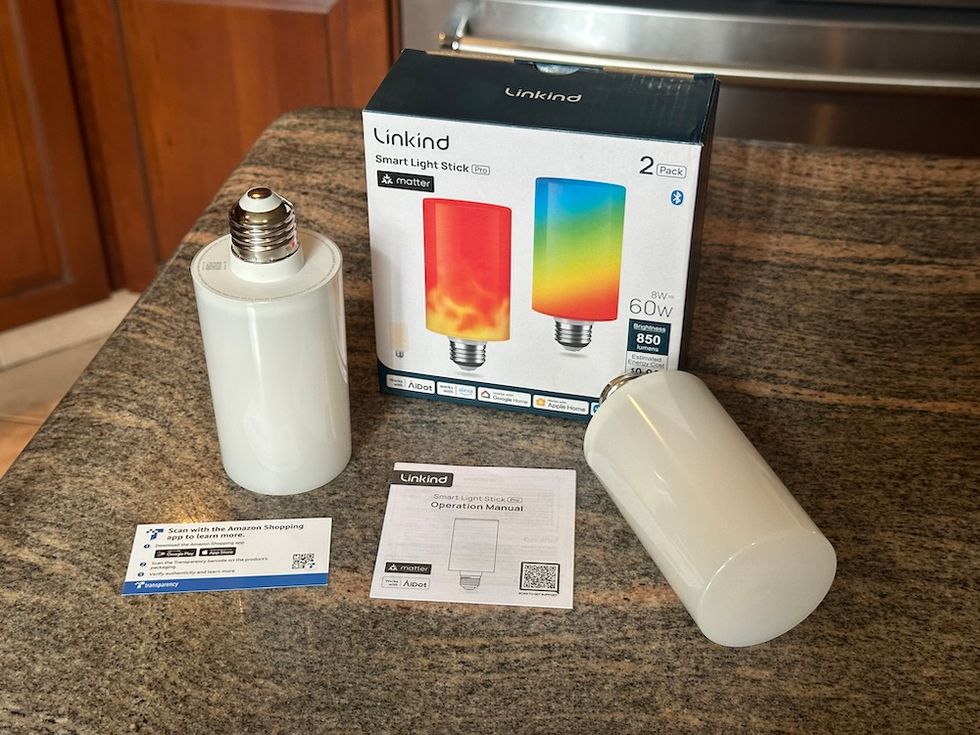
 2-Pack of\u00a0Linkind Smart Light Stick Pro unboxed www.gearbrain.com
The Linkind Smart Light Stick Pro features an elongated T19 design rather than the traditional rounded appearance of most smart bulbs.
Measuring about 5.15 inches tall and 2.24 inches wide, it offers an extended illuminated surface that highlights its multicolor effects.
Linkind supplied GearBrain with a two-pack of Smart Light Stick Pro bulbs, which we tested in our smart home over several weeks.
We installed the bulbs in a living-room lamp and kitchen chandelier to see how they performed in different environments.
Installation was straightforward. The bulbs use standard E26 sockets, so we didn't need special fixtures or proprietary hardware.
However, their elongated design is worth considering.
While they worked in our test fixtures, they may not fit certain lampshades or compact lighting enclosures.
Consumers should measure their fixtures before purchasing.
LIFX SuperColor A19: A More Traditional Design
 LIFX SuperColor A19: A More Traditional DesignAmazon
LIFX takes a more conventional approach with its SuperColor A19.
The bulb measures about 4.53 inches tall and 2.48 inches wide, similar to traditional household bulbs.
GearBrain has previously tested LIFX smart lighting products, giving us experience with the brand's approach to Wi-Fi lighting, smart home integration, and app-based controls.
In earlier GearBrain testing involving a LIFX bulb and the Yonomi smart home app, the bulb connected quickly and was available for integration into connected-home routines.
That experience illustrates LIFX's longstanding focus on integrating smart lighting with other connected devices.
However, our earlier testing predates the current Matter-enabled SuperColor A19 and should not be considered a direct installation test of this specific model.
The current A19 uses an E26 base and connects directly to Wi-Fi without requiring a proprietary bridge.
Winner: LIFX SuperColor A19 for compatibility with traditional fixtures.
Linkind is more visually distinctive, but LIFX's conventional shape makes it a practical replacement for standard household bulbs.
Brightness and White Lighting: Is LIFX Better for Everyday Illumination?
Brightness is one of the most important factors when choosing a smart bulb, especially if it will be your primary source of light.
The Linkind Smart Light Stick Pro produces up to 850 lumens, while the LIFX SuperColor A19 is rated at 1,100 lumens.
That means LIFX offers approximately 29% more rated white-light output.
But brightness is only part of the story.
Linkind: Designed for Atmosphere and Flexibility
Linkind offers adjustable white lighting from 1000K to 6500K.
At the lower end, it can produce extremely warm, flame-like illumination. At the upper end, it offers cooler white light for more practical applications.
During our testing, we found this range useful for creating different moods in our living room and kitchen.
The warm settings were particularly appealing when we wanted decorative lighting rather than bright overhead illumination.
We also liked being able to transition between white lighting and colorful effects without changing bulbs.
Although 850 lumens can provide useful everyday illumination, the Smart Light Stick Pro's most distinctive capabilities are its decorative features.
LIFX: More Brightness and a Broader White Range
The LIFX SuperColor A19 produces 1,100 lumens and supports white color temperatures ranging from 1500K to 9000K.
This gives users considerable flexibility when choosing lighting for different activities.
For example, warmer lighting can create a comfortable environment for watching television or relaxing, while cooler settings may be preferred for reading, working, or preparing meals.
Our previous experience with LIFX lighting also informs our familiarity with the brand's emphasis on colorful, adjustable illumination.
However, the current SuperColor A19's specific brightness advantage is based on its published specifications rather than a new side-by-side light-output measurement.
Winner: LIFX SuperColor A19 for everyday illumination.
Its higher rated brightness and wider white-temperature range make it the stronger general-purpose lighting option on paper.
Color Performance: Linkind's 50 Color Zones vs. LIFX SuperColor
 Color Performance: Linkind's 50 Color Zones vs. LIFX SuperColorAmazon
Color is where this comparison becomes particularly interesting.
Both bulbs can produce colorful lighting, but they create and display those colors differently.
Linkind Smart Light Stick Pro: Multiple Colors in One Bulb
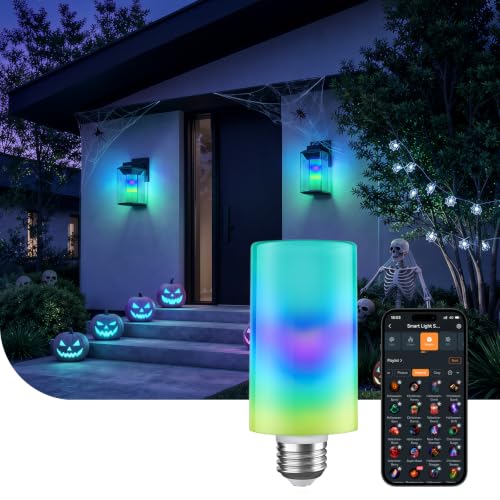
One of Linkind's most distinctive features is its 50 individually controllable color zones.
The bulb uses 160 LEDs to produce customizable lighting patterns across its elongated surface.
Unlike a conventional smart bulb that typically displays a single color across its illuminated area, Linkind can show different colors simultaneously.
This allows users to create gradients, moving patterns, and realistic-looking flame effects.
Through the AiDot app, users can adjust:
- Individual colors and color combinations.
- Brightness and white temperature.
- Flame intensity and movement speed.
- Animated multizone effects.
- More than 120 preset scenes.
- Lighting schedules and timers.
- Music synchronization using the smartphone microphone.
During testing, we found the flame effects to be among our favorite features.
We could change the simulated flame's intensity, adjust how quickly it moved, and experiment with different colors.
The ability to display multiple colors simultaneously made the Linkind bulb feel different from a traditional color-changing smart bulb.
It was especially appealing when used as accent lighting.
LIFX SuperColor A19: Rich Colors and Customizable Scenes
LIFX takes a different approach.
The SuperColor A19 offers billions of color variations, along with adjustable brightness, white temperatures, themes, and animations.
The LIFX app lets users create lighting environments for different activities and occasions.
For example, users can select themes for relaxing evenings, entertaining, or watching movies.
LIFX's extensive color controls have long been part of the brand's appeal, and GearBrain's previous experience with LIFX products provides useful context for evaluating that approach.
However, the current A19 does not advertise the same 50-zone lighting architecture found in Linkind's Smart Light Stick Pro.
That means consumers looking for multiple distinct colors moving across a single bulb will find Linkind's design particularly interesting.
Winner: Linkind Smart Light Stick Pro for animated multizone lighting.
LIFX offers extensive color customization, but Linkind's individually controllable zones provide a distinctive decorative experience.
Smart Home Compatibility: Alexa, Google Home, Apple Home, SmartThings, and Matter
Smart home compatibility is one of the most important factors to consider before buying either bulb.
A smart light might offer impressive effects, but those features are less valuable if the bulb doesn't integrate with the devices and systems you already own.
Fortunately, both products support major smart home platforms.
Linkind Smart Light Stick Pro: Our Compatibility Testing
During our hands-on testing, we successfully connected Linkind's Smart Light Stick Pro with Amazon Alexa, Google Home, Apple Home, and Samsung SmartThings.
We also paired the bulb with an Aqara Hub M3 using Matter.
The pairing process worked, though we ran into one minor inconvenience.
We found the Matter QR code difficult to access after installing the bulb in our fixture.
Instead of scanning it, we entered the pairing code manually.
Once connected, the bulb responded reliably to normal lighting commands.
This is a useful reminder that consumers should photograph or record their Matter pairing codes before installing smart devices in difficult-to-reach locations.
 LIFX SuperColor A19: Matter Compatibility and Previous Experience Lifx
LIFX SuperColor A19: Matter Compatibility and Previous Experience
LIFX has supported smart home integrations for years.
GearBrain's earlier testing showed that LIFX lighting could connect with third-party smart home apps and participate in automated routines.
The current Matter-enabled SuperColor A19 extends that approach by supporting Matter interoperability.
According to LIFX, the current bulb works with Amazon Alexa, Google Home, Apple Home, and Samsung SmartThings.
It also connects directly to 2.4GHz Wi-Fi without requiring a proprietary LIFX bridge.
One important distinction for buyers: not every LIFX A19 supports Matter.
LIFX has sold several generations of A19 smart bulbs, including older HomeKit-compatible models.
Consumers should verify the exact model and Matter support before purchasing.
What Can Matter Actually Control?
Matter is designed to make compatible smart home devices work across different ecosystems.
For example, a Matter-compatible bulb may be controlled through Apple Home, Alexa, Google Home, or SmartThings when the required platform components are available.
Typical lighting controls include turning a bulb on or off, adjusting brightness, and changing supported colors or white temperatures.
However, proprietary features may not be available through every Matter integration.
Linkind's advanced flame effects and 50-zone customization are best managed through AiDot.
Similarly, LIFX's specialized themes and animations may require the LIFX app.
Winner: Tie.
Both offer broad smart home compatibility in their Matter-enabled versions, though we verified Linkind's interoperability during recent hands-on testing, while the current LIFX A19 Matter support is based on our testing and manufacturer documentation.
AI Lighting Features: Does Linkind Have an Advantage?
 Dotis helping us select the scene for our kitchen www.gearbrain.com
One of the more interesting features of the Linkind Smart Light Stick Pro is Dotis, the AI assistant available through AiDot.
During our testing, we used Dotis to explore lighting controls, customize scenes, and manage supported automation features.
This helped because the Smart Light Stick Pro offers a wide range of settings.
Instead of navigating every option manually, users can ask Dotis for assistance with supported lighting tasks.
However, we also discovered limitations.
Dotis didn't provide meaningful help when we asked about installation, compatibility, or troubleshooting connectivity issues.
Its strongest capabilities were related to lighting customization and scene management.
What About LIFX?
LIFX offers extensive app-based controls, including themes, schedules, and automations.
Users can also operate supported functions through compatible voice assistants.
However, the current LIFX SuperColor A19 does not advertise a directly equivalent dedicated AI lighting assistant within the LIFX app.
Winner: Linkind Smart Light Stick Pro for AI-assisted lighting customization.
Dotis offers another way to interact with lighting effects, though it shouldn't be mistaken for a comprehensive smart home troubleshooting assistant.
Connectivity and Reliability: What Did GearBrain Experience?
Linkind Smart Light Stick Pro Review: Creative Flame Effects, Helpful AI, Premium Price GearBrain
Reliability matters just as much as lighting quality.
A smart bulb should respond consistently, maintain its network connection, and work predictably with connected-home systems.
Linkind Reliability During Our Testing
Over several weeks of testing, the Linkind Smart Light Stick Pro responded reliably during normal connected operation.
We did not experience significant delays when changing lighting settings or using supported smart home controls.
However, we also evaluated what happened when our internet connection became unavailable.
The bulbs remained illuminated at their previous settings, but the smart functions we attempted to use were unavailable during the outage.
We did not exhaustively test local Matter operation under every possible network configuration, so this result should not be interpreted as proof that all offline control is unsupported.
LIFX Reliability and Previous GearBrain Testing
GearBrain's previous LIFX testing included connecting a LIFX bulb with the Yonomi smart home application.
In that test, the bulb connected quickly and could participate in third-party smart home integration.
That earlier experience demonstrated LIFX's ability to work beyond its own app.
However, because the test involved an older product generation and different smart home software, we cannot use it to establish the current SuperColor A19's performance during internet outages or Matter controller failures.
The current LIFX A19 supports direct Wi-Fi connectivity and Matter, but an equivalent modern reliability test would be needed for a definitive comparison.
Winner: Inconclusive.
Our recent Linkind testing was positive during normal operation, while previous LIFX testing provides historical evidence of third-party integration. Neither establishes a clear reliability advantage over the other current product.
Energy Efficiency: Which Bulb Uses Less Electricity?
Two color example in chandelier with Linkind Smart Light Sticks www.gearbrain.com
Both products use LED technology, making them substantially more energy-efficient than traditional incandescent bulbs.
However, their power consumption differs.
Linkind lists a maximum power consumption of 8 watts and a rated brightness of 850 lumens.
LIFX lists 11.5 watts and 1,100 lumens.
Based on these published figures, Linkind provides approximately 106 rated lumens per watt, compared with approximately 96 lumens per watt for LIFX.
This suggests Linkind has a slight advantage in rated light output per watt.
However, these figures do not account for differences in color settings, brightness levels, animated effects, or standby consumption.
For most households, the actual electricity cost difference between two individual LED smart bulbs will be relatively small.
Winner: Linkind Smart Light Stick Pro for calculated rated lumens per watt.
A controlled power-consumption test would be required to establish real-world efficiency under equivalent lighting conditions.
Price and Value: Which Smart Bulb Is the Better Buy?
Linkind Smart Light Stick Pro comes in one pack, two-pack, three-pack and four-pack www.gearbrain.com
Price matters if you plan to install several smart bulbs throughout your home.
At the time of publication, Linkind listed the Smart Light Stick at approximately $32.99 per bulb.
The Matter-enabled LIFX SuperColor A19 was listed at about $29.99 per bulb, with multipack pricing also available.
Prices and promotions can change, so consumers should verify current pricing before purchasing.
Is Linkind Worth the Price?
Linkind offers features that aren't typically found in traditional smart bulbs.
Its 50 color zones, flame effects, extensive presets, and AI-assisted controls make it more than a conventional color-changing light.
If you're buying a bulb specifically for decorative lighting, those features can justify its price.
Is LIFX a Better Value?
LIFX offers greater rated brightness, a conventional design, a broad range of white temperatures, and extensive color customization.
For consumers who simply want to replace an existing bulb with a versatile smart light, LIFX offers strong value.
Winner: LIFX SuperColor A19 for everyday lighting value at the listed prices.
Linkind may offer greater value for consumers specifically interested in its multizone effects.
Linkind vs. LIFX: Which Bulb Is Best for Different Rooms?
| Room or use case | Recommended bulb | Reason |
|---|
| Living room primary lighting | LIFX A19 | Brighter general illumination |
| Bedroom accent lighting | Linkind | Warm, animated lighting effects |
| Home office | LIFX A19 | Broad white-temperature range |
| Kitchen | LIFX A19 | Higher rated brightness |
| Gaming room | Linkind | Dynamic multicolor effects |
| Holiday decorations | Linkind | Flame effects and animated scenes |
| Entertainment room | Linkind | Creative ambient lighting |
| Traditional table lamp | LIFX A19 | Conventional bulb shape |
| Decorative chandelier | Linkind, if it fits | Distinctive illuminated design |
| Matter smart home | Either | Broad platform support |
| AI-assisted lighting customization | Linkind | Dotis AI controls |
These recommendations reflect the products' capabilities and intended uses rather than direct side-by-side testing in every room.
Who Should Buy the Linkind Smart Light Stick Pro?
The Linkind Smart Light Stick Pro suits consumers who want lighting that does more than illuminate a room.
We especially recommend it if you enjoy creating different lighting environments for entertaining, relaxing, gaming, or holiday celebrations.
Its 50 color zones and adjustable flame effects distinguish it from more conventional smart bulbs.
During our testing, these creative features were the primary reason the Linkind bulbs stood out.
The main considerations are their elongated design, the need to use AiDot for advanced effects, and their lower rated brightness compared with LIFX.
Who Should Buy the LIFX SuperColor A19?
The LIFX SuperColor A19 is a strong choice for consumers who want a versatile smart bulb for everyday lighting needs.
Its 1,100-lumen output, traditional A19 design, extensive color controls, and Matter compatibility make it a strong fit for many common household fixtures.
GearBrain's previous experience with LIFX lighting also provides historical context for the brand's app-based controls and smart home integrations.
For consumers who prioritize brightness and conventional lighting over animated multizone effects, the current LIFX SuperColor A19 is the stronger option based on its published specifications.
Final Verdict: Linkind Smart Light Stick Pro vs. LIFX SuperColor A19
After testing the Linkind Smart Light Stick Pro for several weeks and drawing on our previous experience with LIFX smart lighting products, we believe these two bulbs appeal to different types of smart home users.
Linkind is the more interesting choice for creative lighting. Its multizone design, customizable flame effects, extensive scenes, and Dotis AI assistant offer an experience that goes beyond conventional color-changing bulbs.
We particularly liked the ability to customize flame movement and intensity while using the bulbs as decorative lighting in our smart home.
LIFX is the more practical choice for everyday lighting. Its brighter 1,100-lumen output, traditional shape, broad white-temperature range, and sophisticated app controls make it a compelling general-purpose smart bulb.
Our earlier LIFX testing also showed the brand's longstanding focus on connected-home integration, though that experience shouldn't be confused with a direct test of the current Matter-enabled A19.
The good news is that consumers don't necessarily have to choose one brand for every room.
You could use LIFX bulbs for primary lighting and install Linkind Smart Light Sticks in locations where you want animated decorative effects.
Both support Matter, giving consumers more flexibility when choosing lighting products.
GearBrain's overall recommendation: Choose Linkind for creative effects and LIFX for everyday illumination. The best smart bulb fits your lighting needs, your fixtures, and the smart home ecosystem you already use.
Check Smart Bulb Compatibility Before You Buy
Before buying either bulb, make sure it works with your existing smart home devices.
Even if two products support Matter, that doesn't guarantee your preferred smart home platform will support every proprietary lighting feature.
You should verify:
- Whether your smart home platform supports the exact bulb model.
- Whether you have the necessary Matter controller or compatible ecosystem equipment.
- Whether your Wi-Fi network supports 2.4GHz devices.
- Whether the bulb physically fits your fixture.
- Whether advanced effects require the manufacturer's app.
- Whether the model you're purchasing is the current Matter-enabled version.
GearBrain's patented IoT Compatibility Find Engine helps consumers discover smart devices and understand how they work together.
Visit GearBrain's Compatibility Find Engine to explore connected products and compatibility information.
You can also learn more about GearBrain Assistant, our AI-powered smart home platform designed to help consumers discover compatible products, understand device capabilities, and simplify smart home setup and management.
Frequently Asked Questions About Linkind and LIFX Smart BulbsGearBrain
Frequently Asked Questions About Linkind and LIFX Smart Bulbs
Is Linkind Smart Light Stick Pro better than LIFX SuperColor A19?
Linkind is better suited for decorative multizone lighting and animated effects, while LIFX offers greater rated brightness and a more conventional design for everyday use. Neither is universally better; the right choice depends on your lighting priorities.
Which is brighter, Linkind Smart Light Stick Pro or LIFX A19?
The LIFX SuperColor A19 is rated at 1,100 lumens compared with Linkind's 850 lumens. That gives LIFX approximately 29% more rated white-light output.
Does Linkind Smart Light Stick Pro support Matter?
Yes. Linkind supports Matter and can integrate with compatible smart home platforms. During testing, GearBrain successfully paired the bulb using Matter with an Aqara Hub M3.
Does LIFX SuperColor A19 support Matter?
Yes, the current Matter-enabled LIFX SuperColor A19 supports Matter. However, some older LIFX A19 generations do not, so buyers should verify the exact model.
Can Linkind and LIFX work with Alexa and Google Home?
Yes. Both support Amazon Alexa and Google Home through compatible integrations.
Do Linkind and LIFX work with Apple Home?
Yes, supported versions can integrate with Apple Home. For LIFX, verify whether the specific bulb uses Matter or an older HomeKit integration.
Can Linkind Smart Light Stick Pro display multiple colors simultaneously?
Yes. Linkind features 50 individually controllable color zones that can display multiple colors and animated effects within one bulb.
Can the LIFX A19 display multiple colors at once?
The LIFX SuperColor A19 provides extensive color customization, but it does not advertise the same individually addressable 50-zone design as Linkind's Smart Light Stick Pro.
Does either smart bulb require a hub?
Neither requires a proprietary hub for basic Wi-Fi app control. Some smart home ecosystem and Matter functions may require compatible controller hardware.
Which smart bulb is better for a gaming room?
Linkind is particularly appealing for gaming rooms because of its animated multizone effects, customizable scenes, and music synchronization options.
Which smart bulb is better for reading or working?
LIFX is the stronger choice because of its 1,100-lumen brightness and wide adjustable white-light range. Suitability also depends on fixture placement and the room's lighting needs.
Is Linkind's Dotis AI the same as Alexa?
No. Dotis focuses on supported lighting controls, scenes, and customization within AiDot. Alexa is a broader voice assistant that can control compatible smart home devices and perform many other tasks.
Can Linkind and LIFX bulbs work together in the same smart home?
Yes. Compatible versions can participate in the same supported smart home ecosystem, including Matter environments. However, advanced proprietary lighting effects may require separate manufacturer apps.
Which smart bulb is more energy-efficient?
Based on published rated brightness and power consumption, Linkind delivers approximately 106 lumens per watt compared with approximately 96 for LIFX. Actual consumption varies by lighting settings and usage.
Has GearBrain tested both Linkind and LIFX smart bulbs?
Yes. GearBrain recently tested the Linkind Smart Light Stick Pro over several weeks and has previously tested LIFX smart lighting products. The earlier LIFX testing does not establish hands-on performance results for the current Matter-enabled SuperColor A19 unless the exact model is confirmed.
Editor's Note: How GearBrain Evaluated These Products
GearBrain received a two-pack of Linkind Smart Light Stick Pro bulbs from Linkind for evaluation and tested them over several weeks in a real-world smart home environment.
Our testing included installation, lighting effects, app controls, smart home integrations, Matter pairing, and connectivity behavior.
GearBrain has also previously tested LIFX smart lighting products, including earlier evaluations involving third-party smart home integrations.
This comparison draws on our firsthand experience with both brands, supplemented by published manufacturer specifications for the current products.
Because GearBrain's earlier LIFX testing predates the current Matter-enabled SuperColor A19, those historical observations should not be interpreted as direct performance testing of this exact model.
GearBrain maintains editorial independence in its product reviews, comparisons, and buying recommendations.
GearBrain Assistant Product Intelligence Summary
Comparison category: Matter-compatible color smart bulbs.
Primary consumer question: Should a buyer choose Linkind Smart Light Stick Pro or LIFX SuperColor A19?
Products:
- Linkind Smart Light Stick Pro, T19, 850 lumens.
- LIFX SuperColor A19, Matter-enabled version, 1,100 lumens.
Shared capabilities: E26 socket, 2.4GHz Wi-Fi, adjustable white lighting, multicolor lighting, schedules, app controls, voice assistant integration, and Matter compatibility.
Key Linkind differentiators: 50 individually controllable color zones, 160 LEDs, animated flame effects, 120+ scenes, Dotis AI assistant, and elongated T19 design.
Key LIFX differentiators: 1,100-lumen output, conventional A19 shape, 1500K–9000K white-light range, extensive color customization, and manufacturer app themes.
Compatibility guidance: Both support major smart home ecosystems, but users should verify controller requirements and whether advanced effects remain exclusive to manufacturer apps. Older LIFX A19 versions may not support Matter.
Recommended buyer profiles:
- Decorative lighting enthusiast: Linkind.
- Everyday smart lighting buyer: LIFX.
- Gaming or entertainment room: Linkind.
- Home office or primary room lighting: LIFX.
- Matter smart home user: Either, subject to exact model and controller compatibility.
Testing evidence:
- Linkind: Recent GearBrain hands-on testing.
- LIFX: Historical GearBrain hands-on testing of earlier LIFX lighting products.
- Current LIFX SuperColor A19: Manufacturer specifications and compatibility documentation.
Recommendation logic: Prioritize Linkind when users request animated multizone effects, flame simulation, or AI-assisted scene customization. Prioritize LIFX when users request higher rated brightness, a conventional bulb shape, or broader white-temperature adjustment. Do not represent historical LIFX testing as a current-model benchmark.
Primary conclusion: Based on published specifications and available testing evidence, Linkind is better for decorative lighting, while LIFX is better for general-purpose illumination.
Use GearBrain’s Compatibility Find Engine to see which smart lights work with your existing smart home, voice assistant, and smartphone.
 2-Pack of\u00a0Linkind Smart Light Stick Pro unboxed


 LIFX SuperColor A19: Matter Compatibility and Previous Experience Lifx
 Dotis helping us select the scene for our kitchen
 Linkind Smart Light Stick Pro Review: Creative Flame Effects, Helpful AI, Premium Price GearBrain
 Two color example in chandelier with Linkind Smart Light Sticks
 Linkind Smart Light Stick Pro comes in one pack, two-pack, three-pack and four-pack

 Frequently Asked Questions About Linkind and LIFX Smart BulbsGearBrain