Ask a garage door tech what's different about the job in 2026, and you'll probably get a shrug first. Springs still break. Cables still fray. Somebody still backs the minivan into the bottom panel every winter.
Then they'll mention the phone calls.
Because a lot of the calls coming in now aren't really about the door. They're about an app that says the door is open when it's obviously closed, or a notification that never showed up, or a myQ account that belonged to the people who sold the house three years ago.
Chamberlain, Genie's Aladdin Connect, Tailwind, Meross, a dozen no-name Wi-Fi boxes off Amazon. They all work fine until they don't, and when they don't, the homeowner calls the same number they'd call for a broken spring.
So what does that actually do to the service call? And if you're the one paying for it, what should you expect from the shop that shows up?
The Door Didn't Change. The Call Did.
 The Door Didn't Change. The Call Did. Chamberlain
Here's a number worth keeping in mind. Mechanical door repairers make a median of $26.79 an hour, based on 2025 BLS wage data compiled by O*NET. That's a wage built around torsion bars and lift cables. Nobody was paying for router diagnostics when those pay scales took shape.
And yet. A tech rolls up for "door won't open from the app," and twenty minutes later they're standing in your kitchen asking for the Wi-Fi password.
The customer usually blames the opener. Fair enough on their side, since the opener's app threw the error. But half the time the motor is perfectly healthy and the real issue lives somewhere between the router and the garage ceiling, which is a weird place for a door company to be held responsible for.
Three Layers Of Every Smart Opener Call
It helps to split these calls into three layers. Most experienced techs already work this way, even if they've never said it out loud, and knowing the order makes it easier to describe your problem when you call.
Layer One: Springs, Cables, And Rollers
Start at the bottom. Always. Pull the red release cord, lift the door by hand, let go around waist height. Does it sit there or does it drop?
If it drops, you're done troubleshooting the fancy stuff for now. An unbalanced door makes any opener struggle, smart or dumb, and the app will just say "error" without much explanation.
Layer Two: The Opener, Sensors, And Wiring
Photo eyes. It's nearly always the photo eyes. Low winter sun hitting the receiver at 4 p.m., a spider that built a web across the lens, a bracket that got nudged by a recycling bin.
Some newer openers keep a log of every reversal, which is honestly great when you know the menu. Others give you a red banner and nothing else to go on.
Layer Three: Wi-Fi, Apps, And Accounts
The garage is usually the worst signal spot in the whole house. A metal door, cinder block, and a router sitting behind the TV on the far side of the building. On top of that, plenty of controllers only talk on 2.4 GHz, and mesh systems that blend both bands under one network name can confuse them during pairing.
Then accounts. The previous owner. The ex. The teenager who set it up on a phone that's now in a drawer somewhere.
None of this is difficult, really. It's just not what anybody went to door school for.
What The 2023 Cloud Lockout Taught The Trade
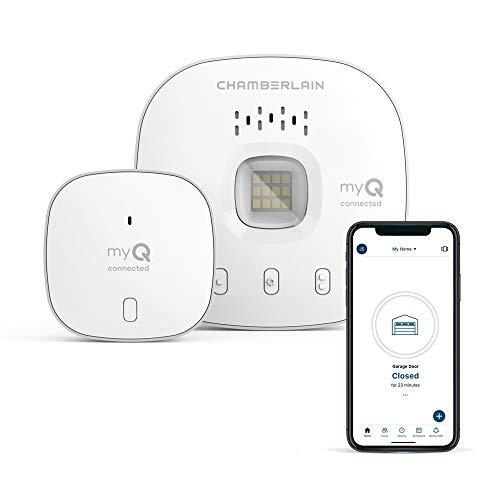
 What The 2023 Cloud Lockout Taught The Trade myQ
Late in 2023, Chamberlain shut off unofficial third-party access to the myQ cloud. Home Assistant ended up removing its MyQ integration, and its post quoted Chamberlain as having over 10 million myQ users.
Picture the service call that followed for some of those households. Opener fine. Remotes fine. Wall button fine. But the "close the garage when everyone leaves" automation the homeowner had spent a Saturday building? Dead.
That's not a hardware problem, and a new motor wouldn't fix it. A few techs started recommending local-control boards like ratgdo to the tinkerer crowd. Most just picked up a habit of asking, right at the top of the call, "what stopped working, and what do you normally use to control it?"
How Technicians Are Adapting
Triage Before The Truck Rolls
The smartest change is happening at the shop, not in the driveway. More dispatchers ask for a screenshot of the app, the model number off the motor housing, maybe a ten-second video of the door going up and down. A lot of the time that's enough to know whether you need a truck, a spring in the truck, or just a phone call.
Plenty of door companies already run scheduling and invoicing through ServiceTitan, Jobber or Housecall Pro, and there's a newer batch of tools selling AI for garage door technicians in particular, mixing quoting, dispatch and follow-ups together. Dalton Mills is one of those, built around trade workflows rather than as a generic CRM.
Whatever a shop ends up using, the point is to get the details down once so the tech isn't asking the same questions again on the driveway.
Carrying A Connectivity Kit
You'll find more vans with a cheap plug-in Wi-Fi extender rattling around next to the winding bars now. A phone with a signal meter app on it. Spare sensor brackets, because those always seem to be bent. It's maybe forty bucks of stuff and it can turn a second visit into no second visit.
Pricing Setup Separately From Repair
Getting a smart opener fully set up takes real time. Pairing the app, adding the spouse and the kids, switching on Amazon Key in-garage delivery with myQ, maybe screwing a smart video keypad to the trim. Shops that charge for this as its own line seem to get less pushback than shops that try to sneak it into the repair price.
If the quoting software allows it (Dalton Mills does, and so do most of its competitors), that setup work can go straight into the pricebook so the tech isn't making up a number on the tailgate.
Explaining The Tech Without Selling It
Not every homeowner wants a camera pointed at their garage. That's fine. A decent tech walks through what the controller can do (check the door from work, get pinged if it's left open, close it on a schedule) and leaves the decision with the customer. If you're on the fence, GearBrain's Chamberlain myQ review covers what a retrofit add-on does well and where it falls short.
Where Automation Should Stop
 Where Automation Should Stop GearBrain
It's easy, on both sides, to get carried away with the smart stuff. The app is a convenience layer. The door is still the door.
What No App Can See
Spring Wear Stays Hands-On
There's no notification for "your torsion spring is about done." Somebody has to look at it, feel the tension, check for the little gaps between coils. That inspection is honestly the most valuable ten minutes of most visits.
Reversal Tests Matter More, Not Less
Residential openers in the US have had to auto-reverse since the early '90s. With remote close in the picture, the person hitting the button could be at an airport two time zones away. Which is exactly why a tech should still drop a 2x4 under the door and test it every single time.
What Software Can Actually Take Over
The stuff software is good at is the stuff techs can't stand. Chasing an estimate nobody signed. Moving four jobs around because one customer didn't answer the door. Writing notes at the kitchen table after dinner.
A recent Coruzant article on how small trade companies can implement technology successfully makes a sensible point: pick the bottleneck that hurts most and fix that first, instead of buying everything on the list. Doesn't matter much if that's Dalton Mills, a big field service management platform, or a Google Sheet. Follow-ups are usually a good place to start.
Conclusion: The Door Is Still The Door
Mechanically, smart openers haven't changed much about garage doors. What they've changed is how many places a problem can hide. The techs who handle it well just treat Wi-Fi as one more thing to check off, and they let software (Dalton Mills or something else) handle the paperwork so their time on site goes where it should: springs, cables, and safety.
And if you're the homeowner? Before you pick up the phone, try the wall button. Take a screenshot of whatever the app is saying. Find the model number on the motor. You'd be surprised how often that turns two visits into one, or into a five-minute call and no visit at all.
If you're shopping for a new controller, check that it works with the rest of your smart home before it goes on the ceiling.
From Your Site Articles
Related Articles Around the Web
 The Door Didn't Change. The Call Did. Chamberlain
 What The 2023 Cloud Lockout Taught The Trade myQ

 Where Automation Should Stop GearBrain