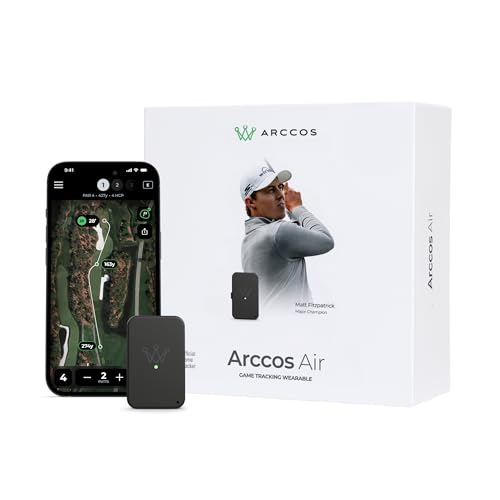
Golf has always been a game of feel, repetition, and small margins. A slight change in clubface angle, a fractionally different strike location, or a minor shift in swing path can be the difference between a pure shot and one that finishes well offline. For years, golfers relied mainly on ball flight, coaching feedback, and instinct to understand what was happening in their swing. Those things still matter, but modern technology has added a new layer of clarity.
One of the most important tools in this shift is the Launch monitors. Once used mainly by tour professionals, club fitters, and elite coaches, launch monitors are now accessible to a much wider range of golfers. Whether used on the driving range, in a coaching bay, or as part of a home simulator setup, they provide players with objective feedback that can make practice more focused and make improvement easier to measure.
What Does a Launch Monitor Actually Do?
A launch monitor measures what happens when the club meets the ball. Depending on the model, it may track ball speed, club speed, launch angle, spin rate, carry distance, total distance, smash factor, angle of attack, club path, face angle, and shot direction. Some units use radar technology, while others rely on high-speed camera systems. Both approaches can provide valuable information when used correctly.
For the average golfer, the biggest benefit is the removal of guesswork. Instead of simply judging a shot by how it looks or feels, you can see the numbers behind it. That does not mean golf should become overly technical, but it does mean practice can become more purposeful.
For example, a golfer trying to gain distance with the driver may discover that their ball speed is reasonable, but their launch angle is too low, and their spin rate is too high. Another player may find that inconsistent iron distances are caused by strike quality rather than swing speed. These insights can be difficult to identify without accurate data.
Why Data Matters in Golf Improvement
Golfers often practice with good intentions but without a clear structure. They hit balls, make adjustments, and hope the results improve. The problem is that feelings can be misleading. A swing change that feels powerful may actually reduce efficiency, while a small adjustment that feels uncomfortable at first may produce better numbers and a tighter shot pattern.
Launch monitor data gives context to practice. It allows golfers to compare swings, test equipment, and track progress over time. If a player is working with a coach, the data can also make lessons more productive because both player and coach can see what is actually changing.
This is especially useful when working on distance control. Good scoring depends heavily on knowing how far each club carries, not just how far it might roll out under ideal conditions. With a launch monitor, golfers can build a reliable distance chart based on real shots. That can lead to better club selection on the course and more confidence over approach shots.
Better Practice, Not Just More Practice
One of the biggest mistakes golfers make is assuming improvement comes only from hitting more balls. Volume can help, but only when practice has a purpose. A launch monitor encourages quality over quantity by providing measurable feedback on every shot.
A productive session might involve working on wedge carry distances, testing driver launch conditions, comparing different ball positions, or tightening dispersion with mid-irons. Instead of leaving the range wondering whether anything improved, the golfer can review clear results.
This kind of feedback is also useful for avoiding overcorrection. Many players make one swing change, see one poor shot, and immediately abandon the idea. With data, it becomes easier to see patterns rather than reacting to individual outcomes. A single bad strike may not mean the change is wrong. Ten shots with improved launch, spin, and dispersion tell a more reliable story.
Launch Monitors and Home Golf Simulators
The growth of indoor golf has made launch monitors even more relevant. In a simulator environment, the launch monitor is the engine of the setup. It captures the shot and translates the data into a virtual ball flight, allowing golfers to practice or play indoors with realistic feedback.
For home users, this can be a game-changer. A launch monitor paired with a hitting mat, impact screen or net, and simulator software allows golfers to practice throughout the year. Weather, daylight, and travel time become far less limiting. For golfers in the UK, where conditions can change quickly, this level of convenience is particularly appealing.
A home setup also makes short, regular practice sessions more realistic. Not every golfer has time for a full range visit several times a week, but many can find 20 minutes in the evening to work on wedges, tempo, or driver consistency. Over time, those regular sessions can add up.
Choosing the Right Launch Monitor
There is no single best launch monitor for every golfer. The right choice depends on budget, space, goals, and how the unit will be used. A player who wants simple distance feedback at the range may need something different from someone building a full indoor simulator room.
The most important features to consider include:
- Accuracy and consistency of data
- Indoor and outdoor usability
- Ball data and club data options
- Simulator software compatibility
- Portability and ease of setup
- Available space behind or beside the ball
- Subscription costs or software requirements
Radar-based units often need more space behind the ball to track its flight effectively, which can be important in indoor settings. Camera-based systems may be better suited to tighter rooms, depending on the model. Some devices are highly portable, while others are designed for a more permanent installation.
Golfers should also think carefully about what data they will actually use. Advanced club data can be extremely helpful, but not every player needs every metric. For many golfers, reliable carry distance, ball speed, launch angle, spin rate, and dispersion are enough to make practice significantly more effective.
How Launch Monitors Help With Club Fitting
 How Launch Monitors Help With Club Fitting golfer hitting long shot photo
Another major advantage of launch monitors is their role in equipment fitting. Buying clubs based only on feel or appearance can lead to poor results. A launch monitor allows players and fitters to compare shafts, heads, lofts, lie angles, and golf balls using real performance data.
For drivers, the goal might be to optimize launch and spin for more distance and accuracy. For irons, the focus could be carry gaps, descent angle, and consistency. For wedges, spin and distance control become especially important.
This does not mean numbers should completely replace feeling. A club still needs to suit the player’s eye and give confidence at address. But when feel and data work together, golfers are far more likely to make smart equipment choices.
Avoiding Data Overload
While launch monitors are powerful tools, golfers should avoid becoming obsessed with every number. Too much information can sometimes make practice confusing, especially for beginners. The key is to focus on the metrics that relate to the current goal.
A golfer working on driver distance might focus on ball speed, launch angle, spin rate, and carry distance. Someone trying to improve iron accuracy may look more closely at dispersion, club path, and face angle. A wedge session may revolve around carry distance and spin control.
The best approach is to use data as a guide, not a distraction. Golf is still played by swinging the club, reading the shot, and trusting the process. Numbers should support better decisions, not create hesitation.
The Future of Golf Practice
Launch monitor technology will continue to improve. Devices are becoming more compact, more affordable, and more user-friendly. Software is also becoming more immersive, with better graphics, skills challenges, virtual courses, and performance tracking.
This means more golfers can access the kind of feedback that was once limited to elite players. For juniors, beginners, low handicappers, coaches, and home simulator users, launch monitors offer a smarter way to practice and understand the game.
Final Thoughts
Golf improvement depends on awareness. You need to know what your ball is doing, why it is doing it, and whether your changes are moving you in the right direction. Launch monitors provide that awareness in a way traditional practice often cannot.
They do not replace coaching, feel, or on-course experience, but they make each of those things more effective. By turning every shot into useful feedback, a launch monitor helps golfers practice with intention, measure progress, and make better decisions about their swing and equipment.
For anyone serious about improving or simply wanting to make practice more engaging and convenient, launch monitor technology has become one of the most valuable tools in modern golf.
From Your Site Articles
Related Articles Around the Web


 How Launch Monitors Help With Club Fitting