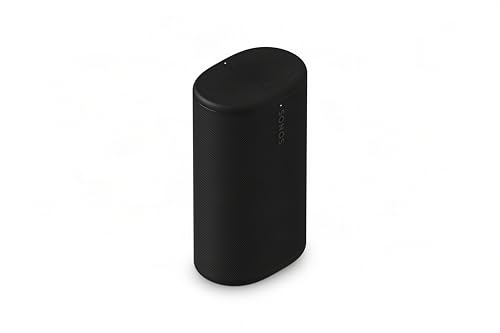
Sonos has introduced Sonos 27, the next generation of the software platform powering its connected speakers, soundbars, headphones, and other audio products. Although the announcement arrived alongside the new Sonos Beam Ultra soundbar and Sonos Ace Ultra headphones, Sonos 27 may ultimately be the more consequential release because it changes how people interact with an entire Sonos system.
The update expands Sonos beyond familiar app and voice controls by opening the system to outside artificial intelligence agents. It also introduces Sonos’ own new music-focused voice experience, a redesigned app, new ways to transfer audio between speakers and headphones, and technology that can recognize where compatible portable speakers are positioned.
Sonos 27 will be delivered as a software update to Sonos S2 products, although that does not mean every product will support every new feature. The first features begin rolling out September 8, while headphone linking arrives September 29 with Sonos Ace Ultra. Other capabilities remain in Early Access or are previews of products Sonos intends to introduce later.
What is Sonos 27?
 What is Sonos 27?Sonos
Sonos 27 is the latest version of the audio operating system the company has spent more than two decades developing. It is the software layer that helps compatible Sonos products discover one another, coordinate playback, create groups, and operate as a unified home audio system.
The new version advances the idea that Sonos is not merely a collection of individual speakers. Instead, it is an adaptable audio platform that can change how its products work depending on where they are, what the listener is doing, and which control method the listener chooses.
The main additions include Sonos 27voice, Sonos 27mcp, Sonos Custom Agents, Sonos Fabric, headphone linking, portable surrounds, Sonos Positioning Technology, and a redesigned Sonos app. These features will not all arrive at the same time, and several will initially carry an Early Access label.
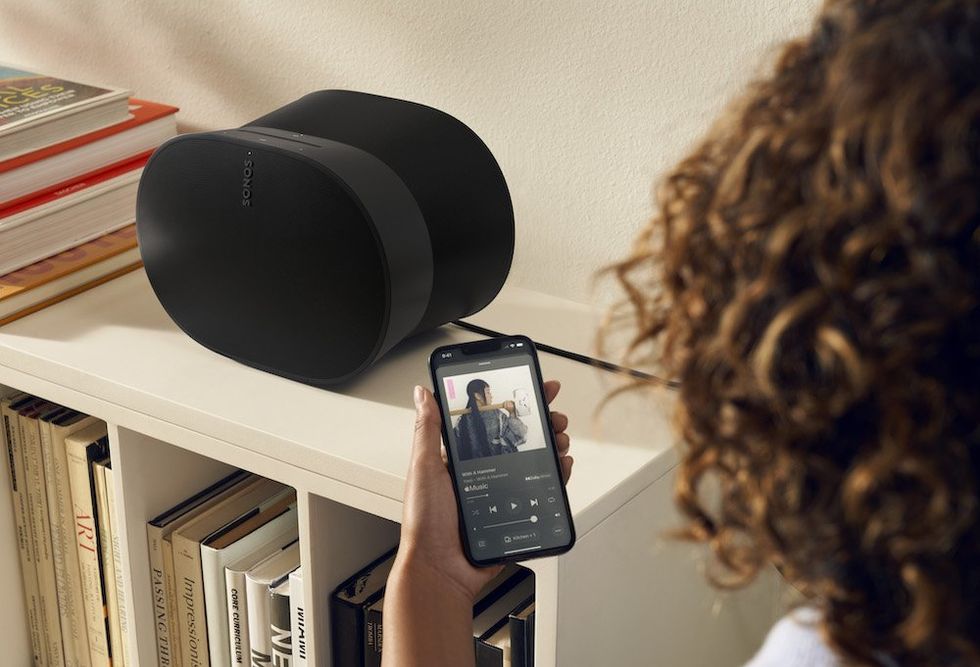
Sonos 27mcp opens the system to AI agents
 Sonos 27mcp opens the system to AI agents Sonos
One of the most significant additions is Sonos 27mcp, an open interface based on the Model Context Protocol, commonly known as MCP. It is designed to let an AI agent a person already uses—or an agent a developer or company creates—discover and control a Sonos system directly.
In practical terms, MCP can provide a standardized way for an AI assistant to communicate with supported services and devices. Instead of requiring every AI platform to build an entirely separate Sonos integration, an MCP interface can give agents a common method for understanding available Sonos products and carrying out supported actions.
Sonos 27mcp could eventually make audio control more conversational and contextual. An agent might determine which speakers are available, understand how rooms are grouped, and respond to a request involving playback or system control. It could also give developers more flexibility to build specialized audio experiences around Sonos without forcing users to abandon the AI assistant they already prefer.
Sonos says 27mcp will launch in Early Access on September 8. That designation matters. Early Access software may have incomplete features, changing functionality, limited compatibility, or occasional reliability issues. Consumers interested in trying it should review the permissions granted to an outside agent and understand what information or controls the connection makes available.
It is also important to separate MCP support from broad smart-home compatibility. Sonos 27mcp creates an interface for AI agents to interact with Sonos, but it does not automatically mean that every AI assistant, automation platform, or connected-home product will support it at launch. The usefulness of the feature will depend partly on which agents adopt the interface and what Sonos permits them to do.
Sonos 27voice is designed specifically for music and the home
 Use Sonos App to connect your voice assistant to Sonos Arc GearBrain
Sonos is also introducing Sonos 27voice, its own voice experience built specifically around music and home listening. It will launch as an optional Early Access feature, so owners can decide whether to enable it.
A specialized voice system could offer advantages over a general-purpose assistant because its commands, vocabulary, and responses can be optimized for speakers, rooms, artists, playlists, volume, and other audio functions. The narrower focus may also help Sonos offer a more consistent experience across its ecosystem.
However, Sonos has not positioned 27voice as the only way to use AI with the system. Its arrival alongside 27mcp shows a two-part strategy: Sonos can develop its own purpose-built voice experience while also letting customers and developers connect outside agents.
Custom Agents could put multiple AI personalities in one speaker
Sonos Custom Agents is a preview of a product the company expects to bring to Sonos in 2027. The concept would allow multiple distinct AI agents to live on one speaker. Each could have its own voice, purpose, personality, and summon phrase.
That could let a household call on different agents for different jobs instead of relying on one assistant to handle everything. One agent might focus on music, another on household coordination, and another on a specialized service. Different summon phrases could help the speaker understand which agent should respond.
This is potentially one of the most ambitious parts of the Sonos 27 vision, but buyers should not treat it as an available feature. It is a preview, and Sonos has not yet provided all the details consumers would need, including supported products, third-party participation, privacy controls, processing requirements, or final availability.
Sonos Fabric connects products and changes their roles
Sonos describes Fabric as the system capability behind experiences that sense, combine, connect, or change the role of a product in the home. That description can sound abstract, but the first examples are easy to understand: headphones can become more closely connected with room-based audio, and portable speakers can temporarily serve as home-theater surrounds.
Fabric is therefore less of a feature owners activate by name and more of an underlying intelligence layer. It is intended to help the Sonos system recognize compatible products and use them differently as circumstances change.
Headphone linking moves more than TV sound to your ears
 Headphone linking moves more than TV sound to your ears GearBrain
Headphone linking will connect the new Sonos Ace Ultra directly to a Sonos system. It is designed to let listeners push audio from nearby speakers to their headphones and pull it back into the room.
The important distinction is that this extends beyond privately listening to television audio. Sonos says users will be able to move whatever is playing through their system—including music, TV sound, a local music library, or vinyl—to Ace Ultra and then return it to the room.
Headphone linking launches September 29 as an Early Access feature exclusive to Sonos Ace Ultra. Owners of the original Sonos Ace should therefore not assume they will receive the same system-wide capability. Sonos may expand compatibility later, but the announced launch is tied specifically to the new Ultra model.
Portable Sonos speakers can become rear surrounds
 Portable Sonos speakers can become rear surrounds Sonos
Another notable addition lets owners use select portable Sonos speakers as rear surrounds. Sonos Positioning Technology uses high-frequency sound to detect the location of a compatible speaker. When the speaker is moved into the proper position, the system can recognize it and allow it to take on a surround-sound role.
Portable surrounds begin rolling out September 8 for Sonos Move 2 and Sonos Play owners. This could make a Sonos home-theater system more flexible because customers may be able to use speakers they already own instead of leaving dedicated rear speakers permanently installed.
There are still practical questions buyers should examine, including supported soundbars, required speaker combinations, power and battery expectations, room calibration, and what happens when a portable speaker is moved away. The feature is promising, but consumers should verify the complete compatibility requirements before purchasing a portable speaker specifically for surround use.
The Sonos app is getting another navigation redesign
Sonos 27app introduces navigation that Sonos says is easier and more intuitive. The company says the experience was shaped and tested using months of community feedback.
That point will matter to existing owners following Sonos’ previous app changes. For a whole-home audio system, app reliability and clear navigation are not secondary considerations. They affect setup, room grouping, source selection, volume control, troubleshooting, and access to music services.
The redesigned navigation begins rolling out September 8. As with most staged software releases, availability may not reach every user or device simultaneously. Owners should also allow time to learn whether the new design improves everyday control across different system sizes and configurations.
Which products will receive Sonos 27?
Which products will receive Sonos 27? GearBrain
Sonos says Sonos 27 will become available as an update for all Sonos S2 products. Feature support, however, will vary by hardware.
That distinction is crucial: receiving the Sonos 27 operating system does not guarantee that an older speaker will support positioning technology, portable surrounds, headphone linking, every voice function, or future Custom Agents.
Before making a purchase or rearranging an existing system, owners should check the compatibility information for the specific feature they want to use. They should also be cautious about assuming that an Early Access feature will perform like finished production software from its first day.
Sonos 27 availability and important dates
- September 8: Redesigned app navigation begins rolling out.
- September 8: Sonos 27mcp launches in Early Access.
- September 8: Portable surrounds begin rolling out for Sonos Move 2 and Sonos Play owners.
- September 29: Headphone linking launches in Early Access for Sonos Ace Ultra.
- 2027: Sonos plans to introduce the Custom Agents product previewed with Sonos 27.
Sonos 27voice will also be an opt-in Early Access feature, although owners should check Sonos’ current availability information for its precise rollout and supported hardware.
Should Sonos owners install Sonos 27?
Most owners of compatible S2 systems will eventually receive the update, and the redesigned app may provide an immediate benefit even for people who do not plan to experiment with AI agents. The more advanced features require a more measured decision.
Owners who enjoy testing new technology may find 27mcp, 27voice, portable surrounds, and headphone linking compelling. People who depend on their Sonos system for stable daily playback may prefer to wait for broader feedback before enabling optional Early Access functions. They should also review compatibility and privacy settings before connecting any outside AI agent.
For prospective buyers, Sonos 27 strengthens the value of considering the ecosystem rather than evaluating a single speaker in isolation. A Beam Ultra, Move 2, Sonos Play, or Ace Ultra may gain capabilities based on how it interacts with other Sonos products and services. At the same time, the best features may require newer hardware or particular combinations of devices.
Why Sonos 27 matters
Sonos 27 points toward a home audio system that is more open, contextual, and adaptable. The inclusion of MCP is especially important because it gives Sonos a potential path to work with multiple AI assistants and specialized agents instead of forcing every customer into one voice ecosystem.
The launch also shows how connected products can change roles through software. A portable speaker can become a rear surround when positioned correctly. Headphones can take over music or vinyl playing in a room and then send it back. A single speaker may eventually host several specialized AI agents.
Many of these ideas still need to prove themselves in real homes, particularly those launching in Early Access. Nevertheless, Sonos 27 is more than a routine app update. It establishes the software foundation for how Sonos expects people, AI agents, headphones, speakers, and home-theater products to work together in the years ahead.
Check out The GearBrain, our smart home compatibility find engine. It can help you find, buy, and connect any smart device. It can even help you find other smart devices or systems compatible with your existing smart devices, such as Google Assistant and Amazon Alexa-enabled devices.
From Your Site Articles
Related Articles Around the Web
 What is Sonos 27?Sonos
  Sonos 27mcp opens the system to AI agents Sonos
 Use Sonos App to connect your voice assistant to Sonos Arc GearBrain
 Headphone linking moves more than TV sound to your ears GearBrain
  Portable Sonos speakers can become rear surrounds Sonos
 Which products will receive Sonos 27? GearBrain