The Conversation (0)

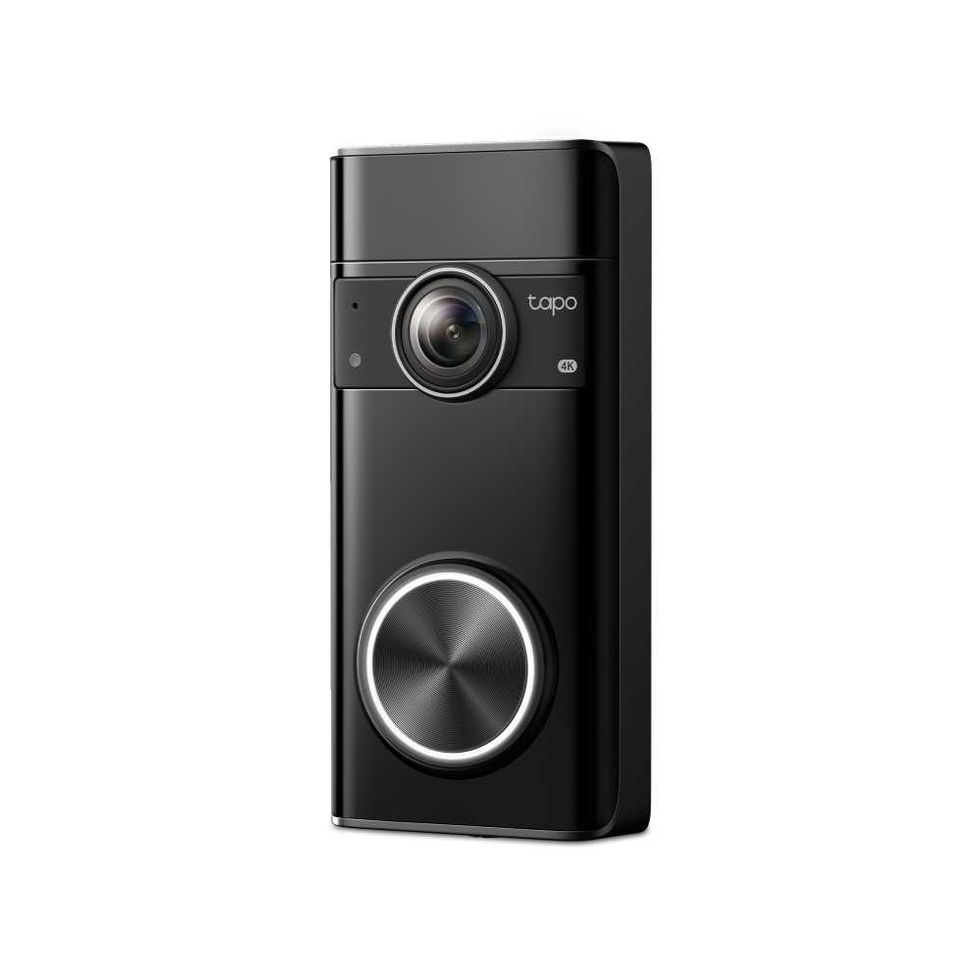
TP-Link is expanding its Tapo smart home security lineup with a new flagship video doorbell designed to address several common complaints consumers have with connected doorbells: limited viewing angles, excessive motion alerts, subscription fees and concerns about where video recordings are stored.
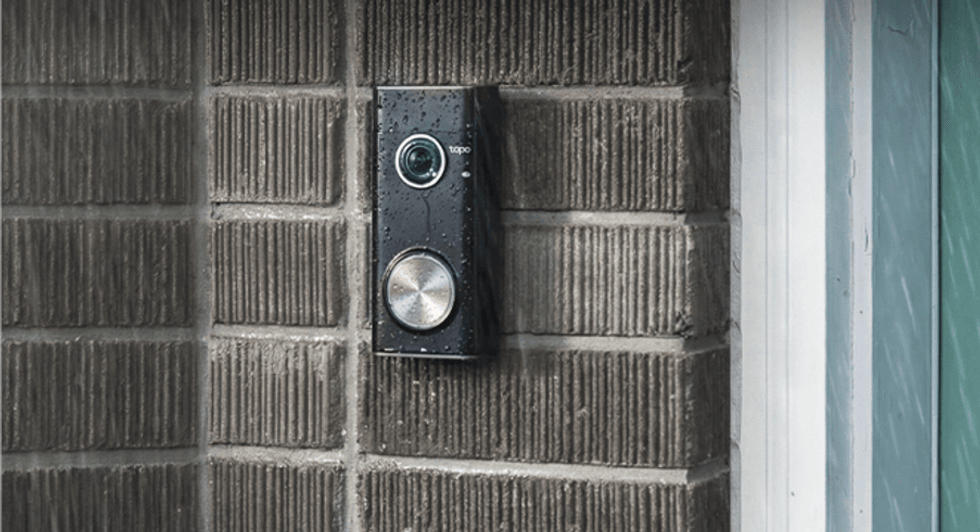
The new Tapo Doorbell Pro D260 combines 4K video with a wide 180-degree field of view, color night vision, radar-assisted motion detection, on-device AI, facial recognition and local microSD storage. Buyers can also choose between battery and hardwired installation, making the D260 suitable for homes both with and without existing doorbell wiring.
Perhaps most importantly for consumers trying to avoid another monthly smart home expense, many of the D260's most advanced features—including person, package, vehicle and animal detection and optional facial recognition—work locally without requiring a subscription. TP-Link's media materials position the D260 around three primary benefits: seeing more of the entryway, getting smarter alerts, and maintaining greater control over stored video.
The Tapo Doorbell Pro D260 officially launches September 30, 2026, for $219.99 and will be sold through Amazon and Tapo's online store. GearBrain expects to test the new doorbell soon, so we'll follow up with a hands-on review after we've had an opportunity to see how its video quality, radar detection, battery life and smart home integrations perform in a real home.
 What is the Tapo Doorbell Pro D260? www.gearbrain.com
The Tapo Doorbell Pro D260 is a connected video doorbell that lets homeowners monitor their front door, receive visitor and motion notifications, communicate with people outside, and record activity around the entrance.
What differentiates this model from a basic video doorbell is the combination of 4K resolution, 180-degree diagonal coverage, PIR and radar motion detection, local AI processing, and subscription-free local storage. TP-Link describes the product as providing 4K clarity and radar-precise detection without requiring a subscription.
It is also designed to function as part of a larger Tapo smart home rather than as a standalone camera. That includes integration with compatible Tapo smart locks, Tapo Hubs, and the Tapo H500 HomeBase.
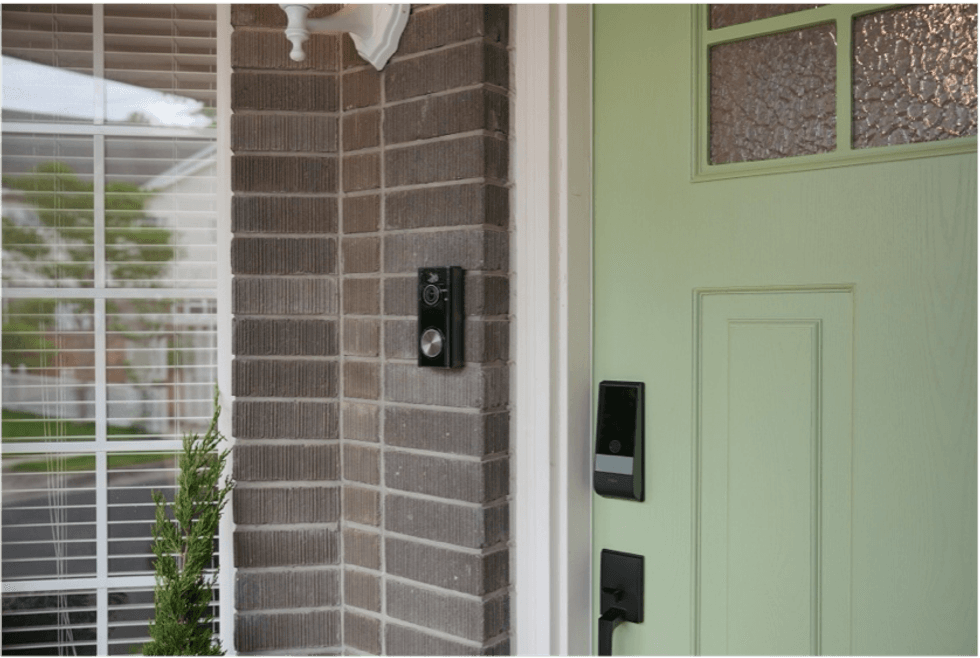 4K video and a 180-degree view help cover the entire front door www.gearbrain.com
A video doorbell isn't particularly useful if someone—or something important—falls outside the camera's field of view.
The D260 records in 4K resolution and has a 180-degree diagonal field of view, designed to show an expansive view of the entryway. TP-Link says the camera can capture sharp details on subjects more than 30 feet away.
The wide viewing angle is especially useful around the bottom of the doorbell's image. Instead of seeing mainly a visitor's face and upper body, homeowners should be able to see from a person's face down to packages on the doorstep.
That's an increasingly important consideration when comparing video doorbells. A camera can have excellent resolution, but if its field of view doesn't include the area immediately in front of the door, it may miss the package you actually wanted it to watch.
The D260 also includes HDR and full-color night vision, extending that visibility after dark. TP-Link lists both capabilities in the product's technical specifications.
As always, specifications don't tell the whole story. We'll be particularly interested in seeing how well the D260 maintains 4K detail at different distances and lighting conditions once we test it.
One of the D260's most interesting technologies is its dual motion-detection system.
Instead of relying exclusively on conventional PIR detection, the doorbell combines PIR and radar sensors. PIR looks for heat signatures associated with people and animals, while radar provides additional movement information.
According to TP-Link, combining the two helps the D260 distinguish meaningful activity from false alarms and significantly reduce unnecessary notifications. The radar sensor can also map movement in 3D and provide an aerial view of motion around the entrance.
In practical terms, this could help address one of the most frustrating parts of owning an outdoor security camera or video doorbell: alerts generated by shadows, vegetation moving in the wind, or other activity that doesn't require the homeowner's attention.
The aerial-view feature adds another dimension. Instead of simply seeing that motion occurred, users can visualize a person's movement path around the doorstep.
Whether radar produces noticeably fewer false notifications will be one of the features we'll pay close attention to during our testing.
The D260's approach to artificial intelligence may be an even bigger selling point for some households.
Its on-device AI can recognize people, packages, vehicles, and animals. TP-Link says these detection capabilities are included at no extra cost.
The doorbell also supports optional on-device facial recognition with up to 50 profiles, according to TP-Link's specifications.
That combination could make notifications more useful. Instead of simply telling you motion occurred, the system can categorize what triggered the event. Facial recognition adds another layer by allowing the doorbell to distinguish recognized people when configured to do so.
Running this processing on the device also has privacy implications. TP-Link says AI detection and facial recognition run locally, so footage doesn't need to be sent to the cloud for analysis.
The D260 supports a microSD card of up to 512GB, although the card is sold separately.
This lets recorded video stay stored locally instead of requiring a cloud storage plan. TP-Link describes the D260 as "private by design," with detection processing occurring on-device.
Tapo Care cloud storage remains available as an optional service. Therefore, consumers essentially get a choice: use local storage and the doorbell's subscription-free AI features, or add Tapo Care if they prefer cloud-based video storage.
That distinction matters when calculating the real cost of a smart doorbell. A cheaper camera with a required monthly plan can eventually cost more than a higher-priced device that offers the features you need locally.
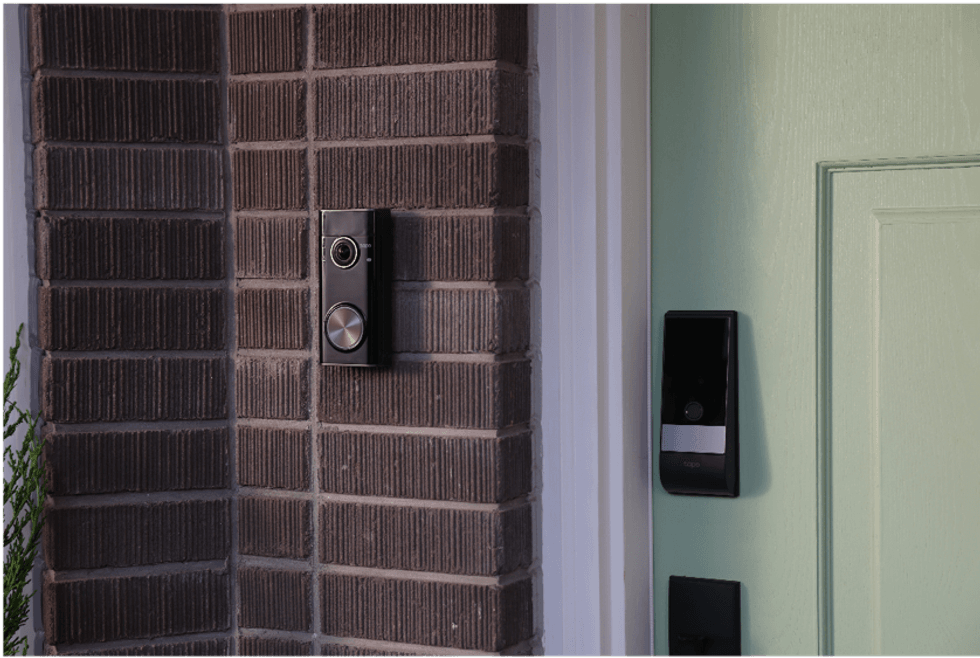 Battery or hardwired: two ways to install the D260 www.gearbrain.com
Another useful feature is installation flexibility.
The Tapo D260 can operate using its built-in rechargeable battery or a hardwired connection. TP-Link rates battery life at up to 180 days, though real-world battery life depends on factors such as motion activity, recording frequency, settings, temperature, and how often you access live video.
For homeowners without suitable doorbell wiring, the battery option eliminates the need to run new electrical wiring simply to install a smart doorbell.
If compatible wiring is available, hardwiring offers another advantage: continuous power and support for continuous recording.
The D260 has an IP66 weather-resistance rating and is designed to operate in temperatures ranging from -4°F to 113°F, making it suitable for year-round outdoor installation in a wide variety of climates. TP-Link's specification sheet confirms battery or hardwired power, up to 180 days of battery life, and an IP66 rating.
The Tapo app serves as the main control center for the doorbell and provides several ways to interact with someone at the front door.
When someone presses the button, Doorbell Call can call the user directly on their smartphone. Two-Way Audio allows the homeowner to have a live conversation with the visitor, while Quick Responses can deliver a preset message when the homeowner can't answer.
The D260's specifications also list two-way audio with voice masking, which provides another option when communicating through the doorbell.
These features mean you don't necessarily need to be home to answer the door. As long as you have access to the Tapo app and an Internet connection, you can see what's happening and respond remotely.
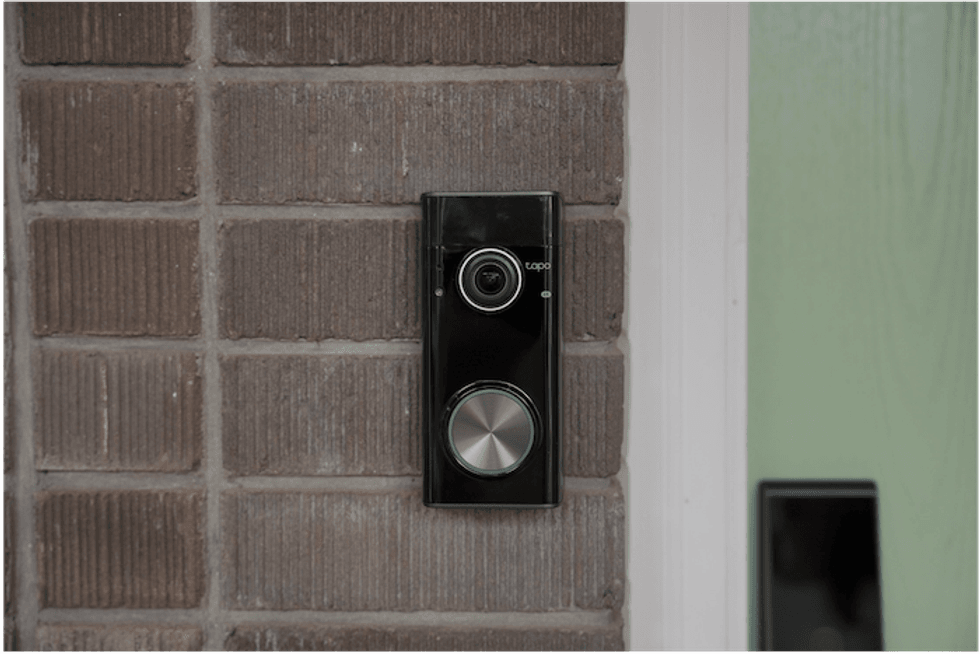 Tapo smart locks can work directly with the doorbell www.gearbrain.com
The D260 becomes more interesting for households already using Tapo products.
When the doorbell and a compatible Tapo smart lock are connected under the same Tapo account, users can unlock the door directly from the D260's live-view screen or Doorbell Call interface.
Imagine a family member or trusted visitor arriving while you're away. You can see who is there, speak to the person and then unlock the connected Tapo lock without moving between different smart home apps.
The D260 can also use compatible Tapo Hubs as indoor chimes and works with the Tapo H500 HomeBase for centralized local video storage and management.
This broader ecosystem integration is worth considering when buying a video doorbell because the device's value increasingly extends beyond simply seeing who's standing outside.
The Tapo Doorbell Pro D260 isn't limited to Tapo's own ecosystem.
TP-Link lists compatibility with Amazon Alexa, Google Home, and Samsung SmartThings, and it supports both 2.4GHz and 5GHz Wi-Fi.
Dual-band Wi-Fi is useful because it gives homeowners more flexibility when connecting the doorbell to their home network. Smart home platform support is also important for households that already have compatible smart speakers, displays, automation systems, and other connected devices.
However, the functions each third-party platform exposes can vary, so buyers should distinguish general compatibility from support for every native Tapo feature.
Here are the key specifications consumers should know before buying:
| Feature | Tapo Doorbell Pro D260 |
|---|---|
| Video resolution | 4K |
| Field of view | 180° diagonal |
| Night vision | Full-color night vision |
| HDR | Yes |
| Motion detection | Dual PIR + radar |
| AI detection | Person, package, vehicle, animal |
| Facial recognition | Optional, on-device, up to 50 profiles |
| Aerial motion mapping | Yes |
| Local storage | microSD up to 512GB |
| Cloud storage | Optional Tapo Care |
| Audio | Two-way audio with voice masking |
| Power | Rechargeable battery or hardwired |
| Battery life | Up to 180 days |
| Weather resistance | IP66 |
| Wi-Fi | 2.4GHz and 5GHz |
| Smart home compatibility | Alexa, Google Home, SmartThings |
| App | Tapo app |
Based on its announced features, the D260 should interest homeowners who want high-resolution video and wide front-door coverage without adding a monthly subscription to the basic ownership experience.
It may also appeal to consumers who receive frequent deliveries, since the 180-degree view and package detection are designed to keep the doorstep visible. Those frustrated by excessive motion notifications may find the combination of radar, PIR, and AI detection appealing.
Privacy-conscious buyers have another reason to look at the D260. Local AI processing, facial recognition and microSD recording allow many of the doorbell's core security functions to remain local.
Existing Tapo users could get even more value from the doorbell's integration with Tapo locks, hubs, and the H500 HomeBase.
On the other hand, consumers primarily interested in a basic doorbell camera may not need everything the D260 offers. At $219.99, much of the value proposition rests on its 4K camera, radar detection, local AI, and storage capabilities.
The Tapo Doorbell Pro D260 launches September 30, 2026, with an MSRP of $219.99 and will be available from Amazon and Tapo.
From September 15 through September 29, 2026, Tapo community members can purchase a $1 promotional code that provides $60 off the D260 when pre-ordering through Tapo. That effectively brings the promotional purchase price down to about $160.99, including the $1 code, before applicable taxes.
 GearBrain's take: promising features, but testing comes next www.gearbrain.com
On paper, the Tapo Doorbell Pro D260 addresses many of the features consumers should consider when shopping for a video doorbell: image quality, field of view, package visibility, motion accuracy, nighttime performance, storage options, smart home compatibility, and ongoing subscription costs.
The combination of 4K video, a 180-degree field of view, radar plus PIR detection, local AI, facial recognition and up to 512GB of local storage is particularly compelling because these features are designed to work together rather than simply increase the camera's specifications.
The ability to choose between battery and hardwired installation also broadens the number of homes where the D260 can be installed, while Alexa, Google Home and SmartThings support should make it easier to incorporate into existing smart homes.
But specifications only tell us what a device is designed to do. They don't tell us how quickly notifications arrive, how accurately radar eliminates false alerts, how clear faces and packages look in real-world lighting, whether facial recognition is consistently accurate, or how close typical users get to the advertised battery life.
Those are exactly the areas GearBrain looks at when testing connected devices in real homes.
GearBrain looks forward to testing the Tapo Doorbell Pro D260 soon. Once we install it and spend time using it under everyday home network and outdoor conditions, we'll report back on its 4K video quality, radar motion detection, AI alerts, Tapo ecosystem integration, and overall performance—and determine how well its impressive specifications translate into real-world use.
And remember to use GearBrain's compatibility find engine. It can help you find, buy, and connect any smart device. It can even help you find other smart devices or systems that are compatible with your existing smart devices, such as Google Assistant and Amazon Alexa-enabled devices.
GearBrain Compatibility Find Engine
A pioneering recommendation platform where you can research,
discover, buy, and learn how to connect and optimize smart devices.
Join our community! Ask and answer questions about smart devices and save yours in My Gear.