The Conversation (0)
Security Home

Vivint
Intelligently heating and cooling a home requires more than following a fixed thermostat schedule. A household’s routine changes day to day, rooms are occupied at different times, and weather and energy needs rarely match a program created weeks or months earlier.
Vivint is trying to solve that problem with Comfort IQ, a new AI-powered energy management platform that uses information from Vivint smart devices across the Vivint smart home to reduce unnecessary HVAC runtime while keeping occupants comfortable.
Ahead of the official announcement, I had an opportunity to get a first look at Comfort IQ and sit down with Jim Nye, chief product officer for Vivint and its parent company, NRG, while he was in New York City. The new service signals an important expansion of Vivint’s platform. Rather than treating security, automation and energy as separate parts of the home, Comfort IQ uses activity and occupancy signals from the connected home to help make better heating and cooling decisions.
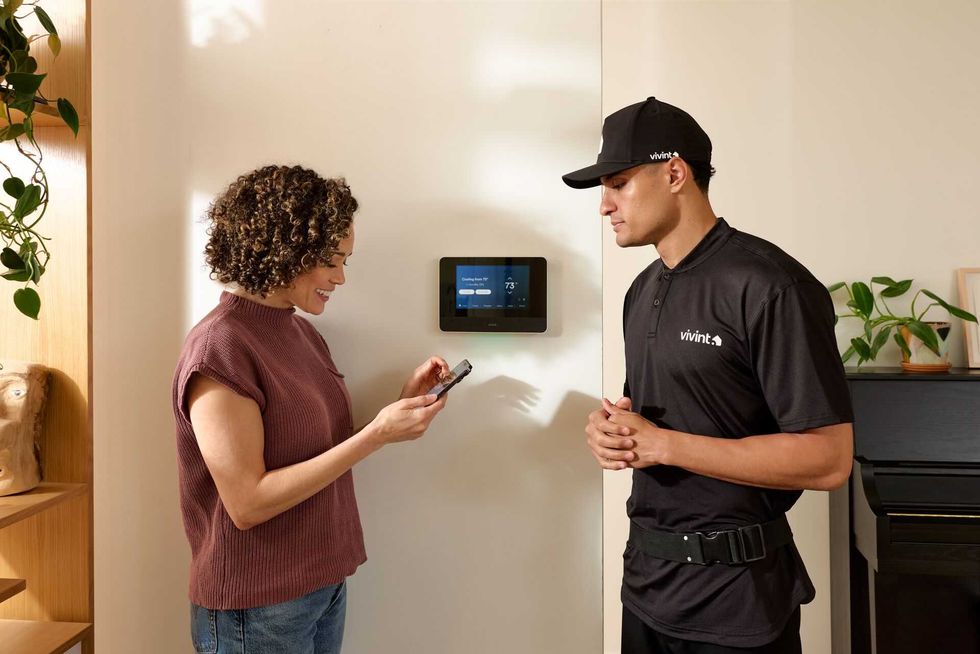
For current Vivint customers, the immediate appeal is straightforward: If they already have a Vivint Smart Thermostat, Comfort IQ is available at no additional charge and can be activated through the Vivint app. For someone evaluating a new professionally installed security or smart home system, Comfort IQ adds energy management to the list of reasons to consider Vivint—but buyers should understand the equipment, service model, and potential savings before deciding.
 What is Vivint Comfort IQ? www.gearbrain.com
Vivint Comfort IQ is an energy management platform that works with a Vivint Smart Thermostat and a home’s existing gas or electric HVAC system. It uses Vivint’s Smart Comfort technology, proprietary AI learning algorithms, and real-time information from compatible Vivint devices to predict when the home is occupied and adjust heating and cooling accordingly.
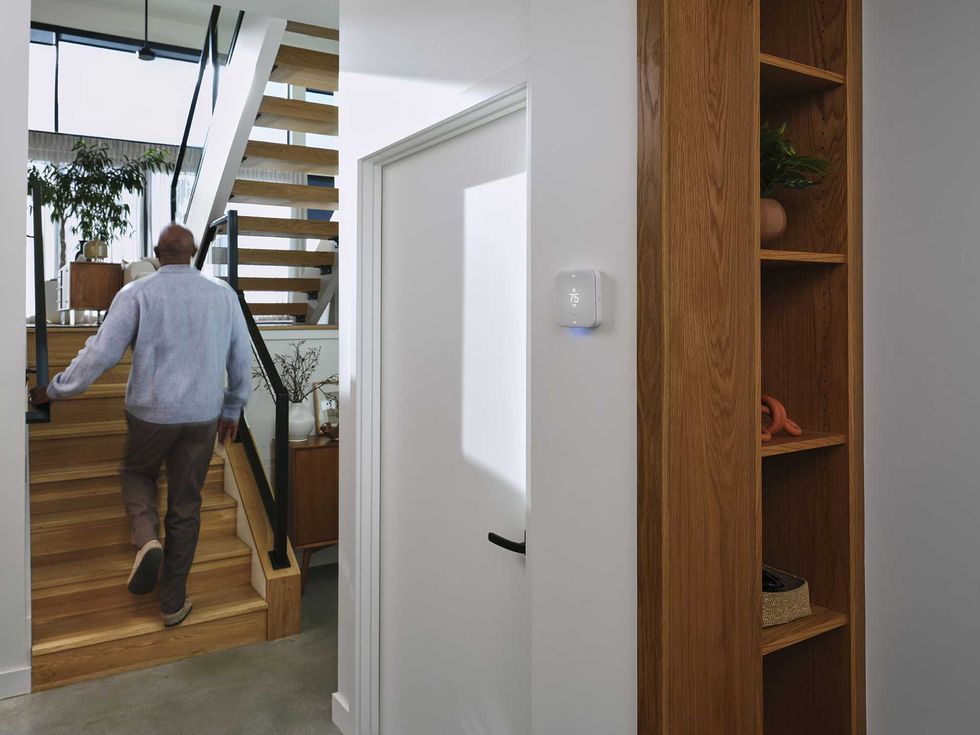
The distinction matters. A conventional programmable thermostat follows schedules the homeowner enters. A typical smart thermostat may add remote control, geofencing, learning features, or basic occupancy detection. Comfort IQ draws from the wider Vivint system, including applicable sensors, security devices, and thermostat activity, to build a more complete picture of what is happening in the home.
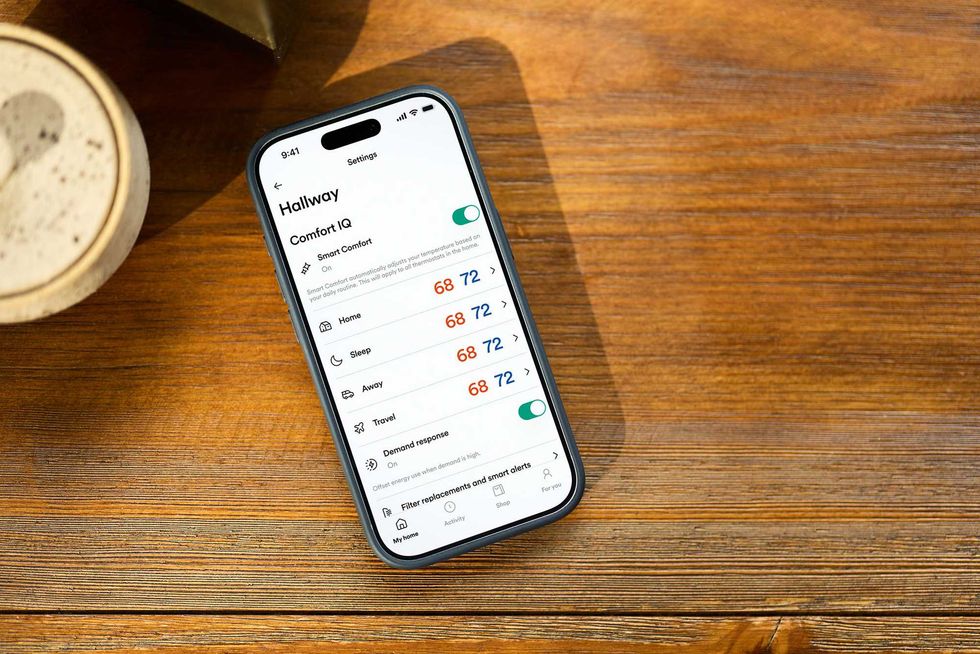
That whole-home context can help the system avoid unnecessarily heating or cooling an empty house. Comfort IQ continually learns from household interactions and changing patterns, so owners do not need to build or maintain a detailed schedule. After opting in and selecting their comfort preferences, users can allow the platform to run in the background.
 How Comfort IQ works www.gearbrain.com
Comfort IQ operates in a continuous cycle: It gathers signals from the Vivint smart home, uses those signals to identify and predict occupancy patterns, and then adjusts HVAC operation within the homeowner’s selected comfort preferences.
The platform is designed to answer questions a fixed schedule cannot. Is someone actually home? Has the household’s routine changed today? Is the HVAC system running longer than needed? Can runtime be reduced without making the home uncomfortable?
Vivint says its advantage comes from access to real-time information from multiple connected devices, rather than relying only on a thermostat. The company has not provided a device-by-device list explaining which sensor signals it uses or how it weights each one. Buyers who want that level of detail—or who have privacy questions about how Vivint processes and retains activity data—should ask before opting in.
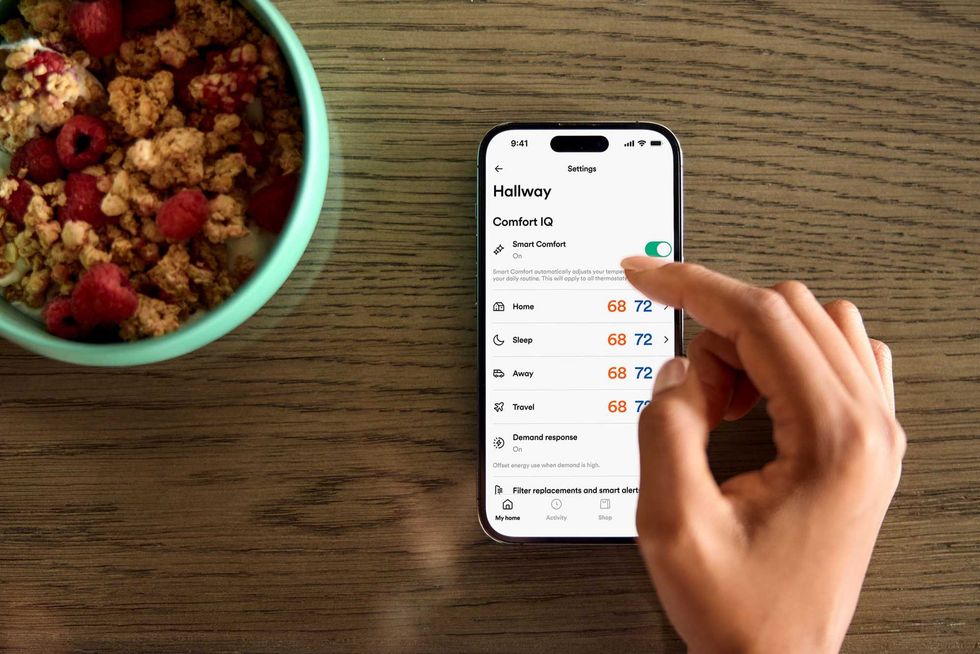
Homeowners can customize settings and preferences in the Vivint app. The goal isn't to remove control, but to reduce the need for constant thermostat adjustments and schedule management.
 What equipment do you need? www.gearbrain.com
The basic requirement is a Vivint Smart Thermostat connected to an existing gas or electric HVAC system. Current Vivint thermostat owners can opt into Comfort IQ through the Vivint app. Vivint says the service is available nationwide to eligible thermostat users at no additional cost.
Vivint’s broader collection of connected sensors and security devices provides the real-time smart home information that distinguishes Comfort IQ from a standalone thermostat. The amount of whole-home context available may therefore depend on the devices installed in a particular home.
Before buying or upgrading, confirm the following with Vivint:
Comfort IQ does not replace the furnace, air conditioner or heat pump. It adds intelligence to the way compatible existing HVAC equipment is operated.
 How much energy and money could Comfort IQ save? www.gearbrain.com
Vivint’s most significant claims are supported by a year-long independent study conducted by Tierra Resource Consultants. The study analyzed 50,000 Vivint households across five major U.S. climate zones.
According to Vivint, households using Comfort IQ achieved three times the energy savings of the average ENERGY STAR-certified smart thermostat. The study found that Comfort IQ reduced HVAC runtime by an average of 13 percent, including nearly 16 percent reductions in cooling runtime and nearly 12 percent in heating runtime.
Vivint says those reductions produced average annual household energy savings of $210 nationwide, with estimated savings of up to $300 annually in certain higher-demand regions. The company also says Comfort IQ delivers four times better energy performance than standalone programmable thermostats.
These numbers are promising, particularly because HVAC operation often represents half or more of a home’s energy use. Still, homeowners should view them as study results and estimates, not a guarantee. Actual savings will depend on climate, utility rates, the home’s insulation and efficiency, HVAC condition, thermostat habits, occupancy patterns and the system being replaced.
A household that already uses an efficient smart thermostat schedule may see a different result than one that regularly heats or cools an empty home. Comfort preferences also matter: Choosing a narrow temperature range may limit how aggressively the system can reduce runtime.
 Comfort without constant thermostat programming www.gearbrain.com
Energy savings matter only if the home stays comfortable. Comfort IQ balances those two objectives rather than simply reducing HVAC use as much as possible.
Users first establish their settings and preferences in the Vivint app. Comfort IQ then learns from daily interactions and adjusts automatically as household needs change. There are no recurring schedules to program and no requirement to manage the system throughout the day.
This could be especially useful for households with irregular routines, people on hybrid schedules, families whose activities change frequently, or homeowners who don't want to continually revise thermostat programs. It may be less transformative for someone with an extremely predictable routine who already maintains an efficient schedule, although the additional signals from the Vivint system could still improve occupancy decisions.
Comfort IQ also includes air-filter replacement reminders based on actual HVAC runtime rather than a generic calendar interval.
That is a practical improvement. A filter in a system that runs heavily during a hot summer or cold winter may need attention sooner than one installed in a lightly used system. Runtime-based reminders can better reflect actual use, potentially helping airflow, indoor comfort, and HVAC performance.
However, the reminder does not inspect the filter's physical condition. Filter type, household dust, pets, renovations, and indoor-air conditions can all affect replacement frequency. Owners should continue to follow their HVAC manufacturer’s guidance and visually inspect filters when appropriate.
Comfort IQ can integrate with virtual power plants and utility demand-response programs. These programs coordinate energy use across many homes, often reducing or shifting consumption when the electrical grid is under stress.
Vivint’s ownership by NRG gives the platform a potentially important connection between smart home control and retail energy services. Existing and new Reliant and NRG customers in select markets may be able to bundle Vivint smart home technology with an energy plan for additional savings and a more unified experience.
Availability and terms will vary by market. Before enrolling, customers should review how a program changes thermostat operation, whether they can override an adjustment, what incentives are offered, what data is shared, and whether leaving the program affects any discount or credit.
Vivint describes Comfort IQ as the first part of a broader intelligent energy management platform. Planned additions include more advanced HVAC capabilities and intelligence, improved schedule, preference and occupancy models, personalized energy-capacity scores, and new ways to display savings milestones and results.
Those planned capabilities could make energy use more visible and actionable, but they are not reasons to buy the system today until Vivint releases them. Buyers should base a current purchasing decision on the features that are available now and treat the roadmap as an indication of direction rather than a promise of timing or final functionality.
If you already use a Vivint Smart Thermostat, Comfort IQ appears to be a low-friction upgrade. It is free for eligible Vivint thermostat customers, activates in the app, and doesn't require a new HVAC system. The strongest reasons to try it are automatic occupancy-aware adjustments, potential energy savings, reduced HVAC runtime, and more useful filter reminders.
Before enabling it, review your temperature preferences and any privacy or utility-program settings. It is also worth recording a baseline from past energy bills so you can compare seasonal usage after activation. Weather-adjusted comparisons will be more meaningful than comparing one unusually hot or cold month with a mild one.
For prospective customers, Comfort IQ makes the most sense as part of a larger Vivint decision. It is not presented as a standalone thermostat platform for homes without Vivint. Its value comes from combining professional smart home and security equipment with energy management.
That integration may appeal to a buyer who wants one professionally installed system, one app, 24/7 security monitoring and automation that spans safety, comfort and energy. It may be less suitable for a do-it-yourself user who wants to mix devices freely across several brands, avoid professional monitoring or purchase only a standalone thermostat.
New customers should compare the potential annual energy savings with the total cost of the complete Vivint system, including equipment, installation, monitoring and any contract commitment. Comfort IQ can improve the value of a Vivint installation, but projected energy savings should not offset the full cost of a security and smart home package.
 Privacy, control and questions to ask www.gearbrain.com
Because Comfort IQ uses activity and occupancy insights, buyers should understand the related data practices. Vivint’s announcement explains the benefits of whole-home intelligence but does not detail data-retention periods, which signals it uses, or whether processing occurs locally or in the cloud.
Useful questions for Vivint include:
These questions don't negate the platform's benefits. They help customers make an informed choice about a system whose effectiveness depends on understanding activity throughout the home.
 GearBrain’s first take www.gearbrain.com
Comfort IQ is a logical and potentially valuable evolution of the Vivint smart home. Security sensors have traditionally been used to detect entry, motion and emergencies. Vivint is now applying that same whole-home awareness to a costly, everyday problem: running heating and cooling only when and where it is needed.
The scale and duration of the Tierra study make the early results notable. Average HVAC runtime reductions of 13 percent and average estimated annual savings of $210 would be meaningful for many households, especially because the system is designed to work without daily effort. Runtime-based filter reminders and support for utility programs add practical benefits beyond thermostat automation.
The most important limitation is that Comfort IQ’s value is tied to the Vivint ecosystem. It is best evaluated as a feature of Vivint’s integrated, professionally installed security and smart home platform—not as a universal thermostat solution. The eventual experience will also depend on HVAC compatibility, installed devices, climate, household behavior and the amount of control and transparency Vivint gives users.
For existing Vivint thermostat owners, Comfort IQ is worth considering because it is included at no extra charge and can be enabled through the app. For new buyers, it strengthens Vivint’s proposition as a connected-home platform that now spans security, automation and energy. The right buying decision will come down to whether that integrated experience, professional service model, and potential energy savings justify the full system’s cost and commitments.
| Feature | What buyers should know |
|---|---|
| Product type | AI-powered home energy management platform |
| Primary purpose | Reduce unnecessary HVAC runtime while maintaining comfort |
| Required equipment | Vivint Smart Thermostat and a compatible gas or electric HVAC system |
| How it works | Uses AI plus activity and occupancy insights from compatible Vivint smart home devices |
| Programming | No ongoing schedules required; users set preferences in the Vivint app |
| Reported HVAC runtime reduction | 13% average in a year-long independent study of 50,000 Vivint homes |
| Reported annual savings | $210 nationwide average; up to $300 estimated in certain higher-demand regions |
| Other features | Runtime-based filter reminders and support for virtual power plant and demand-response programs |
| Cost for eligible users | Available at no additional charge to Vivint Smart Thermostat users |
| Availability | Nationwide for eligible Vivint thermostat customers; energy-plan bundles vary by market |
| Future roadmap | Advanced HVAC intelligence, improved occupancy and preference models, energy-capacity scores and savings milestones |
Editor’s note: Savings and performance figures in this article are based on results and estimates supplied by Vivint from a year-long Tierra Resource Consultants study. Up to $300 in annual savings is estimated for households in certain higher-demand regions. Actual savings will vary and are not guaranteed.
Check out The GearBrain, our smart home compatibility find engine. It can help you find, buy, and connect any smart device. It can even help you find other smart devices or systems compatible with your existing smart devices, such as Vivint Smart Home, Google Assistant and Amazon Alexa-enabled devices.
GearBrain Compatibility Find Engine
A pioneering recommendation platform where you can research,
discover, buy, and learn how to connect and optimize smart devices.
Join our community! Ask and answer questions about smart devices and save yours in My Gear.