Smart security cameras are designed to watch some of the most private spaces around our homes. A video doorbell may record everyone who approaches your front door, while indoor and outdoor cameras can capture family members, children, visitors, vehicles, deliveries, and daily routines.
That makes video security about more than camera resolution, night vision, motion detection, and artificial intelligence. Buyers also need to understand what happens to their recordings after a camera captures them—and, importantly, who possesses the digital keys capable of decrypting those recordings.
Ring is addressing that issue with a new video security technology called Throw Away the Key Encryption, or TAKE, which the company says will begin rolling out in phases to Ring users starting in September.
TAKE is designed to provide significantly more customer control over encrypted Ring videos without requiring users to give up cloud-based features such as Smart Alerts, Video Descriptions, and Shared Users.
For consumers comparing Ring cameras and video doorbells with other home security systems, TAKE introduces another privacy feature worth understanding.
What is Ring Throw Away the Key Encryption?
 What is Ring Throw Away the Key Encryption?Ring
Ring already encrypts customers' videos while the data travels between devices and the cloud, commonly called encryption in transit, and while recordings are stored in the cloud, known as encryption at rest.
TAKE changes how the encryption keys associated with those videos are handled.
Under the new system, Ring videos are protected using unique, rotating encryption keys. A copy of a key can temporarily reside within a secure enclave in Ring's cloud infrastructure.
Think of the enclave as a highly restricted digital vault.
Ring can temporarily obtain the access necessary to process a video when a customer's enabled features require cloud processing. Once those functions have been performed, Ring says it deletes the encryption key rather than retaining a master key that could subsequently be used to access the recording.
The keys necessary for future access remain with the Ring customer and any Shared Users the customer has authorized, on enrolled devices such as smartphones, tablets, and computers.
That's where the name "Throw Away the Key" comes from.
Ring Battery Doorbell 2K (newest model) Retinal 2K with wide-angle video, up to 6x Enhanced Zoom, Two-Way Talk, and Built-In Battery, Matte Mocha
Why encryption keys matter
 Ring has added end-to-end encryption to its app Ring
Encryption is often described as turning readable information into scrambled data. But encryption is only part of the security equation.
The other critical component is the encryption key.
If encrypted video is analogous to a locked safe, the encryption key is what opens it. Consequently, an important privacy question isn't simply, "Is my video encrypted?"
Consumers should also ask:
Who possesses the key that can decrypt it?
Ring uses a useful house-key analogy to explain TAKE. When a locksmith manufactures a lock for your front door, you don't normally expect the manufacturer to retain a permanent copy of your house key.
You may give copies to people you trust, such as a spouse or family member. You might also temporarily give someone access when there's a legitimate need.
TAKE applies a similar principle to security-camera video.
Ring can temporarily use the key when necessary to provide services you've enabled, but the company says it doesn't keep that key afterward. You and your authorized users retain control of the keys needed for continued access.
Why doesn't Ring simply use end-to-end encryption for everyone?
This is where TAKE becomes particularly interesting.
Ring already offers End-to-End Encryption (E2EE) for customers who want an even higher level of control. Ring introduced video E2EE in 2021, and the company says it will continue offering the feature.
With E2EE enabled, encryption keys are available only on a customer's enrolled devices.
That provides stronger separation between the user's video and Ring's cloud infrastructure, but it comes with a tradeoff: if the cloud can't decrypt and process your recordings, some cloud-dependent Ring features can't work.
Shared Users and certain cloud-powered intelligent features, for example, aren't available with E2EE enabled. Users can still access important functions including Live View, recorded-video playback, and video sharing.
TAKE attempts to occupy the middle ground between conventional cloud encryption and full E2EE.
TAKE versus E2EE: What's the difference?
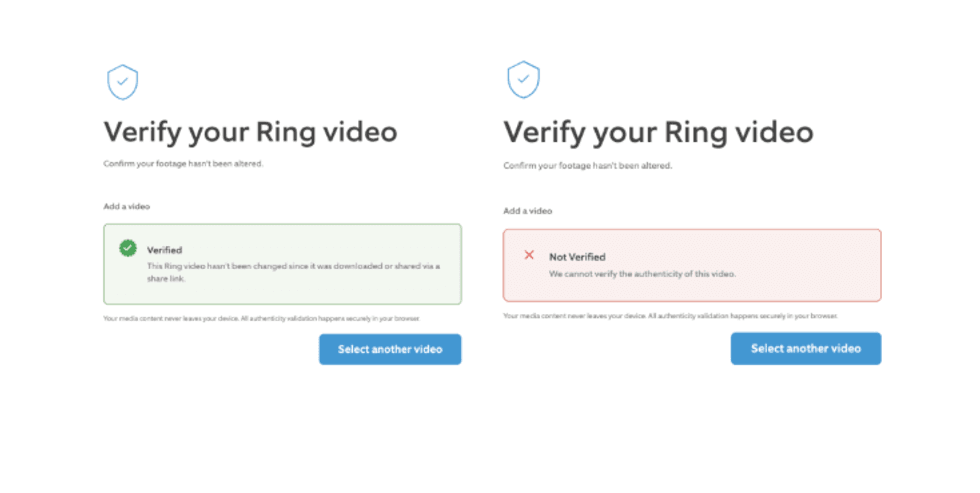
 Ring Verify Ring
The easiest way for Ring owners to understand the two technologies is to think about convenience versus maximum isolation.
With TAKE, encryption keys can temporarily be made available within a secure cloud environment so Ring can provide the intelligent features a customer has chosen to use. Once that processing is complete, Ring says the key is deleted from its infrastructure.
This means users can continue using features such as Smart Alerts, Video Descriptions, and Shared Users while gaining greater control over access to their stored recordings.
With E2EE, the cloud never receives access to the encryption keys. Only enrolled user devices possess them.
That's stronger from a privacy standpoint, but the tradeoff is reduced access to features requiring cloud processing.
Neither option is necessarily right for every household.
A user primarily concerned about maximum video privacy might prefer E2EE. Someone who depends heavily on Ring's intelligent alerts, AI-powered capabilities, or shared family access may find TAKE provides a better balance between privacy and functionality.
Why TAKE is important as security cameras become smarter
TAKE is arriving at an important point in the evolution of home security.
Today's cameras aren't simply recording devices. Increasingly, they are intelligent sensors capable of analyzing what's happening around a home.
Security platforms can distinguish between people, vehicles, packages, and other types of activity. Newer AI-powered services can also describe what a camera sees rather than simply telling you motion was detected.
These capabilities can make cameras considerably more useful, but they also create a privacy challenge.
Many advanced AI functions depend on cloud processing. Completely preventing the cloud from ever decrypting video can therefore limit what the system can do.
TAKE represents an attempt to solve this problem by allowing cloud services to access encryption keys temporarily and for specific purposes, rather than retaining a permanent key capable of decrypting customers' recordings.
That distinction could become increasingly important as AI becomes more deeply integrated into home security cameras.
What TAKE means for Shared Users
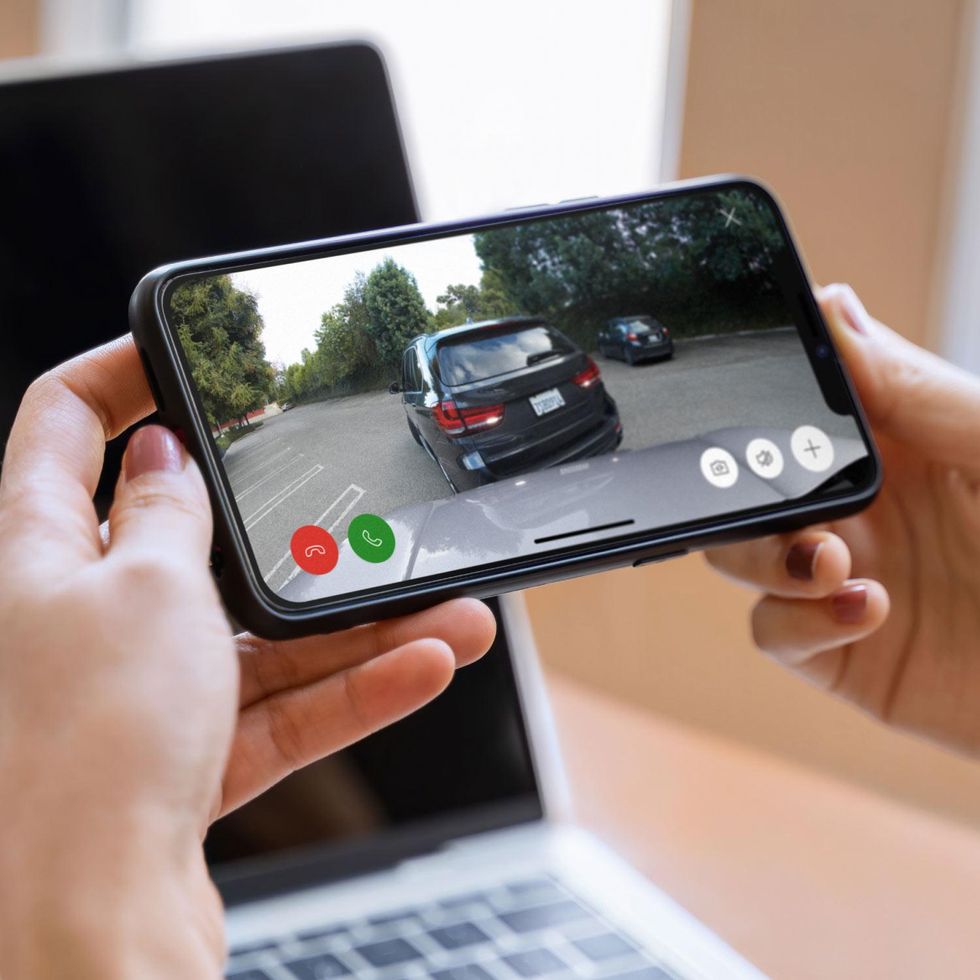
 Use Ring app to monitor videos from Ring Car Cam Ring
Shared access is another important consideration.
Many households don't have a single person managing their security system. Spouses, partners, older children, caregivers, or other trusted people may need access to cameras and recordings.
TAKE allows authorized Shared Users to retain access to videos when the account owner enables them.
In other words, the Ring account owner still determines who gets the equivalent of a "spare key."
This is an important distinction from Ring's E2EE implementation, where Shared Users aren't supported because encryption-key access is intentionally restricted.
Consumers should still periodically review their Ring Shared Users. Strong encryption can't protect your privacy from someone you've intentionally authorized to access your cameras.
TAKE doesn't eliminate the need for good account security
Ring's new encryption technology strengthens video privacy, but consumers shouldn't view encryption as a substitute for basic security practices.
Ring users should continue protecting their accounts with strong, unique passwords and available account-security protections. They should also remove Shared Users who no longer require access and make sure phones, tablets, and computers authorized to access Ring recordings are themselves properly secured.
That's especially important with TAKE because enrolled devices can retain the keys required to access video.
If a trusted device falls into the wrong hands and isn't adequately protected, sophisticated cloud encryption doesn't necessarily solve the problem.
What Ring buyers should know
 Ring Alarm users can tap into cameras to see what's happening in their space through the Live View feature in Ring App Ring
For someone shopping for a Ring Video Doorbell or security camera, TAKE adds a new consideration to the buying decision.
Consumers increasingly have to evaluate smart cameras on two levels.
The first is the traditional hardware and feature comparison: video quality, field of view, night vision, motion detection, subscriptions, smart-home compatibility, local versus cloud storage, and AI capabilities.
The second is data architecture: where recordings are stored, how they're encrypted, who controls the encryption keys, and what happens when cloud AI needs access to video.
TAKE makes Ring's answer to that second group of questions more interesting.
Instead of forcing customers to choose only between cloud functionality and strict end-to-end encryption, Ring is creating an additional privacy model designed to preserve intelligent cloud services while reducing the company's long-term access to the keys protecting customers' recordings.
GearBrain's Take
Throw Away the Key Encryption is important because it addresses one of the central challenges facing AI-powered home security: How do you make cameras smarter without unnecessarily reducing user privacy?
Traditional cloud encryption protects data, but whoever controls the decryption keys can potentially become an important part of the trust equation. Full end-to-end encryption gives customers greater control but can prevent cloud-based AI and shared-access features from functioning.
TAKE attempts to bridge those two approaches.
Ring temporarily gets the access required to deliver features customers have enabled, then deletes its copy of the encryption key. Customers and their authorized Shared Users retain the keys needed for ongoing access.
For Ring users who want the highest available level of separation, E2EE remains the stronger option because encryption keys stay exclusively on enrolled devices. But those users must accept the associated feature limitations.
For many mainstream Ring households, TAKE could provide the more practical balance: stronger control over private security-camera footage without giving up the smart features that made them buy a connected camera in the first place.
And as AI becomes increasingly embedded in video doorbells, security cameras, and other smart-home devices, the question of who holds the encryption keys—and for how long—may become just as important as who has access to the camera itself.
And remember to check out The GearBrain, our smart home compatibility find engine, to find other smart devices, including ones that are compatible with Ring, Google Assistant, and Amazon Alexa-enabled devices.
From Your Site Articles
Related Articles Around the Web
 What is Ring Throw Away the Key Encryption?Ring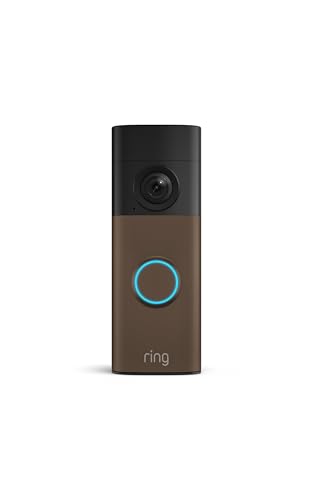
 Ring has added end-to-end encryption to its app Ring
 Ring Verify Ring
 Use Ring app to monitor videos from Ring Car Cam Ring
  Ring Alarm users can tap into cameras to see what's happening in their space through the Live View feature in Ring App Ring